

Also calledsilver perch
 Spearfishing

Spearfishing Stats
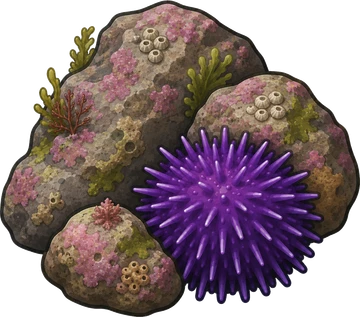
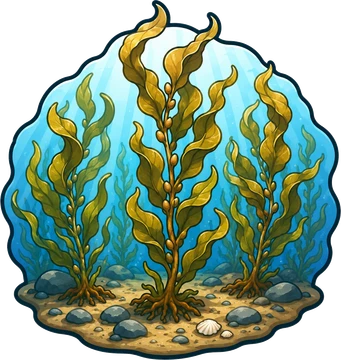
California sand and surf near rocks or piers, strongest in central-coast habitat.
Taxonomy
Rarity
Abundance rates how many are in suitable habitat. Find difficulty rates how hard it is to locate one on a daylight snorkel or freedive through 50 ft. A higher find score means a harder search. The rarity category also reflects the kind of encounter; it is not an average of the 2 scores.
Regulations
CDFW rules verified 2026-09-08
Seasonality
Edibility
Most fish are 6 to 8 inches, which is small enough that many people cook them whole rather than fillet them.
Location
Silver surfperch range from Vancouver Island down to northern Baja California. They belong to the surf zone biome first, holding in the surf on sand beaches and over open sandy bottom, and they work the rocky reef biome around rocks and piers and the bay biome in sheltered water. The recorded depth range runs to about 360 feet, which is a trawl figure and has nothing to do with where anyone meets one.
The single most useful thing to know is where they sit in the water column, because it is not where the rest of the sand-beach surfperch sit. Barred, calico and redtail surfperch are bottom fish, and anglers fish them on the bottom. Silver surfperch hold mid-water to near the surface, and California anglers targeting them are told to fish off the bottom rather than on it. For a diver that changes the search entirely. A shore diver working sand with eyes down is looking in the wrong place for this species.
Identification is the other reason to slow down, because silver surfperch is the middle member of a 3-way lookalike problem. All 3 of the silvery, deep-bodied perches in the same genus turn up in the same water, and 2 of them are also in this Ichthyopedia. A walleye surfperch has black tips on the pelvic fins and a noticeably oversized eye. A spotfin surfperch carries large black spots in the dorsal and anal fins. A silver surfperch has neither: no black fin tips, no ordinary eye made large, and no fin spots beyond a small orange mark that usually appears on the anal fin. The tail is usually pink, the back is dark green, the sides and belly are silvery, and there are narrow vertical bars of pale golden pink along the body.
The diet is small crustaceans and algae. The plant material is a mild oddity in a family that is mostly carnivorous.
Spearfishing Brief
No dedicated account of spearing silver surfperch exists in print. The ratings here follow from the documented habits of the fish and from the walleye surfperch, its closest relative in this Ichthyopedia and the fish it most resembles in both looks and behavior.
Finding one rates a 3, and 2 separate things push it there. The first is scarcity on the southern mainland, which the best community source describes bluntly and which the state's own regional split does not contradict once the islands are accounted for. The second is position. A fish holding mid-water over sand is outside the band a shore diver habitually searches, and a diver scanning the bottom for perch will pass under them.
The shot rates a 3, matching the walleye surfperch exactly, because the problem is the same problem. Most silver surfperch are 6 to 8 inches. They hold in open water rather than against structure, which means there is nothing to work toward and no cover for an approach, and no individual fish separates itself from the group long enough to become a target. Overall difficulty is 3.
A pole spear is the only sensible tool. A fish that tops out at 10 and a half inches in shallow water does not call for a gun.
At the table this is the walleye surfperch's story again, word for word. The flesh is white, mild, low in fat, finely flaked and soft, it fries best and handles other methods, and many of these fish are simply too small to yield much meat, so they get cooked whole. That is not a criticism so much as the standard outcome for the smaller half of this family. One practical note from the fishery is worth carrying: northern silver surfperch average noticeably larger than southern ones, which is the same observation anglers make about walleye surfperch, and it means the fish is a better meal at the top of its range than at the bottom.
Deep Dive
There is a quiet lesson in this species about how fisheries data and personal experience each fail in their own way, and it is worth walking through, because it applies well beyond one small silver fish.
The state number says 33 percent of California's silver surfperch come from south of Point Conception. That is a real figure drawn from a real survey, and there is nothing wrong with it. What it cannot do is tell anyone where inside that enormous southern area the fish actually are, because the survey's southern region runs from Point Conception to the Mexican border and takes in the Santa Barbara Channel, all 8 Channel Islands, and every mainland beach from Ventura to Imperial Beach. A species concentrated entirely at the northern islands and absent from the mainland would produce exactly the same percentage as one spread evenly across the whole coast.
The angler's account has the opposite strengths and weaknesses. Two fish caught in a lifetime of southern California pier fishing is a genuinely informative number, more informative than it looks, because it comes from someone who fished those piers relentlessly and caught the other surfperch there by the hundreds. But it is a pier account, and piers are mainland structures. A fish that lives at Santa Rosa Island would never appear in it.
Read together, the 2 sources describe a fish whose southern population sits offshore and whose mainland presence is thin. Neither source says that. It is what falls out of holding both of them at once, and this entry flags it as inference rather than fact because that distinction matters.
The rest of the biology is the family's, and by now it should be familiar. Surfperch do not lay eggs. Fertilization is internal, the female stores sperm for months, the young develop inside her, and what is born is a small complete fish that swims from the first minute. Silver surfperch mate in fall and early winter and give birth in spring and summer, the same schedule as the walleye surfperch. A brood runs 3 to 17 young, which is modest even in a family built on modest broods.
That small number is the reason the entire family is managed together under one conservative limit rather than species by species. A fish producing a dozen young a year has no mechanism for a fast recovery. California cut recreational surfperch limits in 2002 explicitly to bring harvest down to a sustainable level, and the 20-fish aggregate that a diver counts against today is what came out of that decision. Silver surfperch is a small fish that nobody targets and that the international database dismisses in a phrase as not much of a sport fish due to its size. It still counts against the same 20, and given how little anyone actually knows about where its southern population lives, that is the right way to treat it.
Where to Find Them
Researched habitat and range candidates
San Diego · 21 beaches
Orange County · 15 beaches
Catalina Island · 13 beaches
Los Angeles · 17 beaches
Channel Islands · 24 beaches
Ventura · 24 beaches
Santa Barbara · 20 beaches
San Luis Obispo · 26 beaches
Monterey · 18 beaches
Oregon South Coast · 15 beaches
Oregon Central Coast · 8 beaches
Oregon North Coast · 8 beaches
South Sound · 12 beaches
Hood Canal · 11 beaches
Central Sound · 13 beaches
North Sound · 8 beaches
San Juan Islands · 8 beaches
Strait of Juan de Fuca · 5 beaches
Cape Flattery · 4 beaches
These locations have suitable habitat within the species range. An assignment is a possible encounter, not a confirmed sighting at every beach. Season, depth, and local conditions still matter. Historical habitat without present-day evidence is excluded.