
 Surf Zone
 Surf Zone
Surf Zone
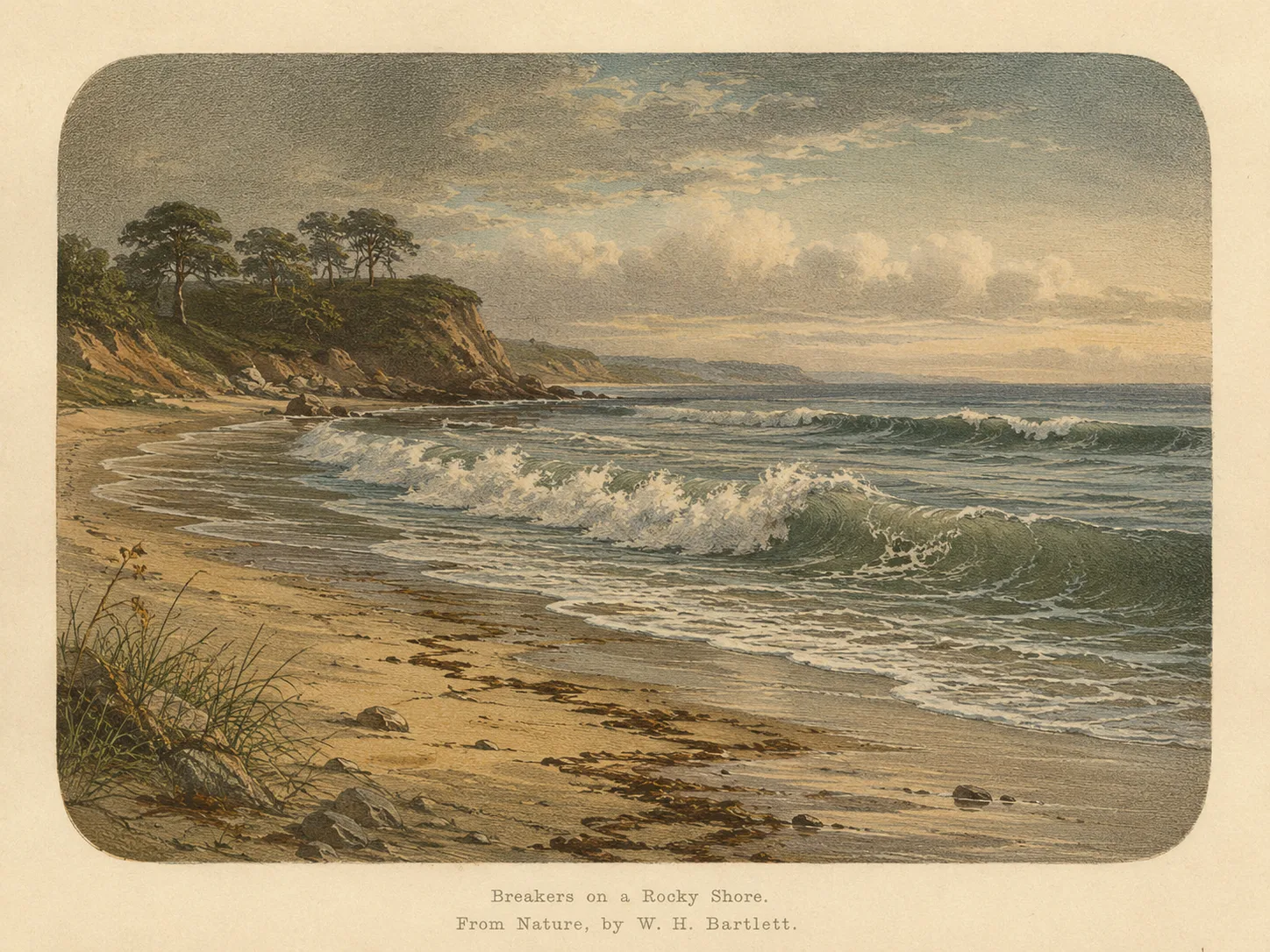
Sandy bottom with breaking waves and open shoreline habitat.
About
The Surf Zone biome is the band of shallow, churning water where waves break and wash up a sandy shore. It is one of the most physically demanding habitats in the ocean. The sand is never still, the water is often cloudy with stirred-up sediment, and there is nothing solid for a plant or animal to hold onto. On the West Coast, the surf zone runs the length of the sandy beaches that make up much of the coastline, and although it looks nearly empty, it supports a busy food web that links the open sea, the beach, and the animals that feed on both.
What shapes the zone
The surf zone is defined by motion. Breaking waves lift and drop the sand with every set, so the seabed is a shifting surface rather than a fixed one, and the animals that live here are built to burrow and re-bury as the sand moves. The habitat also sorts itself into bands up the shore. Highest is the dry sand, then a line of stranded seaweed and debris called the wrack line, then the wet swash zone, the strip where each wave runs up and drains back down the beach face, and finally the surf zone itself, the broken water just offshore. Each band holds different animals, and many move between them with the tide.
Where the food comes from
Because almost nothing grows attached to shifting sand, the surf zone makes little of its own food. Instead it runs largely on material carried in from elsewhere. The 2 most important resources are plankton, the tiny drifting plants and animals suspended in the water, and wrack, the drift kelp and other seaweed torn loose from nearby reefs and washed ashore. Sand crabs and clams filter plankton straight out of the moving water, while beach hoppers and other small invertebrates feed on the decaying wrack. Those invertebrates are then eaten by surf-zone fish and by the shorebirds working the wet sand. Research by scientists at UC Santa Barbara found that sandy beaches near healthy kelp forests, which supply more wrack, hold more life at every level. From sand crabs up to birds and fish, more detritus at the bottom of the food chain means more life all the way up.
What lives there
The most abundant residents live buried in the sand, a group called the infauna. Chief among them is the Pacific sand crab (Emerita analoga), a small, egg-shaped filter feeder that burrows backward into the swash and feeds with its antennae as the waves wash over it. Bean clams, Pismo clams, and polychaete worms share the sand, and beach hoppers swarm the wrack line at night. These invertebrates draw in the fish that hunt the surf zone: barred surfperch, California corbina (Menticirrhus undulatus), and juvenile California halibut (Paralichthys californicus), along with larger visitors such as guitarfish and leopard sharks that move in on the tide. Above the waterline, shorebirds like sanderlings, willets, and marbled godwits probe the wet sand on an outgoing tide for buried prey.
The surf zone is also the spawning ground of the California grunion (Leuresthes tenuis), a silvery fish that leaves the water entirely to breed. On spring and summer nights after the highest tides, a small sardine-like fish called a grunion rides the waves onto the sand, covering the beach by the thousands. Females bury themselves tail-first to lay 1,600 to 3,600 eggs and males wrap around them to fertilize the clutch. The eggs incubate in the warm sand for about 10 days, until the next set of high tides washes them out and triggers hatching. This is called a grunion run. Anyone with a California fishing license can go out during grunion runs after a certain point in the season and catch 30 per person by hand. They're good eating.
Why the biome matters
The surf zone does more than fill the gap between the sea and the beach. It is a nursery, a place where young fish grow before moving to adult habitat, for California halibut and other species that begin life in the shallows. It is one of the most important feeding grounds on the coast for shorebirds, many of which migrate thousands of miles and refuel on sand crabs and beach hoppers along the way. It is also the only place the California grunion can breed, since the fish depends on undisturbed sand at the top of the beach. And it ties the sandy shore to the rest of the ocean, since the kelp that grows on distant reefs ends up feeding the crabs, fish, and birds of the beach, according to research from UC Santa Barbara.
Where the biome occurs
Surf zones form wherever waves break on a sandy shore, which makes them one of the most widespread coastal habitats in the world. On the West Coast they line the open-coast beaches of the Eastern Pacific from Washington and Oregon through California and into Baja. The California grunion is largely confined to this stretch, most common from Point Conception, California, south to central Baja California, according to CDFW. The character of any surf zone depends on its sand and its waves. Fine sand and gentle surf build wide, gently sloping beaches, while coarse sand and heavy surf build steep ones, and each supports a different mix of life.
Threats and conservation
The biggest threats to the surf zone come from the way people manage the beaches above it. Mechanical grooming, the raking that many cities use to keep sand clean and smooth, removes the wrack that feeds the food web and kills the invertebrates and grunion eggs buried in the sand. Studies from UC Santa Barbara found that groomed beaches hold far fewer invertebrates and shorebirds than beaches left in a natural state. Coastal armoring, the seawalls and rock revetments built to shield development from erosion, is the other major pressure. As the sea rises and a beach cannot move inland past a wall, it narrows and eventually drowns, a process called coastal squeeze, taking the upper-beach habitat with it. Polluted runoff and the loss of sand from dammed rivers add to the strain.
Much of the damage is reversible. Leaving wrack on the beach, grooming less or not at all, and setting seawalls back from the shore all let the surf-zone community recover.
How beachgoers and divers can help
A few simple habits protect the surf zone. Leaving stranded kelp and seaweed where it lies, rather than clearing it, keeps the food supply intact for the invertebrates and birds that depend on it. Giving nesting and feeding shorebirds room, and keeping dogs away from them, reduces the stress that lowers their survival. Anyone taking grunion should know the rules. During the open season, which begins July 1, grunion may be taken by hand only, with no nets and no holes dug to trap them, and a fishing license is required for anyone 16 or older, according to CDFW. Taking only what will be used, and leaving spawning fish undisturbed on closed nights, helps keep the runs healthy.
Marine Life
Listed here are many of the aquatic species that you can find in this biome.
 Spearfishing
Locations with surf zone habitat
Every tracked location whose detail page carries the surf zone tag.