

Also calledsplittail perch, forktail perch, white perch
 Spearfishing

Spearfishing Stats
Central and Southern California quiet bays, docks and rock-adjacent sand.
Taxonomy
Rarity
Abundance rates how many are in suitable habitat. Find difficulty rates how hard it is to locate one on a daylight snorkel or freedive through 50 ft. A higher find score means a harder search. The rarity category also reflects the kind of encounter; it is not an average of the 2 scores.
Regulations
CDFW rules verified 2026-09-08
Seasonality
Edibility
One of the few surfperch large enough that filleting is worth the trouble rather than cooking the fish whole.
Location
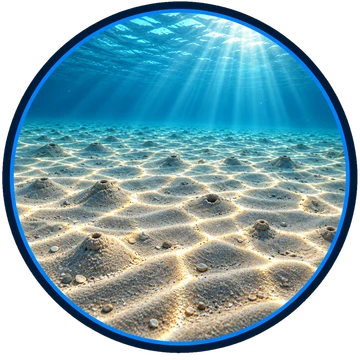
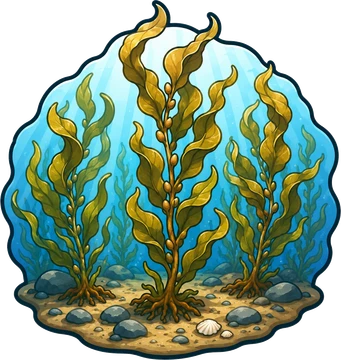
White seaperch range from Vancouver Island down to central Baja California. They belong to the bay biome first, holding in the deeper water of bays and estuaries, and they work the rocky reef biome and the sandy edges of the surf zone biome alongside it. State biologists count only 5 surfperch that genuinely occupy more than 1 habitat type, and this is 1 of them.
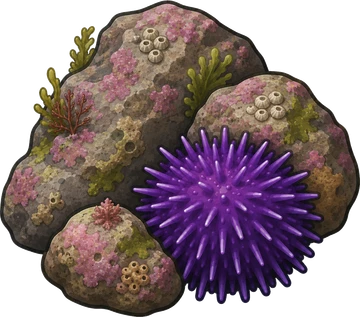
What concentrates them is a specific kind of edge. White seaperch favor places where rock meets fine sand, which describes the base of a jetty, the scour line around a pier piling, and the outer margin of a rocky point where the reef gives way to bottom. They form small schools rather than the dense hundreds a walleye surfperch travels in, and they hold in quiet water rather than in moving surf. Recorded depths run to about 140 feet, with community reports deeper still, but the fish a diver meets are shallow.
Identification is where this species causes trouble, because white seaperch and pile perch look alike, live in the same places, and are often found together along with black perch. Three checks separate them. The tail of a white seaperch is deeply forked. The 2 sections of the dorsal fin are about equal in height, and there is a black line running along the base of the soft rear portion of that fin. Most usefully, a white seaperch lacks the dark vertical bar under the dorsal fin that a pile perch carries. The overall color is silvery with a greenish cast on the back, the fins are usually yellowish, and there is often a small dark spot near the front edge of the anal fin.
The diet is small crustaceans and marine worms taken off the bottom. White seaperch also appear on the state's list of surfperch that act as cleaners, picking external parasites off other fish, though no study of that behavior specific to this species has been published.
Spearfishing Brief
No dedicated account of spearing white seaperch exists, which is worth saying outright. The ratings here come from the documented habits of the fish and from where the other structure-holding perches in this Ichthyopedia already sit.
Finding one rates a 2, matching pile perch and rubberlip seaperch. Small schools around piers, jetties and rock-and-sand edges in shallow water is a description of where a southern California shore diver already spends the dive. What keeps it off a 1 is distribution rather than visibility. The fish leans north and leans toward bays, so a diver on an open-coast reef in San Diego may work several sessions without one.
The shot also rates a 2, and it matches pile perch for the same reason. This is a deep-bodied fish holding near structure in shallow water, which tolerates a slow, deliberate approach in a way an open-water schooling fish never does. California pier anglers separately describe white seaperch as less finicky than pile perch, which is a reason to rate it no harder rather than harder. Overall difficulty is 2.
A pole spear is enough. A 12-inch fish sitting against a piling does not require reach, and the short shore-diving guns that cover most shallow California reef work are equally fine if that is what a diver already has in hand.
At the table this is one of the good ones, by family standards. White seaperch is among the few surfperch that anglers describe as large enough to be worth eating rather than worth releasing, and the flesh is the standard family product: white, mild, low in fat, finely flaked and soft. It handles frying, grilling and baking. The reported wrinkle is seasonal, and it is the same one that follows the rubberlip seaperch: the fish tastes better outside the spawning period. That is a sensible thing to observe about an animal that spends part of the year carrying a full brood of developing young.
Deep Dive
There is a story buried in the California landing records that this species tells better than any other, and it is about estuaries rather than about fishing.
In the 1930s, roughly 69 percent of the commercial surfperch catch in California came from north of Point Arguello, and 4 species dominated it: rubberlip seaperch, striped seaperch, walleye surfperch and white seaperch. By the 1990s each of those 4 accounted for less than 1 percent of the surfperch identified in commercial landings. What replaced them were barred surfperch and redtail surfperch, which together made up 94 percent of identified landings.
The state offers an explanation, and it is not that the fishery moved. It notes that the 4 species that dominated in the 1930s frequently occur in estuaries, while the 2 that dominate now are sandy-beach fish, and concludes that the degradation and loss of estuarine habitat in California may have been a factor in surfperch declines, particularly for the species that depend on estuaries. That is a careful sentence, and it is the state's own.
White seaperch is the cleanest test of it. More than half of every white seaperch taken in California comes out of a bay or an estuary, a higher proportion than any surfperch except the shiner. If estuarine loss is what pushed those 4 species out of the landings, this is the one that should have felt it hardest, and the modern numbers are consistent with that: a 67 percent fall in catch and a 62 percent fall in catch per hour across 2 survey periods. The state is explicit that catch alone does not measure a population and that reduced effort can produce the same signal, but catch per unit effort is harder to dismiss, and it fell nearly as far.
The vulnerability underneath all of this is reproductive. Surfperch do not broadcast eggs. Fertilization happens internally, the female carries the young to full development, and what is born is a small complete fish that swims away. A white seaperch brood runs 8 to 33. Against a fish that releases a million eggs into open water and loses almost all of them, the surfperch strategy trades enormous numbers for a handful of competent survivors. It is an excellent bet in a stable place. It is a poor one when the place stops being stable, because a population built on a few dozen young per female per year cannot outrun the loss of the water it breeds in.
California's regulations acknowledge part of that. The recreational limits were cut in 2002 in an explicit effort to bring harvest down to a sustainable level, and the closed spring season in San Francisco Bay exists to protect the birthing period in exactly the kind of water this species depends on. What no bag limit can do is replace an estuary, and that is the open question the state's own chapter leaves hanging.
Where to Find Them
Researched habitat and range candidates
San Diego · 21 beaches
Orange County · 15 beaches
Catalina Island · 14 beaches
Los Angeles · 16 beaches
Channel Islands · 24 beaches
Ventura · 23 beaches
Santa Barbara · 15 beaches
San Luis Obispo · 28 beaches
Monterey · 18 beaches
Oregon South Coast · 15 beaches
Oregon Central Coast · 8 beaches
Oregon North Coast · 8 beaches
South Sound · 12 beaches
Hood Canal · 12 beaches
Central Sound · 13 beaches
North Sound · 8 beaches
San Juan Islands · 8 beaches
Strait of Juan de Fuca · 5 beaches
Cape Flattery · 4 beaches
These locations have suitable habitat within the species range. An assignment is a possible encounter, not a confirmed sighting at every beach. Season, depth, and local conditions still matter. Historical habitat without present-day evidence is excluded.