
 Bay
Bay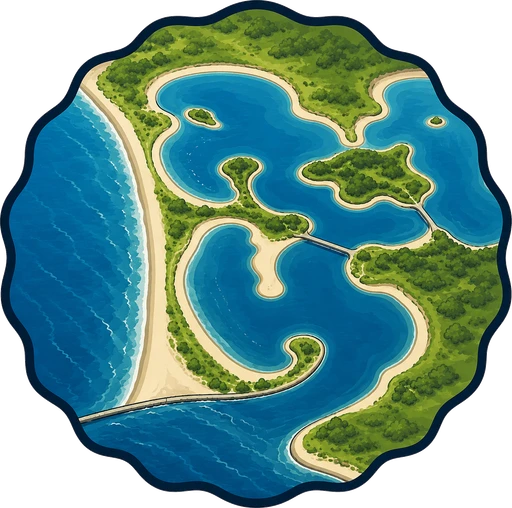 Bay
BayBay
Sheltered low-energy embayment, often with an estuary or lagoon.
About
The Bay biome is the calm, sheltered water that forms where the coast folds inward and the land partly wraps around the sea. A bay is broad and open to the ocean but shielded from its full force, which makes it calmer, often murkier, and far richer than the exposed coast outside it. Many bays are also estuaries, places where a river runs in and fresh water mixes with salt water. Some gulfs, the large arms of ocean that reach deep into a continent, are really just very big bays, and the Gulf of Mexico is the clearest example. Bays rank among the most productive ecosystems on Earth. In the United States, they serve as nurseries for more than 75 percent of the fish and shellfish that people harvest, according to NOAA.
What makes a bay
A bay is set apart by 2 things: shelter and mixing. The surrounding land blocks the waves and swell of the open coast, so the water inside is calm enough for fine mud to settle and for delicate habitats to take hold. Where a river enters, its fresh water meets the ocean's salt to create brackish water, a blend that is saltier than a river but fresher than the sea. That mixing zone is constantly restocked with nutrients washed off the land. A single bay often holds a patchwork of habitats: mudflats, oyster reefs, seagrass meadows, and, depending on the climate, salt marshes or mangroves along its edges.
How the biome works
A bay is fed from both directions. Rivers carry in nutrients from the land, and tides bring in food and larvae from the sea. Because the water is calm, those nutrients are not swept away. They settle and fuel heavy plant and algae growth, from microscopic phytoplankton to seagrass. Much of that growth ends up as detritus, the fine particles of decaying plant matter, which feeds worms, clams, shrimp, and crabs in the mud. Those animals in turn feed fish and birds. The calm, food-rich, and slightly less salty water is also easier for young animals to survive in than the open coast, which is why bays are such important nurseries.
What lives there
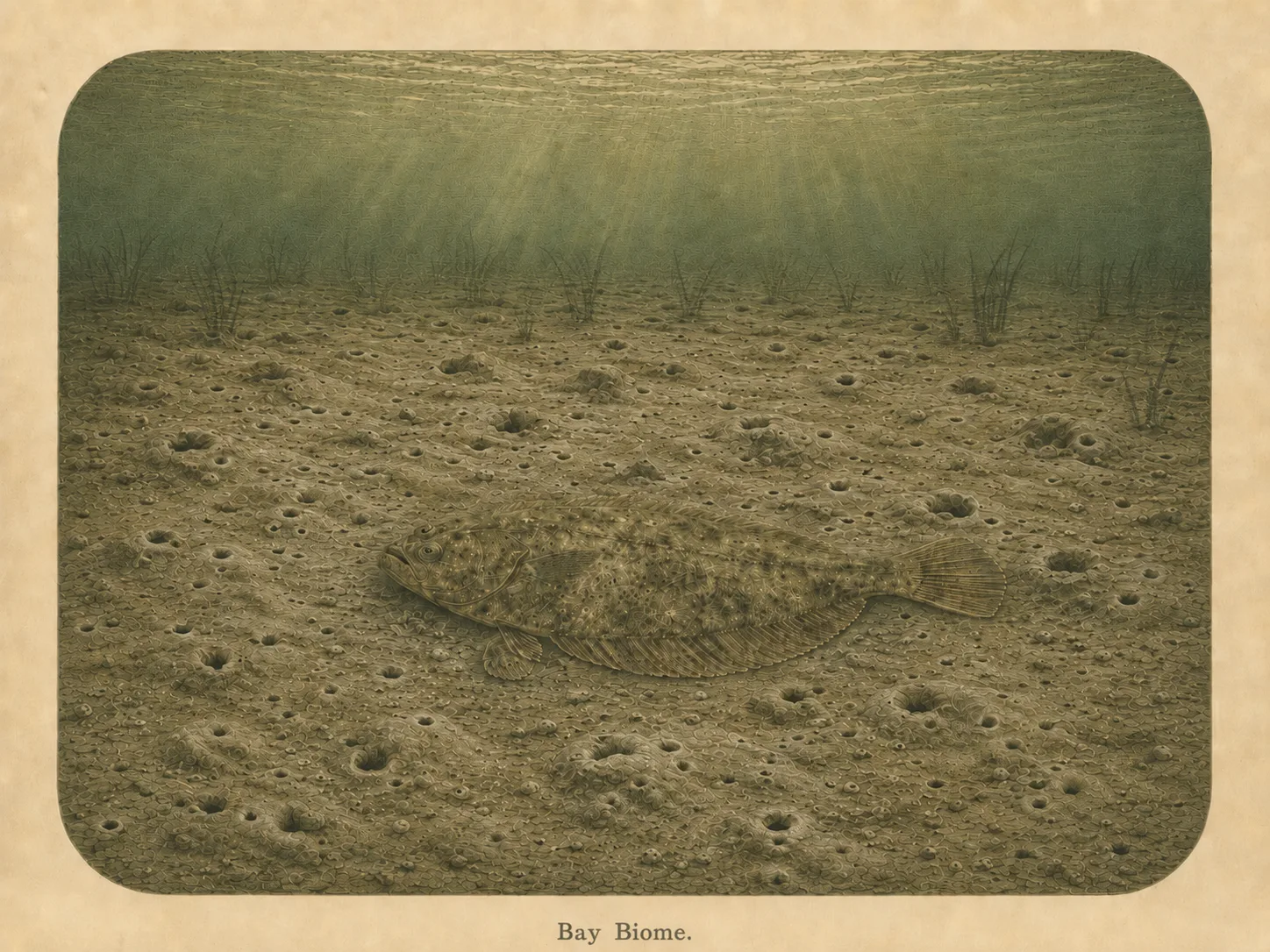
A bay is a crowded place. Its mudflats and shallows hold clams, worms, and shrimp, and hard surfaces like oyster reefs support dense beds of oysters and mussels that filter the water as they feed. These shellfish and small invertebrates draw in fish. Flatfish such as halibut and flounder lie on the bottom, while schooling fish and juvenile game fish use the shallows for cover. Blue crabs (Callinectes sapidus) are a signature bay animal on the Gulf and Atlantic coasts. Above the water, wading birds and waterfowl work the mudflats for buried prey, especially at low tide.
Why the biome matters
Bays do an outsized amount of work for their size. They are among the ocean's most important nurseries, and in the United States more than 75 percent of the fish and shellfish that people catch depend on estuaries at some point in their lives, according to NOAA. The oyster reefs and shellfish beds in a bay filter enormous volumes of water, which helps keep it clear. Bays also buffer the coast, since their marshes and shallows soak up storm surge and slow erosion. And they carry some of the country's most valuable fisheries, from oysters and blue crabs to shrimp.
Where the biome occurs
Bays form on every coast where the land encloses a piece of the sea, especially where rivers meet the ocean. In the United States the best-known examples include Chesapeake Bay, San Francisco Bay, Puget Sound, and Florida Bay at the southern tip of Florida. The Gulf of Mexico, though far larger, works on the same principles: a partly enclosed, river-fed, shallow-edged sea. Florida Bay, a broad, shallow bay between the mainland and the Keys, is laced with seagrass and dotted with mangrove islands.
Threats and conservation
The calm water that makes a bay productive also makes it a trap for pollution. The biggest threat is nutrient runoff from farms and cities. When too much nitrogen and phosphorus wash into a bay, they trigger an overgrowth of algae, a process called eutrophication. The algae die, sink, and decompose, and that decay pulls the oxygen out of the water. What is left is a dead zone, a stretch of water so low in oxygen that little can survive, a condition known as hypoxia. The Gulf of Mexico has the largest dead zone in the United States. It is fed by nutrients from the Mississippi River. In recent years it has averaged about 4,800 square miles, and it reached a record 8,776 square miles in 2017, according to NOAA. Development, dredging, and the diversion of fresh water add further strain.
How people can help
Because most of the damage comes from the land, the most useful help happens upstream. Reducing fertilizer runoff, keeping wastewater and pollution out of the watershed, and protecting the marshes and wetlands that filter incoming water all keep a bay healthy. On the water, respecting catch limits on oysters, crabs, and inshore fish protects the nursery stock that the whole system depends on. Restoring oyster reefs is one of the most effective single steps, since the oysters both filter the water and rebuild habitat.
Marine Life
Listed here are many of the aquatic species that you can find in this biome.
 Spearfishing