

Also calledCalifornia whiting, king croaker, corbie, bean, beanie
 Spearfishing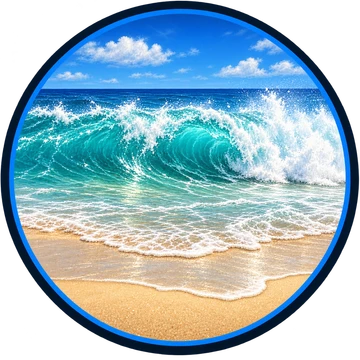

Spearfishing photos - viewer discretion advised
Spearfishing Stats
Southern California shallow sandy surf during summer
Taxonomy
Rarity
Abundance rates how many are in suitable habitat. Find difficulty rates how hard it is to locate one on a daylight snorkel or freedive through 50 ft. A higher find score means a harder search. The rarity category also reflects the kind of encounter; it is not an average of the 2 scores.
Regulations
CDFW rules verified 2026-07-16
Seasonality
Edibility
Firm, mild white meat that cuts into clean fillets.
Location
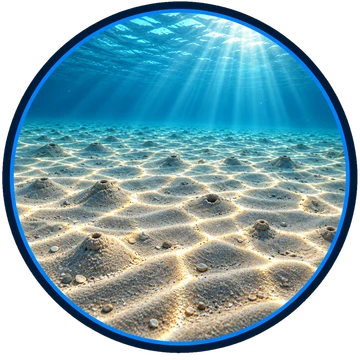
California corbina live along the eastern Pacific from Point Conception in Santa Barbara County south through Baja California and into the Gulf of California in Mexico. The center of the population runs from Santa Barbara south to San Diego. They are surf-zone fish. Adults hold on sandy bottoms from the swash zone out to about 66 feet, though most of them stay in 3 to 18 feet of water. They travel in small groups of 2 to 5 fish along the sand, and larger adults are often solitary. The exception is the structure surf anglers call a croaker hole, a depression scooped into the sand at the outer edge of the sand shelf, right where the bottom starts to slope down. Corbina gather in those holes in numbers well past the size of a traveling group, and yellowfin croaker hold in the same water. In summer they feed in shallow ocean surf so shallow that their backs are exposed above the water at the crest of a wave. In winter most of the population moves into nearby bays and estuaries, then returns to the ocean beaches in spring and early summer. Spawning happens offshore from June through September, peaking in July and August. Females release free-floating eggs into the open water, and the eggs drift as part of the plankton before hatching. Adults do not guard eggs or young. Juveniles grow up in the bay and estuary nurseries and along the shallowest edge of the sand beach.
Spearfishing Brief
Finding California corbina is about as close to a sure thing as surf-zone spearfishing offers, and it rates a 1 on the 1 to 5 scale. The search comes down to a single habitat cue. A beach with a heavy sand crab population will hold corbina, and the fish will be in the water where the waves are breaking, working the crabs the surf turns up. A diver who finds the crab beds has found the fish. The other address worth learning is the croaker hole at the outer edge of the sand shelf, where corbina cluster instead of passing through in twos and threes. Very few species on this coast keep so predictable an address. The incoming morning tide, between the first low and the first high, is the traditional window, and corbina feed in and just past the surf line after dark as well, where divers describe them as even less troubled by an approach. Heavy surf is the one thing that shuts the hunt down. When the beach churns to a soup the fish move off, so calm water matters more than the calendar.
The shot rates a 1 as well, and the reason surprises anglers. Corbina are famously spooky from above the water, where a footstep on wet sand or a rod silhouette against the sky puts a whole group down. None of that reaches a diver already in the water. A feeding group will usually hold while a diver closes to pole spear range, and in most cases the fish do not begin to flee until one of them is shot. The shot comes at close range. Placement is still worth care, because corbina flesh is soft and a spear set badly can pull through while the fish works against it.
What happens after that first fish is the part worth planning around. Once a corbina is speared, the rest of the group clears out of that stretch of surf and stays gone for a while. One explanation is that a dying fish releases a chemical alarm cue into the water and the others read it and leave. Alarm responses to an injured member of the same species are documented in several fish families, but nothing in the literature establishes the mechanism for corbina or for croakers generally, so this is better treated as a reliable pattern with a plausible cause than as a settled one. The practical answer does not depend on which it is. Carrying a speared corbina along the beach keeps whatever the other fish are reacting to in the water with the diver. Bagging the fish, walking out, and putting it straight into an ice chest ends that, and a move of at least a few hundred feet down the beach puts the diver over a fresh stretch of crab bed. Corbina beaches run for miles, so the walk costs little.
The weapon of choice for a corbina hunt is a 6-foot pole spear with a 3-prong or 5-prong paralyzer tip. The shallow surf zone is polespear water, not speargun water. A pole spear is short and quick to reload in a moving water column, and the paralyzer tip spreads the impact across a soft-fleshed fish and pins it against the sand instead of pulling out. Shot distance is typically about 10 feet in water somewhere between the diver's waist and chest. One documented Southern California hunter, diving the surf near Malibu in Los Angeles County, took 49 corbina over 12 days working sand-crab beds on the morning tide, his fish running 22 to 26 inches and 3.5 to 4.5 pounds, with his 2 best at 5.2 and 5.3 pounds against a standing spearfishing world record of 5.5 pounds. Those are large fish for a species that tops out near 8.5 pounds. Because California reserved corbina for recreational use over a century ago, the only person a spearo shares a corbina beach with is the same rod-and-reel angler casting along the swash line from above, chasing the same fish for the same reason.
Deep Dive
California corbina is a croaker that does not croak. The species belongs to the drum and croaker family, which is famous for the loud sound males and sometimes females make during spawning. In a typical croaker the noise is produced by specialized muscles that vibrate against the swim bladder, the gas-filled organ a fish uses to control its depth, which amplifies the vibration into an audible call. Every fish in the corbina's genus, a small group of closely related species called kingcroakers, lacks a swim bladder. Without the resonator, the mechanism that produces the family's namesake croaking noise does not work. The proposed reason for the missing bladder is the habitat itself. A gas-filled organ is a liability in a fish that spends its life in breaking surf on a shallow beach, where compressing and re-expanding gas with every wave surge would be a constant physiological cost. The tradeoff cost the corbina its voice.
The fish uses the other end of its body to find food. A short, stiff barbel hangs from the tip of the lower jaw, and the corbina drags it over the bottom to feel out buried prey in a mouthful of sand it cannot see. The feeding move is unmistakable when a diver sees it. The corbina noses down into the sand at the edge of the swash, scoops a mouthful, and processes it inside the mouth. The food gets sorted out and swallowed, and the sand gets expelled through the gill openings in a small gray puff. The primary prey is the Pacific sand crab, a small burrowing crustacean that lives by the millions in the wet sand of Southern California beaches. Small crustaceans, marine worms, and small clams round out the diet. Juveniles start on clam siphons and small crustaceans and shift to sand crabs as they grow.
Corbina reach a maximum of about 28 inches and 8.5 pounds, though most adults a spearo or an angler meets are 16 to 24 inches and 1 to 4 pounds. Males mature at about age 2 and 10 inches long. Females mature at about age 3 and 13 inches, and after age 3 they grow faster than males and reach the larger sizes. The species lives about 8 years. The California state record is a 7-pound, 1-ounce fish taken from Newport Harbor in Orange County in May of 2005, and the world all-tackle record is a 7-pound, 15-ounce fish taken from Mission Bay in San Diego County in May of 2004. Documented predators include sharks, larger predatory fish that share the surf and nearshore, and seabirds such as brown pelicans that hit small corbina from above.
The corbina also has an unusual legal history. In 1909 California banned the taking of corbina, spotfin croaker, and yellowfin croaker by net. In 1915 the state banned the sale or purchase of all 3 species. Those prohibitions are still on the books. California Fish and Game Code section 8373 makes it illegal to sell, buy, or possess corbina in any place where fish are sold or where food is offered for sale, and section 7856 forbids possession aboard a commercial fishing vessel on a commercial trip. The corbina is a fish California deliberately reserved for recreational anglers over a century ago, and it is why the species is never on a menu and never for sale at a market. The recognition at the time was that corbina belonged to the shore angler standing in the wash, and the state made that stick with a statute. The 3 croakers are among the few marine species in California under a permanent ban on commercial sale.
The corbina's reputation as one of the hardest fish in Southern California to catch belongs to fly fishermen and light-tackle surf anglers. From above the water the fish is nearly untouchable. It hunts by touch and smell more than sight, so a normal presentation of a fly or a bait fails when the fish is not looking for it. Its skin and the row of sensory pores along its side that senses water movement, called the lateral line, register faint vibrations, which means a footstep on damp sand at 20 feet can spook a feeding group. The state record has stood since 2005 and the world record since 2004, and both fish were caught by patient anglers working a light rig at close range. That difficulty is one of the reasons corbina is a bucket-list target for the Southern California surf-fishing community. Meanwhile the same fish is one of the most approachable pole-spear targets on the coast for a diver who knows which beaches hold sand crabs.
On the plate the corbina is an excellent mild white fish. The meat is white, flaky, and softer than a calico bass or a white seabass. The mild flavor takes butter, lemon, and herbs well and turns into good fish tacos. Community sources rank the flavor and texture a close second to white seabass. One caution applies to eating corbina. The California Office of Environmental Health Hazard Assessment includes corbina in its statewide coastal fish-consumption advisory and recommends no more than 1 serving per week for all groups because coastal corbina carry measurable levels of mercury and PCBs from the sediments they feed over. Site-specific advisories exist for stretches of the Ventura, Los Angeles, and Orange County coast, from Ventura Harbor to Santa Monica Pier, from Santa Monica Pier to Seal Beach Pier, and from Seal Beach Pier to San Mateo Point. Where OEHHA has tested a specific stretch, the advice can differ from the statewide default. The Ventura Harbor to Santa Monica Pier stretch and the Seal Beach Pier to San Mateo Point stretch both allow 2 servings per week. Corbina makes a good meal for a diver who keeps to the 1-serving-per-week guideline.
Where to Find Them
Researched habitat and range candidates
San Diego · 17 beaches
Orange County · 13 beaches
Catalina Island · 7 beaches
Los Angeles · 16 beaches
Channel Islands · 12 beaches
Ventura · 23 beaches
Santa Barbara · 16 beaches
These locations have suitable habitat within the species range. An assignment is a possible encounter, not a confirmed sighting at every beach. Season, depth, and local conditions still matter. Historical habitat without present-day evidence is excluded.