

Also calledyellowtail jack, forktail, mossback, firecracker
 Spearfishing

Spearfishing photos - viewer discretion advised
Spearfishing Stats
Southern California island/coastal pelagic water at suitable sites
Taxonomy
Rarity
Abundance rates how many are in suitable habitat. Find difficulty rates how hard it is to locate one on a daylight snorkel or freedive through 50 ft. A higher find score means a harder search. The rarity category also reflects the kind of encounter; it is not an average of the 2 scores.
Regulations
CDFW rules verified 2026-08-07
Seasonality
Edibility
Firm, high-oil meat with a bloodline that trims out easily.
Location
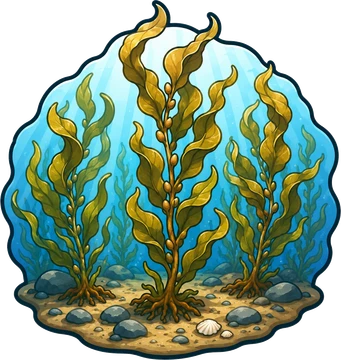
California yellowtail range along the eastern Pacific from British Columbia south to Mazatlan, Mexico, and become common in California south of Point Conception, Santa Barbara. The heart of the range is the Southern California Bight and northern Baja, with strong concentrations around Catalina Island, San Clemente Island, the Coronado Islands, and Santa Monica Bay. The species is fusiform, built for speed, and carries both red slow-twitch muscle for prolonged cruising and white fast-twitch muscle for burst attacks and escapes. Adults hold nearshore over rocky points and along the outer edges of kelp forests, and offshore under drifting mats of surface kelp known as paddies. Smaller fish tend to live farther offshore, larger fish closer to the coast. Yellowtail move north through the coast as the water warms into summer, and they favor a narrow temperature window of 70 to 72 Fahrenheit, tolerating 64 to 75. Below 64 the fish sink to deeper water to conserve energy, which is why a cold spring produces a poor season. From July through October they spawn as aggregate broadcast spawners, releasing eggs and sperm into open water, and the eggs are buoyant and drift free rather than attaching to kelp.
Spearfishing Brief
Finding a California yellowtail is the first half of the difficulty, and it is why the search rates a 4 rather than lower. Yellowtail are not camouflaged, not buried, and not hard to see once they appear. They are thinly spread and their location shifts week to week. A boat may cover 20 miles of ocean and half a dozen paddies before a single fish shows, and a cold-water week can shut the fish off entirely. Prime concentration in Southern California runs from July through August, when the surface reaches 65 to 72 Fahrenheit and paddies build along the outer islands. The other half of the difficulty is the shot itself, which also rates a 4. Yellowtail are wary and fast, they hold at the far edge of range, and a hit fish runs deep and hard for kelp or open water. A slip-tip is the community-standard point because a rigid flopper often tears free from a running fish. The overall difficulty is a 4, driven equally by the search and the shot.
The method that works is a paddy hunt. A boat approaches a floating kelp mat with the engines off from 50 to 100 yards out, and the diver slips into the water well before the paddy so that the entry does not spook fish holding underneath. The approach is a slow drift past the paddy on the up-current side, about 25 feet off the kelp, on the sunny face so that a diver looking down sees any fish silhouetted against the darker water. Yellowtail cruise the up-current face of a paddy, waiting for bait that washes into them. Community guides report that the first pass after settling usually produces a look within 5 to 10 minutes, and that a diver who sees nothing on the first drift should reposition and drift again rather than push into the kelp. A small reflective flasher hung 15 to 25 feet below the float on a swiveling line is a common addition because it draws curious fish into shooting range.
The weapon call is a long-range gun of 110 to 130 centimeters, with 2 or 3 rubber bands, a slip-tip point, and a heavy shaft. Community guns run larger, to 150 centimeters, when divers expect to see 30-pound fish or better. A hard torpedo float rides better in the surface swell around a paddy than a foam noodle, which tangles in the kelp and gets pulled under by a running fish. The reel or breakaway line runs at least 100 feet because a hooked yellowtail dives at once and covers ground fast. Yellowtail are a popular rod-and-reel gamefish as well, taken from party boats on live sardines and with surface iron, and the spear fishery sits alongside a much larger hook-and-line take.
Deep Dive
The California yellowtail was long treated as the eastern Pacific stock of the yellowtail amberjack, a wide-ranging species with populations in Japan, Australia, and off South Africa. In 2015 a genetic analysis by Martinez-Takeshita and coauthors separated the northeast Pacific fish as its own species, and older sources still lump it with the amberjack under the pre-split scientific name. The species is a member of the jack family, alongside the amberjacks, the pompanos, and the smaller mackerel jacks. The yellow forked tail gives the fish its common name, and the body plan is fusiform, tapering at both ends and shaped for high-speed pursuit.
California yellowtail hunt schooling baitfish in open water and on the edges of the kelp. Their diet centers on Pacific mackerel, Pacific sardines, northern anchovies, and market squid, with smaller amounts of crab and smelts. They feed most heavily in the warmer months, when metabolism runs faster and the bait schools thicken. The muscle biology matters to the hunt. A yellowtail carries both dark red slow-twitch muscle, concentrated in a band along the lateral line and toward the tail, and pale white fast-twitch muscle across the rest of the body. The red muscle handles long slow cruising and long-distance migration. The white muscle handles the burst that catches a sardine or shakes off a hooked line. On the plate the two-toned meat is one reason the species commands a high price. Sushi-grade cuts show the pale red of the loin and the darker bloodline, and the fish takes as easily to a grill or a hot sear as it does to a raw preparation.
The average locally caught fish is 10 to 20 pounds and 3 to 7 years old. The typical size range is 20 to 47 inches, with a recorded maximum of over 5 feet, and the largest documented weight is 92 pounds. Sexual maturity comes at 2 to 3 years, by about 25 inches. Spawning runs from July through October as an aggregate broadcast, with adults releasing eggs and sperm into open water. The eggs are buoyant and drift free, and the larvae grow in surface water. The predictable summer aggregations and the fish's fondness for the surface kelp paddy make it easy to find, in season, for the boats that know where to look. Documented predators include large sharks, marlin, and marine mammals such as sea lions and dolphins, though the pressure that sets the population most is the recreational rod-and-reel fishery. California has no dedicated federal management plan for the species, and management runs through the state size and bag limit set in 14 CCR 28.37.
Where to Find Them
Researched habitat and range candidates
San Diego · 20 beaches
Orange County · 15 beaches
Catalina Island · 14 beaches
Los Angeles · 17 beaches
Channel Islands · 24 beaches
Ventura · 23 beaches
Santa Barbara · 20 beaches
San Luis Obispo · 29 beaches
Monterey · 18 beaches
Oregon South Coast · 15 beaches
Oregon Central Coast · 8 beaches
Oregon North Coast · 7 beaches
These locations have suitable habitat within the species range. An assignment is a possible encounter, not a confirmed sighting at every beach. Season, depth, and local conditions still matter. Historical habitat without present-day evidence is excluded.