

Also calledbullhead shark, horned shark, hornback shark

Taxonomy
Rarity
Abundance rates how many are in suitable habitat. Find difficulty rates how hard it is to locate one on a daylight snorkel or freedive through 50 ft. A higher find score means a harder search. The rarity category also reflects the kind of encounter; it is not an average of the 2 scores.
Seasonality
Location
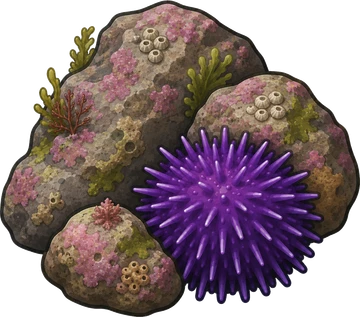
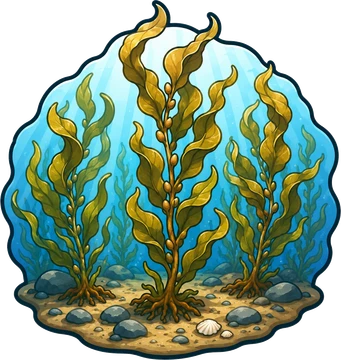
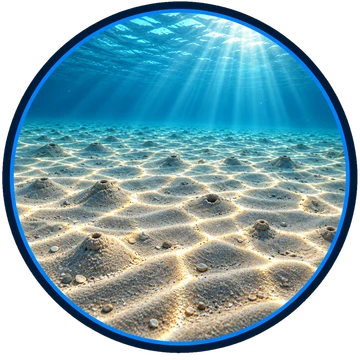
The horn shark lives in the eastern Pacific from Monterey Bay in Monterey County south through the Gulf of California, with unconfirmed reports as far south as Ecuador and Peru that may be misidentifications of related species. Warm-water years occasionally bring individuals into San Francisco Bay, which is farther north than the species usually reaches, even though its scientific name refers to that city. It is a purely bottom-dwelling shark, and the population sorts itself by age. Adult sharks stay on shallow rocky reefs, kelp beds, and the sandy corridors between rocks, most often in 5 to 40 feet of water. Juveniles between 14 and 19 inches long live somewhere different: sandy flats with low relief, out in deeper water, 130 to 500 feet down. Adults seldom swim more than 6 feet above the bottom.
Site fidelity is unusually strong for a shark. A single horn shark can hold a home range about the area of a basketball court plus half again, and return to the same shelter day after day for more than a decade. The longest single movement ever recorded for the species is about 10 miles. That means an adult a diver photographs under a particular ledge at Catalina Island is likely to be found in that same ledge, or the next one along, in later summers. In winter the adults move deeper, down past 100 feet, and horn sharks have been recorded resting in caves as deep as 660 feet.
Deep Dive
The horn shark is named for the pair of tall, sickle-shaped dorsal fins along its back, each with a stout spine at the front edge. The body is stocky, the head is short and blunt, and 2 low ridges run over the eyes. The color is gray or brown with small dark spots scattered across the back, with a yellow underside and a dark patch below each eye. A large adult reaches about 4 feet. Sharks living on rocky reefs carry fin spines worn shorter than those of sharks living in algae beds, ground down by years of contact with the rock. The species can live longer than 12 years in captivity, with a single unconfirmed report of 25.
The bullhead shark family's scientific name translates as different teeth, a reference to the fact that a horn shark has 2 completely different kinds of teeth. The front teeth are small and pointed, with a central peak flanked by smaller peaks on either side, and are used to grip prey. The side teeth are large, oval, and flat, arranged as molar-like plates, and are used to crush shell. That combination allows a horn shark to grip a squirming crab in the front of its mouth while the back of the mouth grinds the shell of the next one to bits. The bite force is the highest known relative to size of any shark. Wild individuals average about 95 newtons at the tooth, with a peak measurement over 200 newtons in experiments, on a shark that weighs only a few pounds.
Adult horn sharks eat almost nothing but hard-shelled prey. The diet is roughly 95 percent crabs, shrimp, hard-shelled snails, clams, and sea urchins, along with occasional peanut worms, sea stars, small octopus, and small fish. Juveniles start on soft-bodied prey (polychaete worms and small sea anemones) and shift to shelled prey as their teeth harden. The animal hunts by smell, an unusual choice for a shark that has only 148 electric-sense pores on its head, called ampullae of Lorenzini, compared with the several thousand carried by most sharks. Feeding starts with a strong suction pulse from the mouth that pulls loose prey off the bottom. For tighter prey the horn shark uses a levering trick unknown in any other shark. It grips the prey with its front teeth, adopts a vertical posture with its head down against the rock, arches the tail, and uses its pectoral fins as a fulcrum to pry the animal loose. When it feeds heavily on the short-spined purple urchin, the shark absorbs the urchin's pigment into its skeleton, and both the fin spines and the teeth turn purple.
Horn sharks are the exception to the standard image of sharks as live-bearers. They lay eggs. Mating happens in December and January on an annual cycle, and the courtship is deliberate. A male chases a female until she settles on the bottom, then grips her pectoral fin in his teeth and inserts one of his claspers into her cloaca. Copulation lasts 30 to 40 minutes. Afterward the female spins in place with her snout in the sand for another 30 minutes. From February through April the female then lays her eggs. She produces up to 24 in a season, always in pairs and about 2 weeks apart. Each egg is enclosed in a distinctive corkscrew-shaped case with 2 spiraling flanges running down its length. Those flanges lock the case into a crack in the rock, and freshly laid cases are soft and light brown for the first few days before they harden and darken to protect the developing pup. Females at some sites have been seen picking up their own eggs in their mouth and pushing them deeper into a crevice, one of the few examples of parental care in any shark. Incubation runs 6 to 10 months. Pups emerge 6 to 7 inches long, with a residual yolk sac inside their bellies that supplies about a month of food before they need to hunt.
The animal has a modest short list of predators. Larger fishes take small horn sharks, and Pacific angel sharks catch and typically spit out juveniles because the fin spines make them a difficult swallow. Northern elephant seals take horn sharks. Bald eagles at Catalina Island have been documented taking small horn sharks. Some of the egg cases are attacked by large marine snails that drill into the case and eat the yolk.
Horn sharks are legal to take in California under the general finfish rules, but there is no established fishery for them and no California cuisine that features the meat. In Mexico incidental catches are used for food and fishmeal. The only persistent take pressure the species faces in California is not for meat but for the dorsal fin spines, which some divers in popular Southern California dive spots have killed sharks to collect for jewelry, a practice flagged in the scientific literature as a low-grade local concern. The rest of the story with humans is mild. Horn sharks bite if grabbed or provoked, and the fin spines can cause deep painful puncture wounds, but a resting shark in its cave leaves divers alone and can be photographed at close range without any response.
Where to Find Them
Researched habitat and range candidates
San Diego · 22 beaches
Orange County · 15 beaches
Catalina Island · 14 beaches
Los Angeles · 16 beaches
Channel Islands · 24 beaches
Ventura · 23 beaches
Santa Barbara · 13 beaches
San Luis Obispo · 26 beaches
Monterey · 18 beaches
These locations have suitable habitat within the species range. An assignment is a possible encounter, not a confirmed sighting at every beach. Season, depth, and local conditions still matter. Historical habitat without present-day evidence is excluded.