
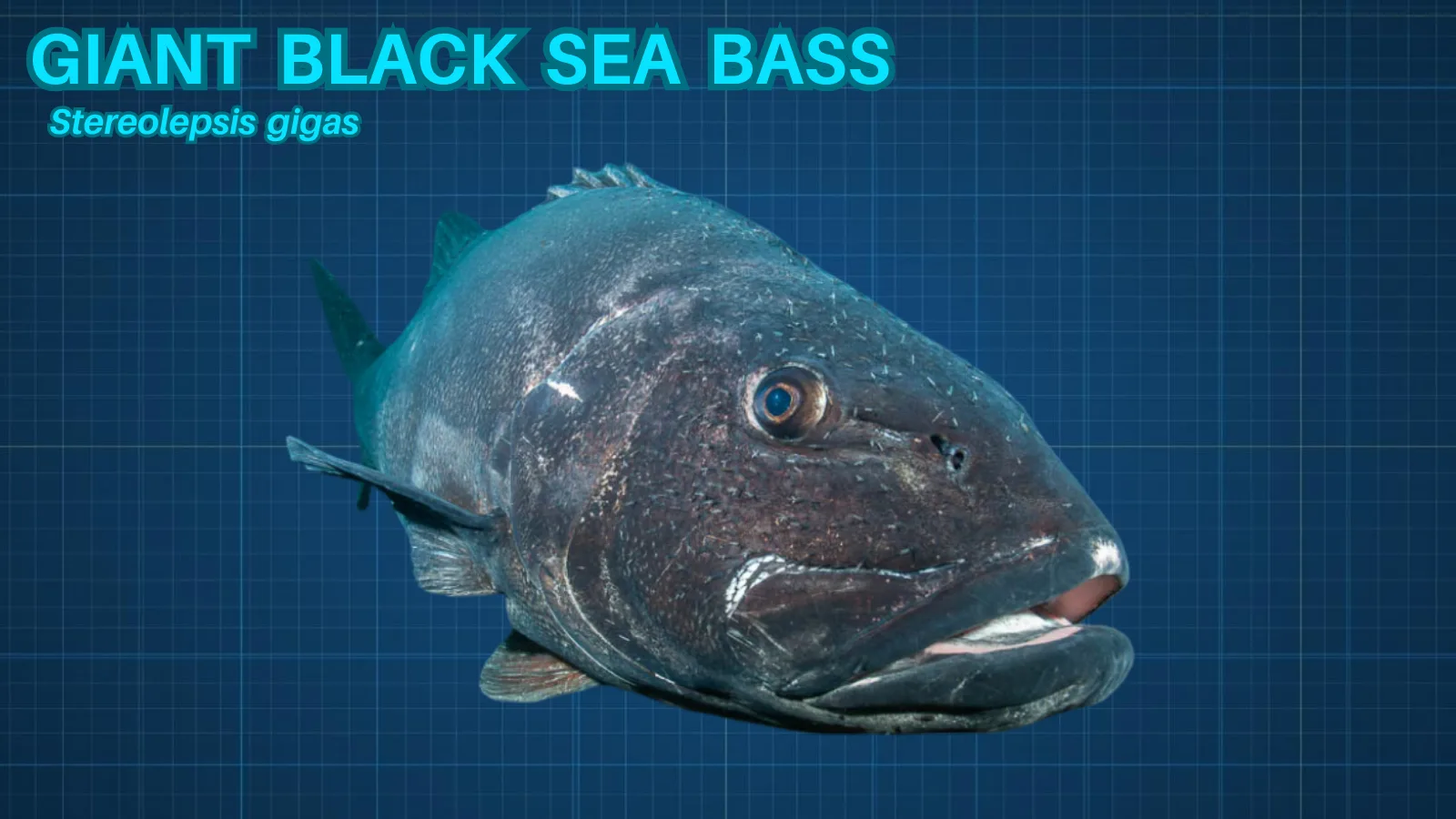
Also calledblack sea bass, ocean hippo, freight train


Taxonomy
Rarity
Abundance rates how many are in suitable habitat. Find difficulty rates how hard it is to locate one on a daylight snorkel or freedive through 50 ft. A higher find score means a harder search. The rarity category also reflects the kind of encounter; it is not an average of the 2 scores.
Seasonality
Location
The giant sea bass is the largest bony fish that lives on the California coast. Its range runs from Humboldt Bay in northern California to the southern tip of Baja California. It also lives in the northern half of the Gulf of California. The similar fish once reported off Japan is now recognized as a separate, closely related species, the striped giant sea bass. Spawning groups of both sexes form mostly south of Point Conception, Santa Barbara.
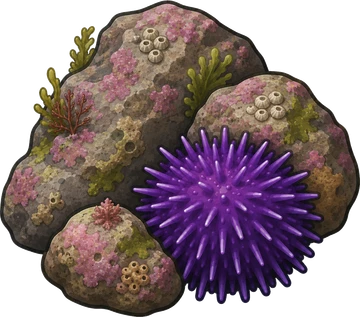
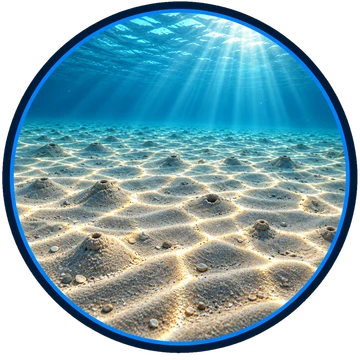
Adults spend most of their time in kelp forest biomes. They also stay on nearby rocky reef biomes, ledges, and drop-offs, from about 35 to 130 feet. They feed over open sand away from the reef as well. Larger fish tend to stay deeper than 100 feet. In winter, adults move into deeper water, where they are seen along drop-offs and the edges of submarine canyons. The brick-red young fish, marked with black spots, live somewhere different. They hover over the sandy bottom at the heads of submarine canyons, such as the La Jolla and Redondo canyons. This is the canyon biome, and most young giant sea bass are found within a third of a mile of a canyon head.
The species is far more mobile than its bulk suggests. Tracking with acoustic tags around the Channel Islands showed adults moving more than 50 miles between the islands and the mainland, with fish tagged at Anacapa Island later detected off Santa Rosa Island, Catalina Island, and Point Dume in Malibu in Malibu. Other tracking in a La Jolla kelp forest found the opposite: fish that stayed in small, well-defined areas and returned to the same spot year after year, including a single fish detected there for 4 years straight.
Deep Dive
The giant sea bass grows to more than 7 feet. It has been documented at over 70 years old. Its age is read from the growth rings in its ear bones, called otoliths. The largest one ever caught on rod and reel was a 563-pound fish landed off Anacapa Island in 1968, still the record. A 1910 account describes an 800-pound fish from the Gulf of California, but nothing that large has been confirmed since. Growth is slow at every stage: about 6 years to reach 30 pounds, 10 years to reach 100, and as many as 15 years to reach 150. A fish the size of a diver is decades old.
Every adult has a marking that turns out to be useful. The scattered dark spots on its sides form a pattern that is unique to each fish and stays the same throughout its adult life, the way a fingerprint does. Researchers at UC Santa Barbara built a conservation tool out of exactly that. Their Spotting Giant Sea Bass project gathered more than 1,600 photographs from over 420 divers and anglers. Software matched the spot patterns to re-identify individual fish, and those repeat sightings produced the 2025 population estimate. The animal once counted only in tons of dock landings is now counted a single fish at a time.
The spawning story is the reason the species was both easy to catch and slow to recover. From June through September, adults of both sexes gather in large groups. Giant sea bass have never been seen spawning in the wild, but they have spawned in captivity during those same months, and studies of their reproductive organs point to a July-through-September peak. Females can breed at around 50 to 60 pounds and 7 or 8 years old. A large female can release an estimated 60 million eggs. The fertilized eggs float to the surface and hatch in about 36 hours. The newly hatched young drift and feed on plankton for roughly a month before they settle to the bottom. The spawning groups themselves appear to be learned rather than instinctive. Biologists think young fish learn the location of a spawning site from older fish, so the same sites are used again across generations. When a local population is wiped out, its spawning site does not move somewhere else. It disappears. That single fact explains why heavy fishing on the spawning groups did such lasting damage, and why protecting the sites that remain matters more than any catch limit.
The giant sea bass is an ambush predator that eats almost anything it can catch on the reef and the surrounding sand. Studies of stomach contents have turned up anchovies, sardines, squid, white croaker, jack and Pacific mackerel, California sheephead, ocean whitefish, sand bass, Pacific bonito, midshipman fish, stingrays, small sharks, rock crabs and red crabs, spiny lobster, and mantis shrimp. Small fish start on anchovies and sardines and move up to larger prey as they grow. Despite that broad diet, the species is docile around divers, which is part of why the same individuals can be photographed at popular sites year after year.
The collapse and the slow return shape everything else about this fish. Commercial and recreational fleets on both sides of the border fished the spawning groups hard through the mid-20th century. Mexican landings peaked at more than 807,000 pounds in 1934. As the population thinned, fishers switched from hand lines to gill nets and pushed the fishery south. California's 1981 law banned recreational and commercial take, though gill and trammel net boats could still keep and sell 2 incidentally caught fish per trip. The 1994 gill-net closure removed most of the accidental catch, and marine protected areas since then have shielded some spawning sites. The signs of recovery have followed: more diver sightings, more fish caught for the same effort in monitoring surveys, and the estimate of 1,220 adults in Southern California. Recreational take is still banned in California, and any giant sea bass a diver meets is protected by law. The picture is not all grim, either. A Scripps analysis pointed out that about 73 percent of the species' range lies in Mexico, where the fish is more common and far less studied. It argued that the global endangered status, last set in 2004, is due for a fresh look, and may turn out to be less dire than Critically Endangered once the Mexican population is properly counted. For now, both things are true at once. The fish is legally protected and slowly rebounding in California, and it is still officially among the most endangered fish a diver can meet.
Where to Find Them
Researched habitat and range candidates
San Diego · 21 beaches
Orange County · 15 beaches
Catalina Island · 14 beaches
Los Angeles · 16 beaches
Channel Islands · 24 beaches
Ventura · 23 beaches
Santa Barbara · 13 beaches
San Luis Obispo · 26 beaches
Monterey · 18 beaches
These locations have suitable habitat within the species range. An assignment is a possible encounter, not a confirmed sighting at every beach. Season, depth, and local conditions still matter. Historical habitat without present-day evidence is excluded.