

Also calleddwarf surfperch



Taxonomy
Rarity
Abundance rates how many are in suitable habitat. Find difficulty rates how hard it is to locate one on a daylight snorkel or freedive through 50 ft. A higher find score means a harder search. The rarity category also reflects the kind of encounter; it is not an average of the 2 scores.
Seasonality
Location
Dwarf perch range from Bodega Bay down to central Baja California, and they never leave shallow water. The species belongs to the rocky reef biome and the seagrass biome, and the recorded depth range runs from the intertidal down to about 30 feet. That is the whole of it. There is no deep phase, no offshore population and no seasonal move into open water.
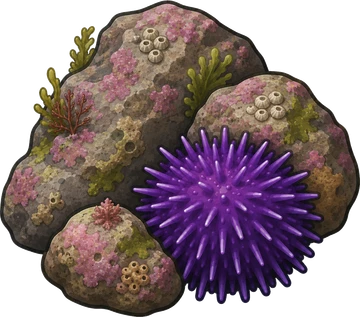
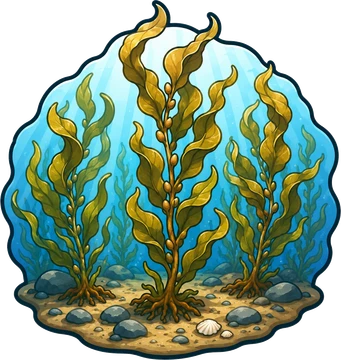
Where to look is unusually specific for a fish this widespread. Dwarf perch hold on the bottom in shallow eelgrass and surfgrass, in rocky tidepools, and around inshore reefs and jetties, and they are described as often among seaweeds. A snorkeler in 4 feet of water over a surfgrass shelf is in exactly the right place. A diver at 40 feet on a reef is not.
Temperature sets a limit on that address, and it is worth knowing on a warming coast. The species is reported to prefer water between 52 and 70 degrees Fahrenheit, and to leave for cooler, deeper water when temperatures pass about 74. A tidepool is the least thermally stable water on the coast, and a fish with that ceiling has to be willing to abandon one.
Identifying a dwarf perch means separating it from the reef perch, which is the only other member of its genus and lives on the same shallow rocky ground. Both are small, silvery and deep-bodied. A dwarf perch has a highly compressed oval body with disproportionately large scales, each scale edged in black, random blotches along the sides, faint stripes behind the pectoral fins, and a large black blotch at the base of the pectoral fin. There is a dark line just below the dorsal fin starting at the fourth spine, and the upper profile of the head is noticeably concave with large eyes above an oblique mouth. What a dwarf perch does not have is the yellow to yellow-orange stripe that runs along the side of a reef perch.
The diet does something unusual over the life of the fish. Juveniles eat small crustaceans, amphipods, marine worms and mollusks, which is ordinary carnivore fare. As they mature the diet shifts to partly plant-based and then to genuinely omnivorous, taking algae alongside the animals. Most fish do not change what they are that way.
Deep Dive
Everything strange about this species comes down to what it costs to be a male dwarf perch.
Male dwarf perch are born sexually mature. They emerge from the female already able to reproduce, which is a condition shared by only 1 or 2 fish anywhere in the world, and the shiner perch in this same Ichthyopedia is the other California example of the pattern. That is where the resemblance ends, because in this species the consequences are extreme.
Males are roughly half the length of females at maturity. They grow more slowly. And they live about a year, against 2 or 3 for a female. Females significantly outnumber males in the population at every stage except birth, and the only explanation that fits is that males die off soon after they are born. Read that alongside being born ready to breed and the design becomes clear. A male dwarf perch is not built to grow, compete for territory or accumulate size. It is built to be born, mate, and be finished. The entire male life history has been compressed into the first year.
There is a further oddity reported for the species, and it is the sort of detail that ought to be better known. Male dwarf perch are said to have more anal fin rays than females, which would make them unique among all spiny-rayed fishes. Anal fin structure in this family is not decorative; the male anal fin is the organ that delivers sperm, and in the shiner perch a breeding male grows fleshy lobes on either side of it. A count that differs between the sexes points at the same kind of specialization. This claim rests on a single reference and is repeated here as reported rather than as established, which is the honest way to carry it until a primary source turns up.
The reproduction itself is the family's, with the family's usual surprise. Surfperch do not lay eggs. Fertilization is internal, the young develop inside the female, and what is born is a small complete fish that swims immediately. Dwarf perch mate in summer, carry the young for about 6 months, and give birth in spring and summer. A brood runs from 2 to 25 by the state's count, with a higher figure of up to 50 published elsewhere.
The number worth pausing on is the size at birth. Newborn dwarf perch measure roughly 1 to 1.4 inches. Against an adult that reaches 6 and a quarter inches at the absolute maximum and is usually nearer 4, that means a dwarf perch is born at something like a quarter of its final length. Set that against a fish that broadcasts millions of microscopic eggs and the difference in strategy is complete. A dwarf perch female spends 6 months producing a handful of animals that are already a quarter grown, already able to swim and feed, and in the case of the males, already able to reproduce. Nothing about it is left to chance except the part that matters, which is whether the shallow rocky shelf they are born onto is still there next year.
Where to Find Them
Researched habitat and range candidates
San Diego · 15 beaches
Orange County · 10 beaches
Catalina Island · 13 beaches
Los Angeles · 11 beaches
Channel Islands · 24 beaches
Ventura · 18 beaches
Santa Barbara · 12 beaches
San Luis Obispo · 24 beaches
Monterey · 18 beaches
These locations have suitable habitat within the species range. An assignment is a possible encounter, not a confirmed sighting at every beach. Season, depth, and local conditions still matter. Historical habitat without present-day evidence is excluded.