

Also calledred snapper

Taxonomy
Rarity
Abundance rates how many are in suitable habitat. Find difficulty rates how hard it is to locate one on a daylight snorkel or freedive through 50 ft. A higher find score means a harder search. The rarity category also reflects the kind of encounter; it is not an average of the 2 scores.
Depth and encounter availability
0–50 ft overlaps juvenile edge; 50–100 ft may improve prospects but is still far shallower than common adult depths. [yelloweye] This Rare rating reflects limited availability within snorkeling and freediving depths through 50 ft. It is not a claim that the species is equally scarce in its normal deeper habitat. Shallow life-stage exceptions are described above.
Seasonality
Location
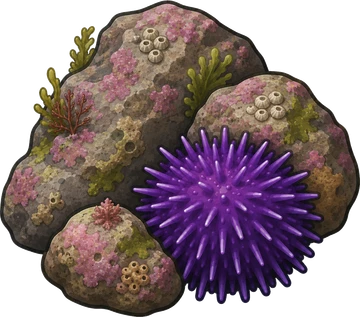
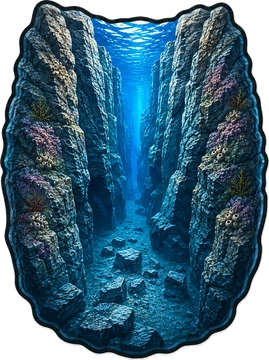
Yelloweye rockfish live from Umnak Island in the Aleutians south to northern Baja California, on steep, complicated rock. They want caves, ledges, boulder fields, and vertical walls, including walls covered in glass and cloud sponges, which are deep-water sponges that build fragile silica skeletons. Adults hold between 300 and 600 feet. The species has been recorded as deep as 1,800 feet and as shallow as 48 feet, and juveniles sit shallower than adults, but the shallow end of that range is the exception rather than where the fish lives.
That single fact governs everything a California diver's relationship with this species amounts to. Recreational diving does not reach 300 feet. A diver in California kelp is roughly 250 feet above the habitat where adult yelloweye rockfish spend their lives, so this is a fish most divers will only ever see in a photograph, in an aquarium, or coming over the rail of a boat. It is worth knowing anyway, because knowing what it looks like is what keeps one off a spear.
Adults are orange-yellow to orange-red, heavy-bodied, with a pale line running down the lateral line, the row of sensory pores along the side that senses water movement, and black tips on the fins. The eye is bright yellow, which is where the name comes from, and large fish carry a rough ridge along the top of the head. Juveniles look like a different species: darker red-orange, with 2 white stripes down the side, one on the lateral line and a shorter one below it, sometimes with a white bar at the base of the tail.
Individual fish stay in one place for extraordinary lengths of time. Adults hold small home ranges, and some are thought to spend their entire adult life on a single rock pile. When that life can run past a century, a rock pile fished hard for one season does not repopulate for decades.
Deep Dive
The yelloweye rockfish was described in 1895 by Frank Cramer. It reaches about 3.5 feet and 40 pounds, which makes it one of the largest rockfish on the Pacific coast, though 36 inches is the more common regional maximum. Age is what sets the species apart. One documented specimen was aged at 121 years, and published maximum ages run from 118 years to as much as 150. A large yelloweye rockfish on a British Columbia wall may have been alive before the first outboard motor.
Everything about the fish's biology is slow. Males in Southeast Alaska mature around 18 years old and females around 22, and a British Columbia study found only half the population mature between ages 19 and 22. Reproduction, once it starts, is live-bearing. Fertilization is internal, the female carries the developing young, and she releases live larvae between February and September. A single female can produce as many as 2,700,000 eggs, which sounds like resilience and is not, because almost none of those larvae survive and the fish that produced them took 2 decades to reach that point. Recruitment across the rockfish family depends on water temperature, food supply, and the strength of upwelling, so good years are irregular.
Diet changes completely with age. Larvae eat algae, single-celled organisms, and tiny crustaceans. Adults hunt other fish: other rockfish, sand lance, which are slender schooling fish that burrow into sand, herring, and flatfishes, along with crabs, marine snails, and other crustaceans. Documented predators of the yelloweye rockfish itself are limited in the literature to other fishes, which is what happens with a heavy-bodied, spiny, deep-water animal that few things can swallow.
The last piece of the story is why catch-and-release did not save this fish on its own. Yelloweye rockfish cannot vent their swim bladder, the gas-filled organ that controls buoyancy. Brought up from 400 feet, the gas inside expands and the fish arrives at the surface with bulging eyes and its stomach pushed out through its mouth, and simply throwing it back does not work. The fix is a descending device, a weighted release that carries the fish back down to depth so the gas recompresses. California now requires anyone taking groundfish from a boat to carry one, and NOAA research found that the devices are largely effective at returning rockfish toward the depth they came from. When a yelloweye rockfish comes up by accident, the state's guidance is to send it back down immediately and then move somewhere else, so the next drop does not bring up another one.
Where to Find Them
Researched habitat and range candidates
San Diego · 13 beaches
Orange County · 10 beaches
Catalina Island · 14 beaches
Los Angeles · 10 beaches
Channel Islands · 24 beaches
Ventura · 15 beaches
Santa Barbara · 10 beaches
San Luis Obispo · 25 beaches
Monterey · 17 beaches
Oregon South Coast · 15 beaches
Oregon Central Coast · 8 beaches
Oregon North Coast · 8 beaches
South Sound · 12 beaches
Hood Canal · 10 beaches
Central Sound · 13 beaches
North Sound · 8 beaches
San Juan Islands · 8 beaches
Strait of Juan de Fuca · 5 beaches
Cape Flattery · 4 beaches
These locations have suitable habitat within the species range. An assignment is a possible encounter, not a confirmed sighting at every beach. Season, depth, and local conditions still matter. Historical habitat without present-day evidence is excluded.