
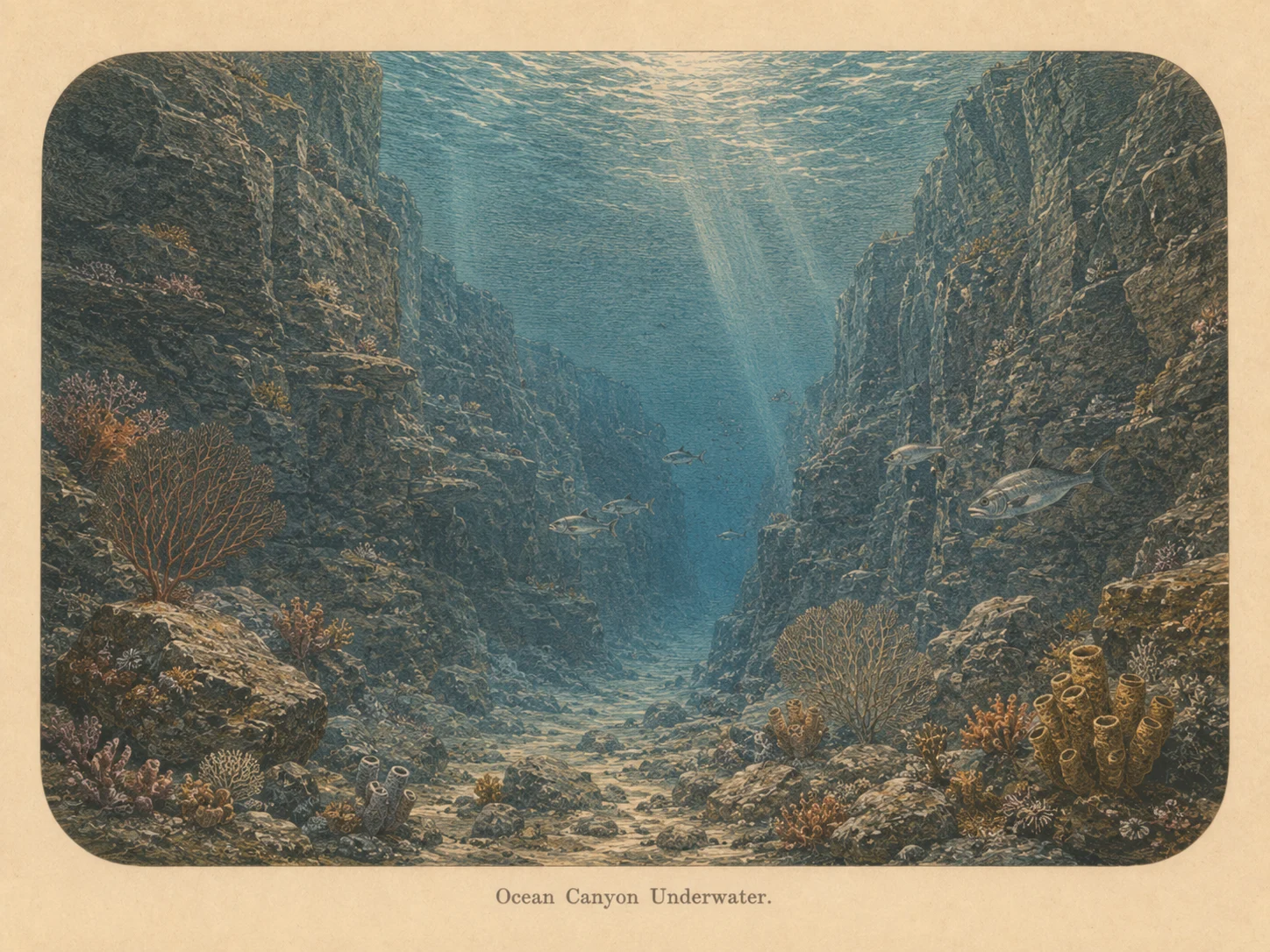
 Canyon
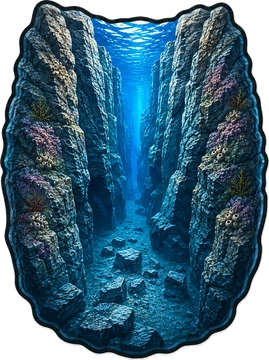 Canyon
Canyon
Sharp vertical structure with a real depth change, including walls and drop-offs.
About
The Canyon biome is the world of steep, deep underwater terrain: the submarine canyons, walls, and sheer drop-offs where the seafloor falls away into cold, dark water. What sets it apart is its steepness and depth. Most of the coastal seabed slopes gently, but here the bottom plunges hundreds or even thousands of feet, sometimes within sight of shore. The clearest West Coast example is the La Jolla Canyon off San Diego, where a deep-sea canyon begins just a short swim from the beach. Rock that rises the other way, from spires on the shelf to the tops of offshore seamounts, belongs to the pinnacles biome instead.
Canyons, walls, and drop-offs
A submarine canyon is a steep-walled valley cut into the continental shelf, the shallow seabed that rims the coast, and the deeper slope beyond it. The biome also covers the walls and drop-offs that fall away from a reef edge or a shelf break without forming a full canyon. What every version has in common is a face that drops, rather than a structure that stands up out of the bottom.
The West Coast has dramatic examples. The head of the La Jolla and Scripps canyon system reaches within about 100 yards of the beach at La Jolla Shores. The rim there sits in water only 40 feet (12 meters) deep, and from that lip the walls drop past 600 feet and run seaward to roughly 1,600 feet. Farther north, the Monterey Canyon is deeper than the Grand Canyon and similar to it in overall scale. It plunges to about 3,600 meters (11,800 feet) and runs 153 kilometers (95 miles) out to the deep seafloor.
What makes it productive
This steep terrain is rich for 2 reasons. The first is upwelling, the rising of cold, nutrient-rich water from the deep toward the surface. Canyon walls force deep currents upward against their steep sides. That nutrient-rich water then feeds blooms of plankton, the drifting plants and animals at the base of the food web. The second reason is the depth itself. Organic matter sinking from the sunlit surface, known as marine snow, drifts down and settles on the walls and floor, feeding animals far below the reach of light. In the La Jolla Canyon, detritus (the fragments of dead kelp and surfgrass) washes in from nearby reefs and piles up in the canyon head. These mats support one of the densest communities of small animals ever measured, according to research by Vetter and Dayton at the Scripps Institution of Oceanography.
What lives there
The biome supports 2 very different communities. Near the canyon heads and along the drop-offs, moving water and abundant food draw dense aggregations of fish and larger animals. Off La Jolla, opalescent squid (Doryteuthis opalescens), also called market squid, gather to mate and lay their eggs on the sandy canyon floor. The squid runs pull in leopard sharks (Triakis semifasciata), stingrays, and guitarfish. These predators crowd the canyon at certain times of year. Steep structure like this also concentrates open-water gamefish, because currents sweeping up a wall deliver food to a fixed spot.
The second community lives deep, on the hard, steep surfaces below the reach of light. There, slow-growing deep-sea corals and sponges anchor to the rock and filter food from the passing current. The Monterey Canyon holds more than 400 species of fish and invertebrates, from giant Pacific octopus to deep-sea anglerfish. Dense swarms of krill in the canyon also draw feeding whales, according to research on the canyon.
Why the biome matters
Steep, deep terrain concentrates life out of proportion to the space it takes up. By driving upwelling, canyons fertilize the water above them and feed the plankton that supports fish, seabirds, and whales across a much wider area. Their walls and floors also gather food, which makes them rich feeding and spawning grounds. The squid run that draws sharks and rays to La Jolla each year is one example. The quiet deep corners of a canyon serve as refuges as well, sheltering slow-growing corals that can seed the recovery of damaged areas elsewhere, according to research on canyon ecosystems. For divers and spearfishers, these drop-offs are among the most reliable places on the coast to find big fish, for the same reason the whales come. The structure gathers food.
Where the biome occurs
Steep underwater terrain forms along the edges of continents wherever the margin is cut or the shelf breaks away, so it occurs worldwide. Along the West Coast, submarine canyons cut into the margin from north to south, including the La Jolla and Scripps canyons off San Diego, the Redondo Canyon off Los Angeles, and the Monterey Canyon in central California. Shorter walls and drop-offs edge the reefs and shelves in between, on a scale a diver can work in a single dive. What links all of them is a steep face dropping into cold, deep water, and the concentration of life that face creates.
Threats and conservation
The deep parts of this biome are fragile because they change so slowly. Bottom trawling, a fishing method that drags heavy gear across the seafloor, can flatten deep-sea coral and sponge communities that took centuries to grow, and the damage can last lifetimes. Deep-sea mining and the loss of oxygen from warming water threaten deep-canyon life as well. Closer to shore, heavy fishing pressure on the squid runs and the gamefish that gather at drop-offs can thin those aggregations. Some of the most important sites are now protected, and the head of the La Jolla Canyon lies within a marine protected area off La Jolla Shores.
How divers and spearfishers can help
The rules that protect these places are worth knowing and following. Much of the La Jolla Canyon head sits inside a no-take marine protected area, an ocean zone where fishing and collecting are banned, so the marine life there is left undisturbed. Elsewhere, respecting catch limits on market squid and on the gamefish that gather at drop-offs keeps those aggregations from being overdrawn. Divers can also avoid contact with the corals and sponges on deep walls and ledges, since a colony knocked loose may have been growing for a century or more.
Marine Life
Listed here are many of the aquatic species that you can find in this biome.
 Spearfishing
Locations with canyon habitat
Every tracked location whose detail page carries the canyon tag.