
Photo: Matt Wilbur, La Jolla Shores
Taxonomy
Rarity
Abundance rates how many are in suitable habitat. Find difficulty rates how hard it is to locate one on a daylight snorkel or freedive through 50 ft. A higher find score means a harder search. The rarity category also reflects the kind of encounter; it is not an average of the 2 scores.
Seasonality
Location
The painted greenling lives on the Pacific coast of North America from Kodiak Island in Alaska to Point San Carlos in central Baja California. FishBase places it on rocky bottoms from the intertidal zone, the band of shore between the tides, to about 160 feet. Mexican Fish lists a far deeper maximum of 740 feet, a number the other sources read do not support.
Deep Dive
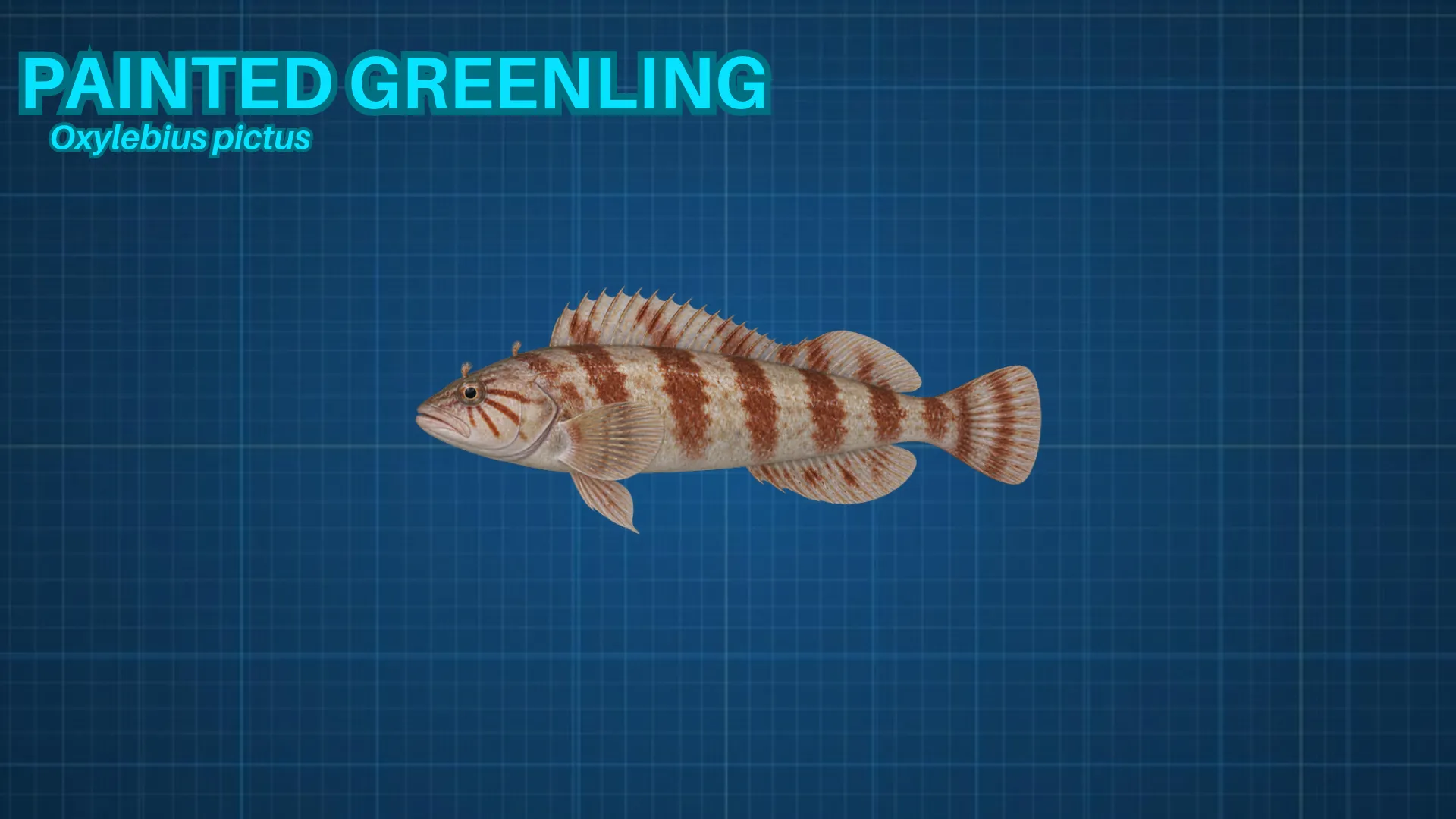
This is the only species in its genus, the group of closest relatives. It grows to about 10 inches. The body is crossed by 5 to 7 broad red or reddish brown bars. Each eye has 3 dark bars radiating from it, 1 forward and 2 back. Breeding males lose the body bars, and a few fish are dark all over with white spots.
FishBase records a maximum age of 8 years.
Painted greenlings live alone or in pairs and feed on crustaceans such as shrimp and crabs, marine worms, small mollusks such as snails, and bryozoans, which are tiny colonial animals that form crusts and tufts. The fish guard their cluster of orange eggs, and sources report they will confront a diver who comes too close.
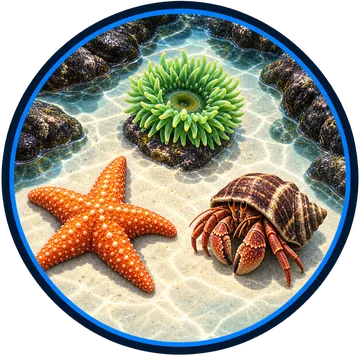
Their strangest habit involves sea anemones. FishBase says the fish sleep on the oral disc, the central surface of a large anemone, leaving by day and returning every night. Some fish, mainly juveniles, shelter among the tentacles of the white-spotted anemone and the fish-eating anemone.
Despite the name, the painted greenling is not among the greenlings in California's rockfish rules. Those rules cover only the kelp and rock greenlings.
Where to Find Them
Researched habitat and range candidates
San Diego · 13 beaches
Orange County · 10 beaches
Catalina Island · 13 beaches
Los Angeles · 10 beaches
Channel Islands · 24 beaches
Ventura · 15 beaches
Santa Barbara · 10 beaches
San Luis Obispo · 22 beaches
Monterey · 17 beaches
Oregon South Coast · 15 beaches
Oregon Central Coast · 8 beaches
Oregon North Coast · 8 beaches
South Sound · 12 beaches
Hood Canal · 9 beaches
Central Sound · 13 beaches
North Sound · 8 beaches
San Juan Islands · 8 beaches
Strait of Juan de Fuca · 5 beaches
Cape Flattery · 4 beaches
These locations have suitable habitat within the species range. An assignment is a possible encounter, not a confirmed sighting at every beach. Season, depth, and local conditions still matter. Historical habitat without present-day evidence is excluded.