

Also calledbullhead, marbled sculpin, giant marbled sculpin, scaleless sculpin, bull cod
 Spearfishing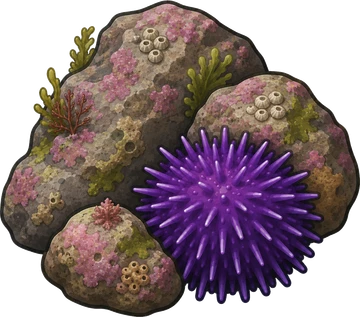

Spearfishing Stats
Central/northern California and Pacific Northwest rocky shallows
Taxonomy
Rarity
Abundance rates how many are in suitable habitat. Find difficulty rates how hard it is to locate one on a daylight snorkel or freedive through 50 ft. A higher find score means a harder search. The rarity category also reflects the kind of encounter; it is not an average of the 2 scores.
Regulations
CDFW rules verified 2026-08-15
Seasonality
Edibility
Dense, firm meat with excellent structure that does not fall apart; raw fillets are often blue or blue-green and cook up white.
Location
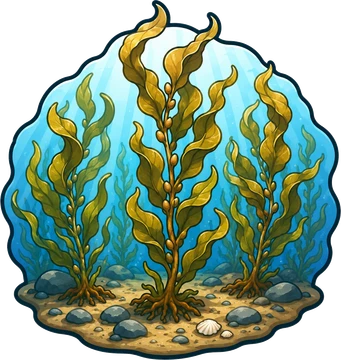
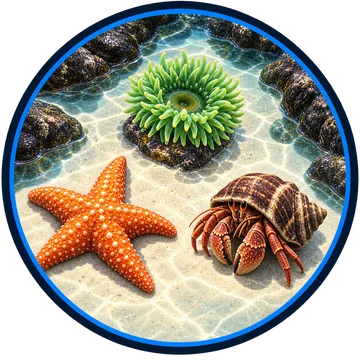
Cabezon live along the northeastern Pacific coast from Sitka, in southeastern Alaska, south to Punta Abreojos in central Baja California. They are a bottom fish. They hold on rocky reef biomes, in kelp forest biomes, and on the edges of sand and mud, from the intertidal zone down to about 656 feet, though most divers meet them shallower than 90 feet. Adults settle on a home reef and stay put. They ambush what passes: crabs, shrimp, and other crustaceans, small fish, and mollusks, including octopus and shelled prey they can crush. Diet shifts seasonally, with more mollusks and fish in the diet through winter and spring. Larvae drift as plankton, then settle into tide pools as small silvery fish and move to deeper reef as they grow.
From October through March, with a peak in January, adult cabezon spawn on shallow rocky ledges. A male holds a nest site on the rock, more than one female may lay a sticky egg mass in it, and the male stays on the nest until the eggs hatch, fanning the mass with his pectoral fins and driving off anything that comes near. Depending on water temperature the eggs incubate 25 to 49 days. The guarding male will not leave the nest even when threatened, and California Department of Fish and Wildlife notes that this makes nest-guarding males especially easy to spear. Most California divers avoid targeting nesting males for that reason.
Spearfishing Brief
For cabezon, the whole difficulty of the hunt is in the search rather than the shot. Once a diver spots one, the shot is easy: the fish is only mildly wary, holds its position on the rock, and lets a diver close inside a rod's length. That combination sets the find rating at a 4 and the shot rating at a 1, and the overall difficulty at 4.
The search itself is what takes practice. A cabezon in place looks like the rock it is sitting on. Its skin carries whatever brown, green, or red mottling matches the reef, and the fish sits still on its pectoral fins with almost no movement. A diver who scans by color will swim over dozens of them and see none. The pattern that works is a slow, deliberate search of the bottom, drifting a few feet up, watching for the shape rather than the color: the oversized, broad head, the wide-set eyes at the top of the head, and the pale outline where the head meets the reef. Small ledges, undercuts, and the mouths of crevices are the places to slow down. Cabezon like structure they can wedge into if something goes wrong. That is also what a hit fish will try to do; a shaft that does not immediately pin the fish against the rock often ends with the cabezon locked into a hole and hard to extract.
The weapon for cabezon is a short one. Because the shot is a close one and the fish is not fast, a long-range gun is more gun than the target needs and gets in the way in tight rocky terrain. Divers who target cabezon deliberately choose a 75 to 90 centimeter speargun with a single band, or a polespear, and place the shot behind the head or through the shoulder before the fish can wedge. Cabezon lack scales, so a normal shaft punches through cleanly. A dive knife matters more than gun size: extracting a shot fish from a crack is part of the routine. From 1958 through 2003, cabezon were the eighth most-landed of 52 species at the Central California Council of Diving Clubs freediving spearfish meets, with about 3,000 fish taken across roughly 150 meets. That is the volume record of a common, gettable species that rewards divers who slow down and read the rock.
Deep Dive
Cabezon is Spanish for "large head," and the word matches the fish. The head takes up about a third of the body and carries the wide-set eyes, tabs of skin above them, and a broad mouth full of teeth built for crushing shellfish. The rest of the body is muscled and tapers to a wide tail. The skin has no scales at all, which is unusual for a bony fish this size. Its family name, longfin sculpins, comes from a smaller relative, the longfin sculpin, which is named for its long anal fin rather than for anything on the cabezon. The cabezon's own first dorsal fin is tall and spiny and runs down the back. The species belongs to a different family than the true lingcod, though the two are often compared for their meat and their similar habits on the reef.
Cabezon grow to about 3 feet 3 inches and 31 pounds at the outside, though a fish of half that size is a large one. Females grow larger and live longer than males, up to about 13 years compared to 9 for males. They reach sexual maturity in their second or third year; in central California males are all mature by year 4 at around 17 inches. That is a slow-growing, long-lived reef fish, and it responds poorly to heavy harvest of the spawning stock. The removal of the 15-inch minimum size in 2025 shifted management toward the combined RCG bag limit as the main tool for keeping take within safe levels.
Two features get repeated attention in the literature. The first is the blue flesh. Raw cabezon fillets are often blue or blue-green, sometimes strikingly so. The color comes from biliverdin, a bile pigment that ends up in the blood and muscle of the fish. It is harmless. Nobody knows for certain where the biliverdin comes from, but the leading guess is diet, since some of the invertebrates cabezon eat store bile pigments picked up from algae. The color cooks out to pure white, and the meat itself is firm, sweet, and often compared to lobster or lingcod. It is one of the better-eating fish on the Pacific coast, which is a large part of why divers target them.
The second is the eggs. Cabezon roe is toxic to humans and to many other mammals and birds. A 1970 study documented the toxic effects of the eggs, and in 1976 the toxin was identified as a phospholipid called dinogunellin. Eating even a small amount causes vomiting, diarrhea, chills, and fever within a day. Cooking does not make the roe safe: California Department of Fish and Wildlife states that cabezon eggs are toxic no matter how much they are cooked, so the eggs are discarded whole. The rest of the fish is safe and prized. The combination of a defended nest, a common egg-guarding male, and a toxic egg mass is probably not a coincidence: the eggs advertise the mother and the guarding father to any predator that finds the nest, and the toxin cuts down on the ones that eat.
Cabezon are ambush predators near the top of the small-reef food web. They take crabs, shrimp, small octopus, other small mollusks, small fish, and even other fish's eggs. Their part of the reef community is the wall of teeth waiting in a crevice. What eats a cabezon in return is less well documented; larger fish, harbor seals and sea lions, and diving cormorants and pelicans are the likely candidates, but the sources thin out fast. A cabezon that reaches full size on its home reef has probably outlived most of the things that could take it.
Cabezon are also a popular rod-and-reel fish along the whole California coast, especially from jetties, piers, and rocky shorelines, and they hit cut squid, crab, and other bait fished on the bottom. Spear divers and hook-and-line anglers share the same RCG Complex bag limit, though divers and shore-based anglers are exempt from the seasons and depth limits that bind boat-based anglers. A spear diver picks a specific fish and shoots it; a rod-and-reel angler takes whichever cabezon commits to the bait. On the plate, the two catches produce the same excellent white meat, and that is a large part of why the fish is targeted at all.
Where to Find Them
Researched habitat and range candidates
San Diego · 13 beaches
Orange County · 10 beaches
Catalina Island · 14 beaches
Los Angeles · 10 beaches
Channel Islands · 24 beaches
Ventura · 15 beaches
Santa Barbara · 10 beaches
San Luis Obispo · 25 beaches
Monterey · 17 beaches
Oregon South Coast · 15 beaches
Oregon Central Coast · 8 beaches
Oregon North Coast · 8 beaches
South Sound · 12 beaches
Hood Canal · 10 beaches
Central Sound · 13 beaches
North Sound · 8 beaches
San Juan Islands · 8 beaches
Strait of Juan de Fuca · 5 beaches
Cape Flattery · 4 beaches
These locations have suitable habitat within the species range. An assignment is a possible encounter, not a confirmed sighting at every beach. Season, depth, and local conditions still matter. Historical habitat without present-day evidence is excluded.