

Also calledblue bass, blue perch, priestfish
 Spearfishing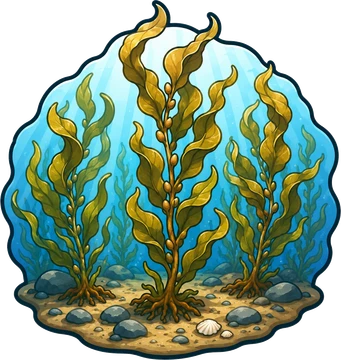

Spearfishing Stats
Central California rocky reefs and kelp, especially Carmel Bay
Taxonomy
Rarity
Abundance rates how many are in suitable habitat. Find difficulty rates how hard it is to locate one on a daylight snorkel or freedive through 50 ft. A higher find score means a harder search. The rarity category also reflects the kind of encounter; it is not an average of the 2 scores.
Regulations
CDFW rules verified 2026-08-27
Seasonality
Edibility
An easy fillet, but the flesh is soft and turns strong-flavored faster after capture than other rockfish. How mushy it ends up is mostly a handling question. Bleed and ice it the moment it comes up.
Greyer, softer, and thinner than the other rockfish, and the most prone to mush of the group.
Location
Blue rockfish live from Newport, Oregon south to Punta Santo Tomas in northern Baja California, in kelp forest, rocky bays, and sandy bays. They are absent from the intertidal zone, the band of shore that the tide uncovers. The species has been recorded from the surface down to about 1,800 feet, but almost the entire population lives between the surface and 295 feet, and adults hold most often between 16 and 82 feet. What sets them apart from the other rockfish on the same reef is where in the water they sit. Most rockfish are bottom fish. Blue rockfish hang in open water above the rock, in schools, sometimes mixed with other species. A diver looking only at the reef floor will swim under them.
That range statement is newer than it looks. Until 2015 every blue rockfish from Baja California to British Columbia was counted as a single species. A study published that year split off a second species, the deacon rockfish, and redescribed the blue rockfish at the same time. Their ranges overlap from northern California to central Oregon. South of Monterey Bay, California, nearly every fish is a blue rockfish; the deacon share climbs going north.
Individual fish stay put. Researchers in Carmel Bay, California implanted acoustic transmitters, small sound-emitting tags that fixed receivers can log, into 21 adult blue rockfish and tracked them for 15 months. Of the 20 fish that reported back, 13 were present in the study area for more than 364 of the 445 days available. Average home range came out at about 57 acres. The fish averaged 29 feet of depth over the year, sat shallower by day than by night, and dropped deeper during upwelling, the seasonal push of cold water from below toward the surface, and when the waves built. A total of 6 fish did leave after 4 to 8 months, most of them during the spring upwelling season, and 2 shifted their home ground by as much as 1.9 miles. So the fish is resident, though not permanently fixed to one patch of reef.
Spearfishing Brief
The blue rockfish is one of the easiest fish in California kelp to get a shot at, and the reason is the school's response to stillness. Community accounts converge on the same approach: descend without thrashing, let the reef settle, then hang motionless in the water column and let the fish drift back in. Divers who chase a school through the kelp watch it move off ahead of them. Divers who stop moving usually get the fish inside a few feet. The telemetry work supports what those accounts describe, because these are resident fish holding over a small patch of reef, not travelers passing through, and they do not treat a still shape in the water as a reason to abandon home.
Finding them is not the challenge. Blue rockfish are slate blue, they school, and they sit in open water above the rock where the light is good. Northern California divers report them as the most common fish they see, spread through kelp patches and over structure. The mistake that costs a diver fish is searching at the bottom. In central and southern California kelp the schools are usually somewhere between 16 and 82 feet, well off the reef, and often shallower in the middle of the day.
Shot placement matters more here than approach does. A spine or head shot keeps the fish from rocking up into the reef, where a wounded rockfish can wedge itself out of reach. Because blue rockfish are suspended in open water instead of tucked under a ledge, the angle is usually clean and there is no crevice nearby for the fish to reach. A speargun in the 80 to 90 centimeter range is the right tool, because the job is picking one fish out of a school suspended in the kelp columns rather than closing on a single target. That is more than enough gun for a fish that tops out around 24 inches and 8.4 pounds. A longer open-water gun is slow to swing between kelp blades.
Divers are a small part of the pressure on this species. Blue rockfish have been a mainstay of the California hook-and-line fishery for more than a century, taken from charter boats, skiffs, and piers, and the current bag limits are written against that fishery rather than against spearfishing.
Deep Dive
Blue rockfish belong to a Pacific group of live-bearing fish that runs to more than 60 species along the west coast of North America. This one was described in 1881 by David Starr Jordan and Charles Henry Gilbert. Maximum length is about 24 inches and maximum published weight 8.4 pounds, though a fish that size is exceptional. Most of what a diver sees is far smaller. Growth is fast early and then slows sharply: a fish is about 4.5 inches at 1 year and 6 inches at 2. Females mature at about 9 inches and 5 years, and males later. After that the species simply keeps going. Males have been aged to 44 years and females to 41, which makes a mature blue rockfish older than most of the divers swimming past it.
The mouth explains the diet. Blue rockfish have a small mouth and long gill rakers, the comb-like projections inside the gill arches that strain small food out of the water, and that combination makes them effective predators on plankton. They eat krill, jellyfish, salps and other drifting tunicates, small crustaceans, marine snails, algae, squid, and small fishes. Juveniles start on copepods and barnacle larvae, both tiny drifting crustaceans. Feeding is not a delicate business. A school hunting together will churn the surface, circling the prey and taking what gets caught in the middle. Documented predators on adults include other rockfish, lingcod, sharks, dolphins, seals, and sea lions. Juveniles are eaten by lingcod, cabezon, salmon, seabirds, porpoises, and by other rockfish.
Reproduction follows the pattern shared across the family. Fertilization happens inside the female, and she carries the developing young rather than laying eggs. Mating takes place in October. Embryos begin developing in December, and the female releases live larvae in winter. The larvae drift as plankton for several weeks before settling, and the young fish show up in the kelp canopy in April and May at just over an inch long. From there they work their way down toward the reef the adults hold over.
The species carries an unusual number of names for a single fish. Blue bass, blue perch, reef perch, nervi, and priestfish all refer to it, and Portuguese fishermen in Monterey, California were calling it by a name meaning priest fish in the late 1800s. When a second species was split out of it in 2015, that one was named the deacon rockfish. The 2 are told apart by jaw structure and by the fine speckling that the deacon carries down its body, which the blue rockfish does not.
On the plate the blue rockfish sits at the lower end of the rockfish range. The published accounts agree on 2 things: the texture is soft, and the flesh turns strong-flavored faster after capture than other rockfish do. Divers who eat a lot of them add that the meat runs greyer than the bright white of the bottom-dwelling rockfish and tends toward mushy. Those 2 descriptions fit together, because soft rockfish flesh going mushy is largely a handling problem rather than a fixed trait of the species. A blue rockfish that sits warm in a catch bag is a worse fish than one that is bled and iced right away. It is a good fish under heavy seasoning, in tacos in particular, and it is not a sashimi fish. Pan-frying, grilling, fish and chips, and chowder all work. California law requires the skin to be left attached to any rockfish fillet at sea so the species can still be identified.
Where to Find Them
Researched habitat and range candidates
San Diego · 13 beaches
Orange County · 10 beaches
Catalina Island · 14 beaches
Los Angeles · 10 beaches
Channel Islands · 24 beaches
Ventura · 15 beaches
Santa Barbara · 10 beaches
San Luis Obispo · 25 beaches
Monterey · 17 beaches
Oregon South Coast · 15 beaches
Oregon Central Coast · 8 beaches
Oregon North Coast · 8 beaches
South Sound · 12 beaches
Hood Canal · 10 beaches
Central Sound · 13 beaches
North Sound · 8 beaches
San Juan Islands · 8 beaches
Strait of Juan de Fuca · 5 beaches
Cape Flattery · 4 beaches
These locations have suitable habitat within the species range. An assignment is a possible encounter, not a confirmed sighting at every beach. Season, depth, and local conditions still matter. Historical habitat without present-day evidence is excluded.