
Photos: Matt Wilbur, La Jolla Shores
Taxonomy
Rarity
Abundance rates how many are in suitable habitat. Find difficulty rates how hard it is to locate one on a daylight snorkel or freedive through 50 ft. A higher find score means a harder search. The rarity category also reflects the kind of encounter; it is not an average of the 2 scores.
Seasonality
Location
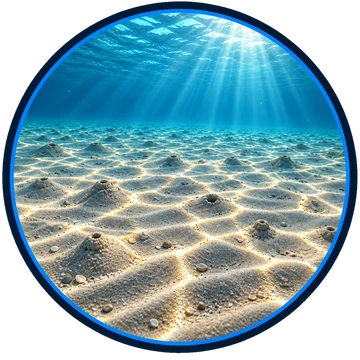
The roughback sculpin ranges from Wark Channel in northern British Columbia to Bahia Santa Maria in southern Baja California, Mexico, and FishBase notes it probably reaches southeastern Alaska as well. FishBase describes it as common on sand and also found on mud. Mexican Fish adds gravel, small rocks and bedrock. It lives from the intertidal zone, the band of shore between high and low tide, to about 470 feet.
Deep Dive
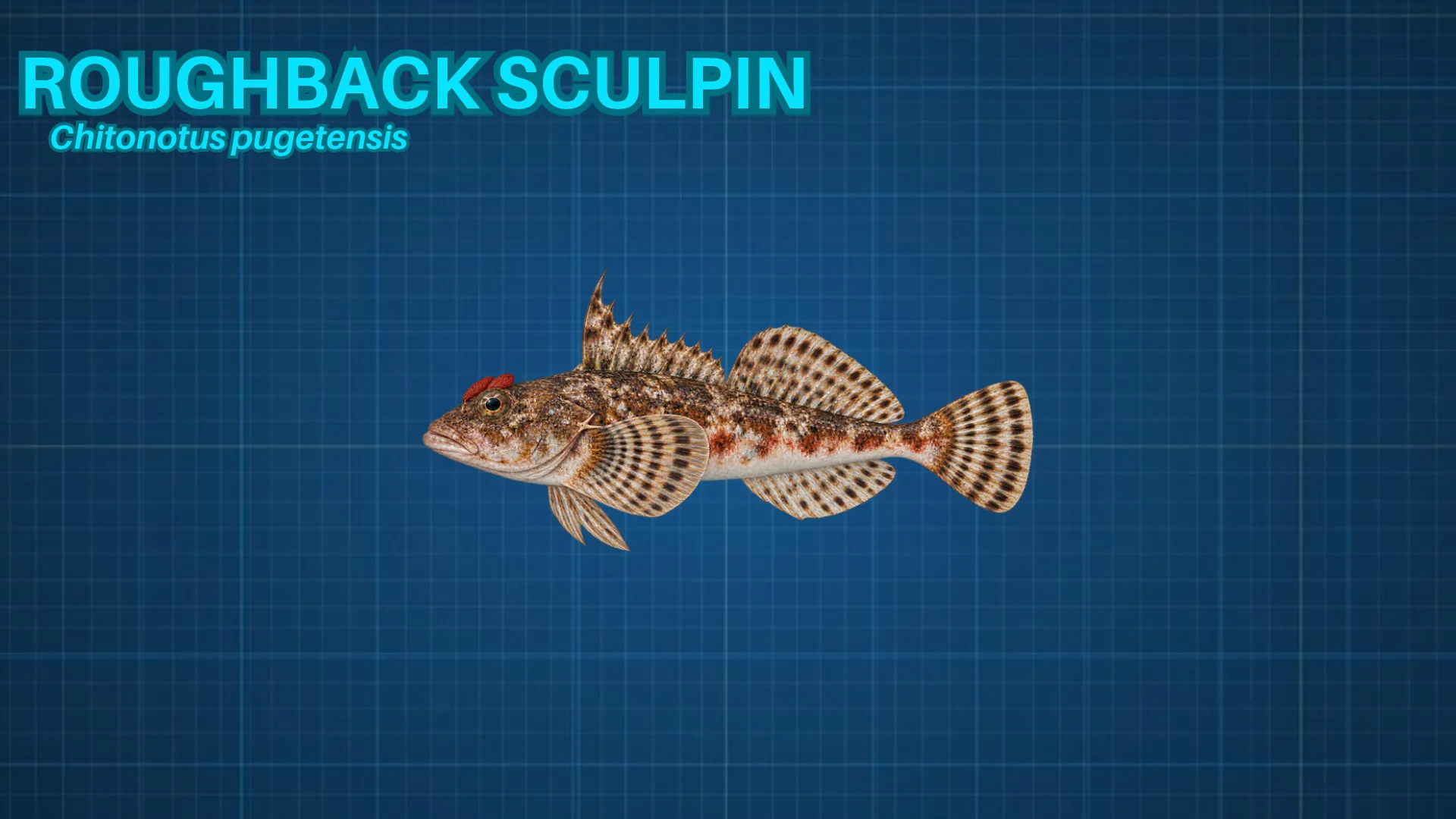
The roughback sculpin grows to about 9 inches. Its back is brown and gray with dark saddles and blotches, fading to white on the belly. The best field marks are on the head and back fin. Large branched spines on the cheeks look like small antlers, the 1st spine of the dorsal fin is long, and a deep notch separates the 3rd and 4th spines. The dorsal fin has a black edge, and a red blotch develops there in the breeding season.
The scales on the upper body feel rough to the touch, and the scientific name joins Greek words for a coat of mail and a back.
Aquarium observations suggest the roughback sculpin is active at night, and Mexican Fish describes it as an ambush predator that waits for food to come within reach. It eats shrimps and other crustaceans, small fishes, marine worms and larvaceans, which are small drifting animals. Birds, sea lions and seals eat it in turn.
Fertilization happens inside the female, and she can lay up to 3 batches a year of as many as 3,100 eggs, attaching them to worm tubes and other surfaces. In Southern California the spawning season is long and peaks in spring. Sources disagree slightly on the maximum depth, giving 466 and 472 feet.
Where to Find Them
Researched habitat and range candidates
San Diego · 14 beaches
Orange County · 10 beaches
Catalina Island · 6 beaches
Los Angeles · 10 beaches
Channel Islands · 21 beaches
Ventura · 15 beaches
Santa Barbara · 10 beaches
San Luis Obispo · 20 beaches
Monterey · 17 beaches
Oregon South Coast · 15 beaches
Oregon Central Coast · 8 beaches
Oregon North Coast · 8 beaches
South Sound · 12 beaches
Hood Canal · 9 beaches
Central Sound · 13 beaches
North Sound · 8 beaches
San Juan Islands · 8 beaches
Strait of Juan de Fuca · 5 beaches
Cape Flattery · 3 beaches
These locations have suitable habitat within the species range. An assignment is a possible encounter, not a confirmed sighting at every beach. Season, depth, and local conditions still matter. Historical habitat without present-day evidence is excluded.