

Also calledblackfoot seaperch, sharpnose surfperch
 Spearfishing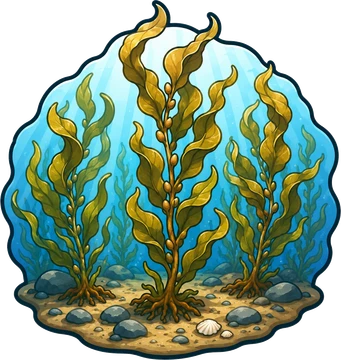


Spearfishing Stats
California inshore reef and kelp habitat within the shallow tail of a broad depth range.
Taxonomy
Rarity
Abundance rates how many are in suitable habitat. Find difficulty rates how hard it is to locate one on a daylight snorkel or freedive through 50 ft. A higher find score means a harder search. The rarity category also reflects the kind of encounter; it is not an average of the 2 scores.
Regulations
CDFW rules verified 2026-09-08
Seasonality
Edibility
Most fish are small enough that they yield little meat, so the fillets are a token rather than a meal.
Location
Sharpnose seaperch range from central Oregon down to central Baja California, and they are structure fish through all of it. The species belongs to the kelp forest biome first, works the rocky reef biome inshore and offshore, and turns up in eelgrass, which is the seagrass biome. It also holds around oil platforms, and that last habitat matters more in southern California than anywhere else on the coast, because the standing platforms in the Santa Barbara Channel have become de facto reefs with a full fish community on them.
The depth range is the part that separates this species from nearly all its relatives. Most surfperch are shallow animals that a diver meets in the first 30 feet. This one is recorded from the surface down to about 750 feet, and it spends a good part of the year well below the reach of anyone breathing air. What brings it up is reproduction, and the timing is documented from 2 directions. California pier-fishing literature records that females move in from deep water during the summer months to give birth, and the state's own habitat notes for the species say the fish appear around piers when spawning. The state's reproductive table lists the release of young as summer, which closes the loop.
That summer movement is also when the identification problem starts. Inshore sharpnose seaperch mix into schools with black perch, pile perch and white seaperch, 3 species already in this Ichthyopedia, and one of them is a close relative that looks very similar. Sharpnose and white seaperch share a genus and a general shape. The separator is the pelvic fins, which are black-tipped on a sharpnose and not on a white seaperch, and the overall color, which on a sharpnose is silvery with reddish-brown marks across the back. Worth noting that the walleye surfperch also carries black pelvic tips, so the check is not unique on its own. A walleye has an outsized eye and lives over open sand, while this fish is deeper-bodied and stays on structure.
The diet has 1 oddity in it. Sharpnose seaperch eat small crustaceans and bryozoans, which is unremarkable, and they also eat kelp. Most of this family is carnivorous, and only a handful of California surfperch are recorded taking plant material at all.
Spearfishing Brief
No dedicated account of spearing sharpnose seaperch exists in print, and given how little of this species is documented at all, that is not surprising. The ratings here follow from its recorded habits and from where the other structure-holding perches sit in this Ichthyopedia.
Finding one rates a 3. The fish is not cryptic and not camouflaged, and when it is in reachable water it holds on kelp, reef and platform structure where a diver already looks. The rating is about availability. For much of the year this species is hundreds of feet down, and even inshore it is nowhere described as numerous. Summer is the exception and it is a real one, because that is when the females come shallow to give birth and school up with fish a diver is already among.
The shot rates a 2, level with pile perch, white seaperch, rubberlip and striped seaperch. A deep-bodied perch holding against structure allows a slow, controlled approach. There is one piece of angling folklore worth setting aside here: sharpnose seaperch have a reputation among pier anglers as one of the harder perch to hook, with light, fussy bites that take practice to convert. That is a bait-and-tackle problem and it says nothing about how the fish behaves in front of a diver. Overall difficulty is 3, taking the harder of the 2 numbers.
A pole spear covers it. The fish tops out around 11 inches, which puts it at the small end of the takeable perches, alongside black perch and rainbow seaperch rather than with pile perch and rubberlip.
The table is respectable with an honest caveat about size. The flesh is the family standard, white, mild, low in fat, finely flaked and soft, and it fries, grills and bakes well and is reported to taste better outside the spawning season. What holds the fillet quality down is that most of these fish yield very little meat. A diver who takes one is getting a good small fillet rather than a meal, which is the fair description of most of this family.
Deep Dive
There is a version of this fish's life that almost nobody has ever seen, and it is most of the fish's life.
Sharpnose seaperch is a surfperch that mostly does not live in the surf, or anywhere near it. The family name describes a group of shallow-water animals built for moving water and rocky shorelines, and this species runs down to about 750 feet, deeper than any of its relatives except the pink seaperch. Both of those deep species are also the 2 California surfperch that fisheries data can say the least about, which is not a coincidence. What is known about most fish is known because someone caught a lot of them.
Even the most basic reproductive fact is missing. The state's summary table of surfperch reproduction has a column for brood size, and for nearly every species it gives a range: 4 to 113 for the barred surfperch, 9 to 92 for the striped seaperch, 2 to 36 for the shiner perch. For this species the entry reads insufficient data, followed by a parenthetical noting that one specimen was examined and contained 7 young. That is the entire published record of how many young a sharpnose seaperch carries. One fish. The mating season is listed as not available. No maximum age has been reported. The international database that carries formal fin-ray and vertebra counts for nearly every California surfperch has no description block for this one at all.
What is documented is the summer movement, and it is the thread that ties the species to the rest of the family. Females leave deep water and come inshore to give birth, appearing around piers and mixing into schools of black perch, pile perch and white seaperch. Giving birth is the right phrase. Surfperch do not lay eggs. Fertilization is internal, the young develop inside the female, and what is born is a small complete fish that swims from the first minute. A female making that trip from 700 feet to a pier piling is carrying finished animals, not a cloud of eggs, and the whole point of the journey is to release them somewhere with food and cover.
That is also the vulnerability. A fish that produces a handful of young a year, comes shallow only to reproduce, and spends the rest of its life beyond anyone's observation is exactly the kind of animal a management agency has almost no tools for. California's answer is the family aggregate, which treats every surfperch as interchangeable and caps the whole group at 20 fish a day. For a species with no catch data, no brood data, no age data and no assessment, a shared conservative limit is not an elegant solution. It is the only one available.
Where to Find Them
Researched habitat and range candidates
San Diego · 13 beaches
Orange County · 10 beaches
Catalina Island · 14 beaches
Los Angeles · 10 beaches
Channel Islands · 24 beaches
Ventura · 15 beaches
Santa Barbara · 10 beaches
San Luis Obispo · 25 beaches
Monterey · 17 beaches
Oregon South Coast · 15 beaches
Oregon Central Coast · 3 beaches
These locations have suitable habitat within the species range. An assignment is a possible encounter, not a confirmed sighting at every beach. Season, depth, and local conditions still matter. Historical habitat without present-day evidence is excluded.