

Also calledreef surfperch
Taxonomy
Rarity
Abundance rates how many are in suitable habitat. Find difficulty rates how hard it is to locate one on a daylight snorkel or freedive through 50 ft. A higher find score means a harder search. The rarity category also reflects the kind of encounter; it is not an average of the 2 scores.
Seasonality
Location
Reef perch range from Tomales Bay in Marin County down to northern Baja California, which settles a question this Ichthyopedia had open. The species was flagged as possibly a central California fish; it is not. The range covers the entire Southern California coast.
Where it lives is the genuinely remarkable part. The state gives the depth range as intertidal to 20 feet, and that is the shallowest range of any California surfperch. For comparison, the dwarf perch runs to 30 feet, the redtail surfperch to 60, the shiner perch to 480, and the sharpnose and pink seaperches to 750. Reef perch do not have a deep phase. California pier-fishing literature puts the usual water at 6 feet or less. This is a fish that lives its entire life in the band a person can stand in.
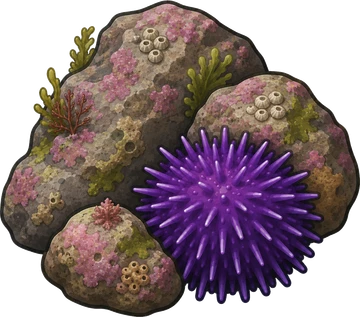
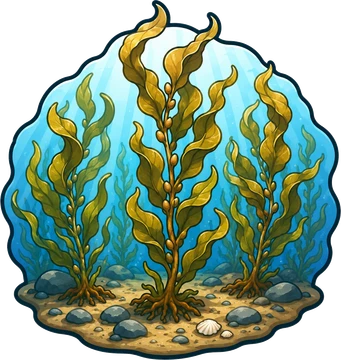
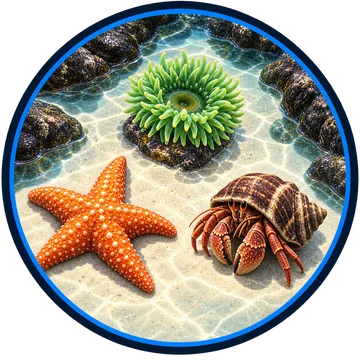
The species belongs to the rocky reef biome and the seagrass biome, holding on shallow rocky ground and in tidepools, over surfgrass and over red and green algae. A snorkeler working a low-tide rocky shelf in Southern California is in exactly the right water. A diver on a reef at 40 feet is not, and no amount of searching there will produce one.
Identification means telling it from the dwarf perch, the only other member of its genus and a fish that lives on the same shelf. Both are small, silvery and deep-bodied, and both carry a dark mark at the base of the pectoral fin. The reef perch has 1 feature the dwarf perch lacks, and it settles the question: a yellow to yellow-orange stripe running along the side from the pectoral fin nearly to the tail. The rest of the fish is silvery with blue, green and black across the back, with a triangular crescent-shaped black patch at the pectoral base and a large patch of black-tipped scales between the pectoral and anal fins.
The name comes from the color. Aurora was the Roman goddess of the dawn, and that name gets applied to species carrying pink or yellow, which is a fair description of the stripe.
Deep Dive
Reef perch is 1 of only 2 California surfperch that eats plants first.
Every source that describes the diet of this species puts algae ahead of animals. The state does, the international species account does, and California angling literature does, all using nearly the same phrasing: algae and small invertebrates. Every other surfperch in California is described the other way around, leading with crustaceans, worms, mollusks or fish eggs, with plant material appearing partway down the list if at all. Only the reef perch and its close relative the dwarf perch reverse the order.
That is not a small difference. A fish family that feeds mostly by picking animals off the bottom has a particular set of equipment, and this Ichthyopedia already carries the extreme version of it in the rubberlip seaperch, whose thick fleshy lips work like fingers to sort food from debris by touch in the dark. Reef perch went the other direction entirely. It lives on the shallowest rock available, in the brightest, most sunlit water on the coast, and grazes what grows there. Red and green algae need light, surfgrass needs light, and a fish eating both is committed to staying in water shallow enough for the sun to reach the bottom. The depth limit and the diet are the same fact seen twice.
The trade-off is that this is the least protected place a fish can be. A tidepool at low tide is a small, isolated body of water that can heat up, lose oxygen, change salinity when it rains, and be reached by shorebirds. The shallow rock outside it takes the full force of every swell. A 7-inch fish living there permanently is exposed to more physical variability in a week than a reef fish at 60 feet sees in a year.
Reproduction gives it no margin either. Surfperch do not lay eggs. Fertilization is internal, the young develop inside the female, and what emerges is a small complete fish that swims immediately. Reef perch mate in summer and release their young in spring and summer. How many is unknown; the state's summary table has a column for brood size and for this species it is empty, and nothing else published fills it. Given that the dwarf perch, its closest relative, carries somewhere between 2 and 25, a comparable number is a reasonable expectation and remains an expectation rather than a fact.
Put those together and the picture is of an animal with no slack anywhere. It cannot go deep, because its food is in the light. It cannot produce many young, because no surfperch can. It lives in the most physically punishing water on the coast, and it is small enough that the state's own fisheries data amounts to 4 words. There is no evidence the species is in trouble. There is also very little evidence about it at all, which for a fish that occupies the one habitat a person can reach without getting wet is a strange thing to have to write.
Where to Find Them
Researched habitat and range candidates
San Diego · 13 beaches
Orange County · 10 beaches
Catalina Island · 13 beaches
Los Angeles · 10 beaches
Channel Islands · 24 beaches
Ventura · 15 beaches
Santa Barbara · 10 beaches
San Luis Obispo · 22 beaches
Monterey · 17 beaches
These locations have suitable habitat within the species range. An assignment is a possible encounter, not a confirmed sighting at every beach. Season, depth, and local conditions still matter. Historical habitat without present-day evidence is excluded.