

 Spearfishing

Spearfishing Stats
Core covered California habitat.
Taxonomy
Rarity
Abundance rates how many are in suitable habitat. Find difficulty rates how hard it is to locate one on a daylight snorkel or freedive through 50 ft. A higher find score means a harder search. The rarity category also reflects the kind of encounter; it is not an average of the 2 scores.
Depth and encounter availability
Recorded juvenile 70–120 m is also below 100 ft; no routine accessible life stage verified. This Rare rating reflects limited availability within snorkeling and freediving depths through 50 ft. It is not a claim that the species is equally scarce in its normal deeper habitat. Routine shallow occurrence is unverified; habitat suitability alone does not promise a sighting.
Regulations
CDFW rules verified 2026-09-04
Seasonality
Edibility
Location
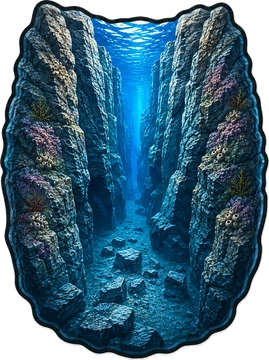
Greenblotched rockfish live from San Francisco south into central Baja California, on rough bottom and inside rock structure, alone or in small groups rather than in schools. The depth figures spread across sources more than usual, from a shallow limit of 180 to 200 feet to a deep limit somewhere between 1,300 and 1,600.
The fish is stubby and wide, a little over a third as deep as it is long, and its ground color runs through yellow, red and pale pink. The markings are the whole identification. There are 4 or 5 white squares sitting just below the dorsal fin, and above the lateral line and across the top of the head the fish carries green vermiculations, which are dense worm-like squiggles rather than spots. The spiny part of the dorsal fin is heavily striated in green, salmon or orange.
That vermiculation is what separates it from the greenspotted rockfish, which carries discrete green spots and short sinuous lines on a yellowish-pink body. Worm tracks here, spots there. It is not an easy call on a wet fish, and the 2 species overlap in range and depth. This one reaches 19 inches and lives up to 50 years. As with every rockfish, the fin spines are sharp and carry mild venom.
What it eats has not been published. Its trophic level marks it as a carnivore and nothing further is established, so this entry does not list prey.
Spearfishing Brief
There is nothing to hunt. The fish is legal in California inside the 10-fish rockfish bag with no sub-limit and no size limit, and spear divers are exempt from the season and depth restrictions, and it still lives between roughly 180 and 1,600 feet on rough bottom.
An encounter would be an accident at the top of the range on deep reef, with a solitary fish holding in rock structure, which makes the shot easy and the search impossible. Any short reef gun covers it. No spearfishing literature exists for the species, no California angling record was located, and nobody has published a description of how it eats, so this entry leaves the table quality blank.
Deep Dive
The greenblotched rockfish was described by Chen in 1971, which makes it one of the most recently named fish on the CDFW groundfish identification chart by a margin of more than 70 years. Most of its neighbors were described in the 1880s and 1890s, in the great sweep of Pacific coast ichthyology carried out by Jordan, Gilbert, Eigenmann and their contemporaries. This one waited until the second half of the 20th century, and the reason is almost certainly the greenspotted rockfish.
A pair of fish that share a coast, a depth band, a body shape, a color range and a set of green markings will get called one species for a long time. Separating them required someone to look closely enough to notice that in one the green forms discrete spots and short lines, and in the other it forms continuous worm-track vermiculation. That is a fine distinction, and it is the sort of distinction that only gets made when a specialist works systematically through a genus rather than identifying fish one at a time.
The consequence is that this species has about 55 years of scientific history rather than 145, and it shows. What is established: how big it gets, how long it lives, roughly where it occurs, roughly how deep, that it is solitary or in small groups on rough bottom, what it looks like in detail, and that it bears live young. What is not established: when it gives birth, how many young it carries, at what size or age it matures, what it eats, what eats it, how many there are, or whether that number is going up or down.
Set that against the numbers FishBase does provide, and the picture is uncomfortable. A generation time of 20.7 years means the population replaces itself on a 20-year clock. A doubling time over 14 years means it cannot rebound quickly from anything. A vulnerability score of 68 out of 100 puts it in the same band as the cowcod at 70 and the bronzespotted rockfish at 68, and both of those species are closed to retention in California.
The honest summary is that the greenblotched rockfish is protected by obscurity rather than by regulation. It lives deep, it is not worth targeting, and it comes up as incidental catch, so no fishery has ever pressed on it hard enough to reveal what its biology would do under pressure. That is a stable situation right up until it is not, and it is worth naming as the reason this fish is fine rather than pretending someone checked.
Where to Find Them
Researched habitat and range candidates
San Diego · 13 beaches
Orange County · 10 beaches
Catalina Island · 14 beaches
Los Angeles · 10 beaches
Channel Islands · 24 beaches
Ventura · 15 beaches
Santa Barbara · 10 beaches
San Luis Obispo · 25 beaches
Monterey · 17 beaches
These locations have suitable habitat within the species range. An assignment is a possible encounter, not a confirmed sighting at every beach. Season, depth, and local conditions still matter. Historical habitat without present-day evidence is excluded.