

Also calledpuffer shark, balloon shark

Taxonomy
Rarity
Abundance rates how many are in suitable habitat. Find difficulty rates how hard it is to locate one on a daylight snorkel or freedive through 50 ft. A higher find score means a harder search. The rarity category also reflects the kind of encounter; it is not an average of the 2 scores.
Seasonality
Location
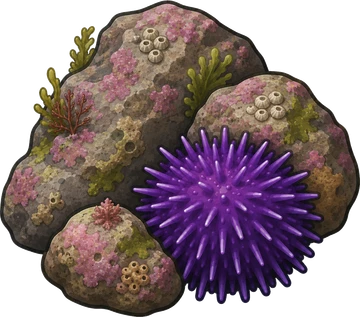
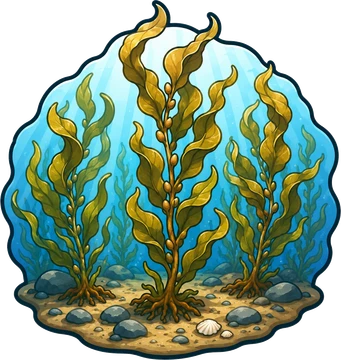
Swell sharks live in the eastern Pacific from central California south to the Gulf of California and southern Mexico, with a separate population off central Chile and nothing in between. Records run from about 15 feet down to roughly 1,500 feet, but the fish that a diver meets sit in a narrow shallow band, usually between 15 and 120 feet. The habitat is specific: rocky, algae-covered bottom and the edges of kelp beds, with crevices, caves and undercut ledges to rest in.
Behavior is what makes the species hard to see and easy to approach. Swell sharks are nocturnal. They lie still through the day, wedged into cover, and they do it in company: the species forms resting aggregations, so a single good ledge can hold several stacked against each other. At night they leave the reef and hunt small fish and invertebrates near the bottom. A daytime swell shark generally holds while a diver approaches, which is unusual and is not tameness. It is the same instinct that produces the behavior the fish is named for. Researchers have also documented consistent differences between swell sharks at Santa Catalina Island and those on the California mainland, so the animals at one site are not simply a sample of one coastwide pool.
Deep Dive
The name comes from a defense that has no close parallel among sharks. Threatened, a swell shark curves its body into a U, grips its own tail fin in its mouth, and gulps seawater into its stomach until it has swelled to close to double its normal size. At the surface it can do the same thing with air. The point is mechanical: a shark wedged in a crevice that suddenly doubles in girth cannot be pulled out, and a bent, inflated animal is a poor shape to bite. The water is held in the stomach until the animal chooses to release it. A swell shark brought to the surface and returned to the water will often deflate with an audible bark as the air comes back out, which is where a second common name, puffer shark, comes from.
The reproduction is the other unusual thing. Most sharks bear live young. Swell sharks lay eggs, 2 at a time, in amber cases roughly 4 inches long by an inch or 2 wide, with wiry tendrils trailing from each corner. The tendrils are the anchoring system: they catch on rock and seaweed and hold the case in place against surge, which is what keeps it from washing up on a beach. A fresh case is pale and soft and hardens to brown leather within a few hours of being laid. Development takes 9 to 12 months depending on water temperature. The pup that finally cuts its way out is 5 to 6 inches long and is a complete small shark with no parental care of any kind behind it. Not every case gets that far. Marine snails bore holes through the tough outer coating and eat the developing embryo, which is the main documented threat to a swell shark before it hatches. The empty cases wash ashore across Southern California and are the thing beachcombers call a mermaid's purse.
Since 2014 the species has been at the center of an unexpected line of research. Swell sharks are biofluorescent: under blue light, which is most of the light that remains at depth, their pale skin markings absorb it and re-emit bright green. Fluorescence was first described in catsharks that year. What was not known was how it worked, because the fluorescent proteins that make corals and jellyfish glow are absent in sharks. In 2019 a team publishing in iScience worked out the chemistry. The green light comes from small molecules built from brominated tryptophan, an amino acid, processed through a metabolic pathway called the kynurenine pathway. The resulting compounds sit in the light-toned skin and are absent from the dark-toned skin, which turns the animal's existing brown-and-cream pattern into a high-contrast green-and-dark pattern under blue light. It is a chemically different route to the same effect that corals reach with proteins. The reason the researchers who described it think it matters is that a pattern only visible under blue light is a pattern most of the reef cannot see, which raises the possibility that swell sharks are marked for each other.
The rest of the animal is ordinary in a way that suits its life. It grows to about 43 inches, though a typical adult is closer to 35. It eats small reef fishes and bottom-dwelling molluscs and crustaceans, and it has 2 ways of getting them: drawing prey in by suction, or lying still with its mouth open and waiting for something to swim into it. Larger sharks and seals eat swell sharks. It is harmless to people and has no commercial or recreational fishery in California, appearing in the state's regulations only through the general finfish default of 20 fish in combination with no more than 10 of any one species, and no size limit. Females have reproduced in captivity, which is why swell sharks and their egg cases are a fixture of public aquariums up and down the coast, and why the egg case, held up to a light with the embryo and its yolk visible through the wall, is the first shark most California schoolchildren ever see.
Where to Find Them
Researched habitat and range candidates
San Diego · 13 beaches
Orange County · 10 beaches
Catalina Island · 14 beaches
Los Angeles · 10 beaches
Channel Islands · 24 beaches
Ventura · 15 beaches
Santa Barbara · 10 beaches
San Luis Obispo · 25 beaches
Monterey · 17 beaches
These locations have suitable habitat within the species range. An assignment is a possible encounter, not a confirmed sighting at every beach. Season, depth, and local conditions still matter. Historical habitat without present-day evidence is excluded.