

Also calledkelp wrasse, cigar fish, iodine fish
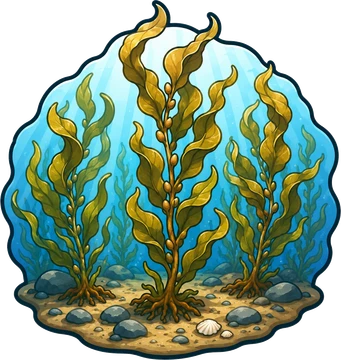

Photo: Randall Spangler, San Carlos Beach, Monterey
Taxonomy
Rarity
Abundance rates how many are in suitable habitat. Find difficulty rates how hard it is to locate one on a daylight snorkel or freedive through 50 ft. A higher find score means a harder search. The rarity category also reflects the kind of encounter; it is not an average of the 2 scores.
Seasonality
Location
Señoritas live in the eastern Pacific from Salt Point in northern California south to southern-central Baja California. They hold in kelp beds and over rocky bottom, and while records run to about 320 feet, the fish that matter to a diver are shallower than 75. They form small groups rather than tight schools, and they spend the day working the water column and the reef surface.
At night they go somewhere unexpected. A señorita finding the end of the day moves off the reef onto adjacent sandy bottom and buries itself, sometimes with only the head left showing, and stays there until morning. The same behavior serves as an escape: a startled señorita will dive into sand rather than into a crevice. It is an unusual answer to the problem every small reef fish has to solve at night, and it means the sand next to a reef, which looks empty on a night dive, is not.
Deep Dive
The señorita's job on the reef is cleaning. It picks external parasites off other fish, and parasites make up roughly half of everything it eats. Copepods and isopods, both small crustaceans that attach to the skin and gills of larger fish, are the bulk of it. The work was described in detail by Edmund Hobson in a 1971 study of cleaning symbiosis among California inshore fishes, which remains the reference for how the relationship runs on this coast.
What makes cleaning worth watching is that the client cooperates. A blacksmith wanting to be cleaned does not simply hold still. It rises off the reef and hangs at an unnatural angle, head up or head down, perpendicular to the bottom, and waits. The pose is a signal, and it is the fish asking. Señoritas respond by working over the body, the fins and the gill covers, removing parasites and dead skin. The client, which under any other circumstance would be watching for a predator, allows a smaller fish to work around its gills and mouth. Enough species do this along the coast that a single señorita may spend much of a day moving between clients.
The arrangement is a genuine trade rather than a favor. The señorita gets about half its diet without hunting, and the client loses a parasite load that would otherwise cost it. It is one of the clearest examples on this coast of 2 species doing better through cooperation than either would alone, and it happens continuously, in plain sight, on reefs that divers visit every weekend.
The taxonomy has recently shifted under this fish, which is worth knowing if the name in a field guide does not match the binomial in the frontmatter above. For over a century the species sat in a genus of its own, and effectively all California literature still uses that name. The World Register of Marine Species now treats that genus as a synonym and returns the species to the wider wrasse genus it was first described in, in 1861. Nothing about the fish changed. The name did.
The rest of the biology is modest. Señoritas reach about 10 inches at maximum and are usually smaller, with a maximum reported age of 4 years. They are pelagic spawners, releasing eggs and sperm into open water with no nest, no pairing bond and no parental care of any kind, which is a common arrangement among wrasses. Their diet outside of parasites is small invertebrates picked off the reef and the kelp. They belong to the same family as the California sheephead, which is a reminder that wrasses on this coast run from a hand-sized cleaner to a 3-foot predator with a bulging forehead.
Where to Find Them
Researched habitat and range candidates
San Diego · 13 beaches
Orange County · 10 beaches
Catalina Island · 14 beaches
Los Angeles · 10 beaches
Channel Islands · 24 beaches
Ventura · 15 beaches
Santa Barbara · 10 beaches
San Luis Obispo · 25 beaches
Monterey · 17 beaches
These locations have suitable habitat within the species range. An assignment is a possible encounter, not a confirmed sighting at every beach. Season, depth, and local conditions still matter. Historical habitat without present-day evidence is excluded.