

Also calledgolden perch, ocean goldfish
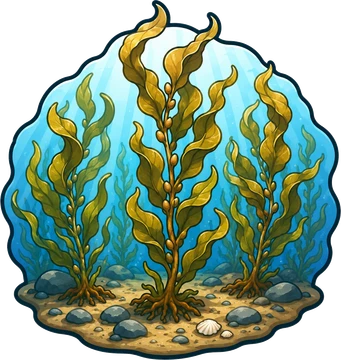
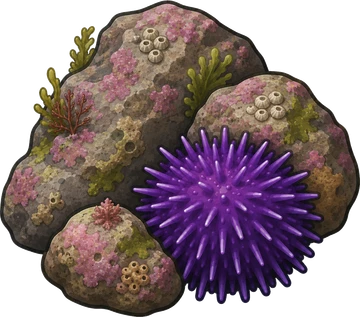

Photo: @NauticalNick, Casino Point Dive Park
Taxonomy
Rarity
Abundance rates how many are in suitable habitat. Find difficulty rates how hard it is to locate one on a daylight snorkel or freedive through 50 ft. A higher find score means a harder search. The rarity category also reflects the kind of encounter; it is not an average of the 2 scores.
Seasonality
Location
Garibaldi live along the eastern Pacific coast from Monterey Bay, California, south to Guadalupe Island and the southern tip of Baja California, Mexico. They are shallow-water fish, tied to rocky reefs with crevices and caves and to the edges of kelp forest biomes, from the surface down to about 100 feet. The southern Channel Islands hold the largest populations, and Catalina Island is dense enough with them that biologists have nicknamed it Garibaldi Central. Adults do not migrate. Both sexes hold small year-round territories of roughly 3 to 10 square meters, which they defend against other garibaldi and against most fish that enter, regardless of season.
Territoriality shapes what a diver sees. A snorkeler drifting along a rocky reef notices the same fish in the same crevice on repeat dives, because a garibaldi in place is a garibaldi at home. The bright orange color also holds year-round; garibaldi do not fade with season or mood, and both sexes look the same. Juveniles do look different, and the difference is one of the more striking transformations on the California coast. A young garibaldi is a deeper red-orange with a scatter of iridescent electric-blue spots along its fins and lateral line, the row of sensory pores along its side that senses water movement. Those blue spots gradually fade as the fish grows and are gone by the time it reaches about 6 inches. An adult is uniformly bright orange, up to about 12 to 14 inches long.
Deep Dive
Garibaldi are the largest members of the damselfish family, a mostly tropical group that reaches its northern limit in the eastern Pacific on the California coast. In the tropics, damselfish are small and abundant reef fish, often territorial to the point of harassing much larger animals. Garibaldi are the same, at scale: a fish the size of a dinner plate acting as though it owns the reef. Adults are long-lived for a damselfish: a study that aged the species by its otoliths found a 57-year-old male and a 55-year-old female, decades beyond the previously published maximum of 17 years. Sexual maturity comes late for a fish this size, around 5 or 6 years old and about 8 inches long. Diet is broad. Garibaldi feed on the small animals attached to rock and kelp: sponges, bryozoans (the small crust-forming animals that grow in colonies on the reef), tubeworms, sea slugs, small crabs and shrimp, and red algae. Documented predators of small garibaldi include the kelp bass, and juveniles are also taken by other reef-associated predators; adults have few documented natural predators, and the bright orange color may function partly as a warning that this fish is not easy prey and will fight back.
The breeding season, mid-March through July, is when the species is at its most visible and most protective. About a month before spawning, a male begins tending a patch of red algae on the reef. He weeds out sponges, tubeworms, and any other invertebrate that grows in, encourages the red algae to spread, and grooms the patch until it is a thick mat roughly a foot across. This nest garden is the site he will spawn in and defend. Research shows that a female inspects several males' gardens before choosing one, and she chooses on the quality of the algae mat. Once a pair spawns, the female leaves. The male alone guards the eggs, which stick to the algae in a bright yellow layer, and he aerates and cleans them for 19 to 21 days until they hatch. A single clutch runs from about 15,000 to 80,000 eggs, and a male may host clutches from several females in one season.
A guarding male is also the reason divers hear garibaldi as often as they see them. The male produces a loud, blunt thumping sound by grinding his throat teeth, called pharyngeal teeth, against each other. The sound is used in courtship as part of a "dipping" display to a passing female, and it is used again as a warning to intruders during nest guarding. Snorkelers close to a nest often hear the sound before they realize the fish is objecting to them, and a garibaldi that dips downward toward a diver and thumps is telling the diver to leave. Males back that warning up. Nest-guarding garibaldi will charge divers, flare their fins, and nip at exposed skin, gloves, camera housings, and mask straps. The bite is not dangerous but it is committed, and the standard practice for a diver who has drawn a garibaldi's attention is to move a few feet off the nest, not to hold ground.
The path to full protection took decades. Concern first appeared in Avalon, on Catalina Island, in the early 20th century, where garibaldi were a fixture of the glass-bottom-boat tours and were being caught in numbers by visiting anglers and divers. The California Fish and Game Commission adopted a state-wide prohibition on take by angling or diving on January 30, 1953. A limited commercial aquarium fishery continued for decades. Legislation in 1993 required a permit for live capture and closed the aquarium collection season from February 1 through October 31, covering the entire breeding period. The commercial fishery was closed permanently in 1995 with a three-year moratorium that was later made permanent, and Assembly Bill 77 that same year, signed by Governor Pete Wilson on October 16, made the garibaldi the state marine fish of California. The current regulation lives in the state's fishing code as 14 CCR section 28.05, and it is short enough to quote in full: "May not be taken or possessed." A diver who meets a garibaldi looks, does not touch, and gives its nest space during breeding season.
Where to Find Them
Researched habitat and range candidates
San Diego · 13 beaches
Orange County · 10 beaches
Catalina Island · 14 beaches
Los Angeles · 10 beaches
Channel Islands · 24 beaches
Ventura · 15 beaches
Santa Barbara · 10 beaches
San Luis Obispo · 25 beaches
Monterey · 17 beaches
These locations have suitable habitat within the species range. An assignment is a possible encounter, not a confirmed sighting at every beach. Season, depth, and local conditions still matter. Historical habitat without present-day evidence is excluded.