
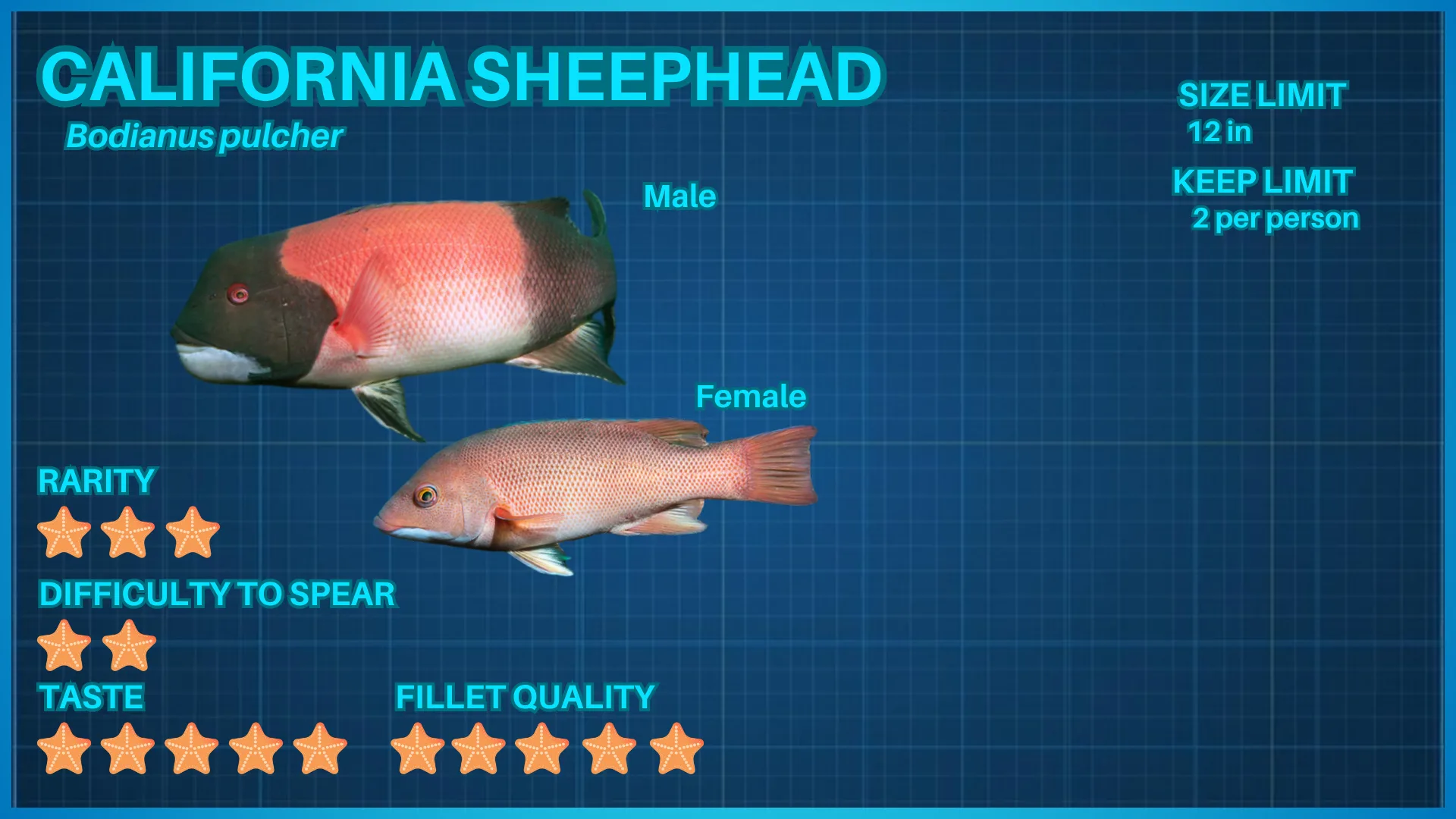
Also calledsheepie, goat, billygoat, California redfish, snaggle tooth
 Spearfishing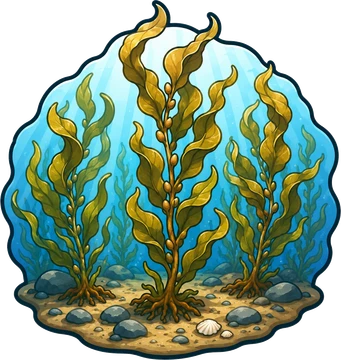

Spearfishing Stats
Southern California rocky reef and kelp
Taxonomy
Rarity
Abundance rates how many are in suitable habitat. Find difficulty rates how hard it is to locate one on a daylight snorkel or freedive through 50 ft. A higher find score means a harder search. The rarity category also reflects the kind of encounter; it is not an average of the 2 scores.
Regulations
CDFW rules verified 2026-07-07
Seasonality
Edibility
Very white meat carrying a shellfish-diet flavor close to lobster, but it softens if it is not iced quickly and breaks apart when overcooked.
Location
California sheephead live in the eastern Pacific from Monterey Bay south to Guadalupe Island and the Gulf of California, with the center of the population in Southern California and northern Baja California. They are a shallow-reef fish. Depth records run from the surface to about 180 feet. Most sheephead spend their time between 10 and 100 feet. The fish a diver meets are usually between 20 and 60 feet. They belong to the kelp forest biome and the rocky reef biome, and they spend about half their time on rocky bottom, with a strong preference for reef that has kelp growing on it because the added structure gives them more crevices to work. They are day-active hunters. At night each fish wedges into a crack in the reef and secretes a thin cocoon of mucus around itself, which is thought to mask its scent from moray eels and other night predators. Males hold a group of females in a territory roughly 80 feet across and defend it against rival males. During the summer spawn, males extend their daily range and make regular trips into deeper water.
Spearfishing Brief
The California sheephead is curious toward divers rather than wary, and that behavior is what makes the hunt work. Smaller females and mid-size fish will swim in to investigate a diver rather than flee, especially on lightly hunted reefs. That is the reason the fish rates as easy to find and only moderately hard to shoot. Where the shot gets harder is on the trophy males. Big males on pressured reefs have become wary of divers and will hold off at distance rather than come in close.
Divers build the standard tactic around that behavior. A diver drops to the bottom near reef structure, tucks against a rock, and scratches a knife tip or a stone against the reef. Sheephead associate that sound with cracked shells and come in from as far as 20 feet away to investigate. Cracking a purple sea urchin at the start of the dive works better still, and it can set up an area of reef for the rest of the session. The shot is taken close, from a settled position, with the fish holding still to inspect the sound. On trophy males that will not come in, the approach is a slow creep along the reef, using the kelp for cover. Another approach on those fish uses the blind spot, which sits directly above the male and about 30 degrees behind him. A diver drops in on that line and stops kicking for the last 25 feet, gliding into range rather than swimming into it.
When choosing a weapon, the first thing to consider is range. This is close-range reef work. A medium speargun of 90 to 110 centimeters with 1 or 2 bands is the community standard. A shorter 75 centimeter gun or a polespear is the right tool in tight reef and in thick kelp, where a diver can bring a short gun onto a fish faster in a confined space and where the water is usually murky. The shot is placed on the head or on the spine just behind the gill plate. A body shot on a large male risks the fish taking off and hiding in the rocks, where it can wrap the shooting line around them. Sheephead also have canine teeth strong enough to crush urchins, which they will use on a diver who reaches carelessly toward a fish that is still alive.
Deep Dive
The California sheephead is a wrasse, one of the largest wrasses in the eastern Pacific, and it belongs to a family that is better known for coral-reef fish than for temperate reef fish. Its closest relatives are the hogfishes of the Caribbean and the tropical Pacific, which molecular work places in the same genus, and the parrotfishes sit in the same family on a more distant branch. The most striking thing about the species, biologically, is that every California sheephead hatches as a female. The largest fish in any given group later transition into males. This pattern is called protogynous sequential hermaphroditism. Protogynous means female first, and sequential means the change goes from female to male and cannot reverse. The timing of the transition depends on where the fish lives and how much food is available. In food-rich sites, the transition can wait until about 13 years of age. In food-scarce sites, the same change can happen at 5 or 6 years. Studies converge on an average around 12 to 18 inches in length and 5 to 13 years of age. The change itself takes anywhere from 2 weeks to several months, during which the fish shifts from the dull pink of a female to the black head, red midriff, and fleshy forehead bump of a male. The trigger is social. When a dominant male dies or disappears from a territory, the largest female in the group takes his place.
That reproductive system is the reason the fish is listed as Vulnerable. It is also the reason the regulations exist. The 2007 Hamilton study compared sheephead collected in 1998 at Bahia Tortugas, Catalina Island, and San Nicolas Island against data from the same sites 20 to 30 years earlier, and found that where fishing had intensified, both sexes were smaller, females matured earlier, and fish changed sex at smaller sizes and younger ages. The mean time spent as a mature female was cut roughly in half on the fished reefs. The paper's conclusion is worth stating plainly: populations that change sex are more sensitive to size-selective fishing than populations that do not, because the biggest fish are the ones the fishery targets, and the biggest fish are the ones the population depends on for males. Removing them skews the sex ratio and lowers the number of fertilized eggs.
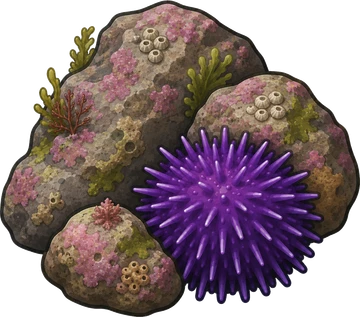
Sheephead feed almost entirely on hard-shelled prey. Sea urchins, mussels, clams, snails, crabs, lobsters, sand dollars, barnacles, and bryozoans, the small animals that grow in crusts on rock, all get eaten. The tools for this diet come in 2 parts. The visible canines on the front of the jaw pry animals loose from rocks and crack shells. Behind the jaw, a thickened plate of throat bones grinds the shells into fragments before the meat goes down. That diet, and specifically the urchin part of it, makes the sheephead incredibly important to the kelp forest. In Southern California, where sea otters are absent, the sheephead is one of the main predators holding the sea urchin population down, which makes it a keystone species: one the whole system leans on out of proportion to its numbers. Purple sea urchins graze kelp, and a reef that loses its sheephead can lose its kelp along with them as the urchin population expands unchecked. Studies of population variation across sites in Southern California have shown that reefs where sheephead feed heavily on crabs and urchins grow the largest fish, which then keep the urchin population in check. It is a feedback loop that runs both ways.
The California sheephead can live to 53 years and reach 3 feet and 35 pounds, though a fish that old is rare today. Males and females look very different. Adult males carry the black head and tail, the wide reddish-orange midriff, red eyes, and the fatty forehead bump that grows more pronounced with age. Females are a dull pink over most of the body with a white underside and lack the forehead bump entirely. Both sexes have the white chin and the exposed canine teeth. Spawning runs from July through September, extending into October in some years, and takes place in the water column near the male's territory. A female may release between 36,000 and 296,000 eggs in a season and can spawn 80 or more times over that stretch. The eggs and larvae drift as plankton, with no parental care. Predators of adult sheephead beyond people are harbor seals, California sea lions, and double-crested cormorants. The mucus cocoon that resting fish secrete inside their crevice is a defense against animals that hunt them by scent while they sleep.
On the plate, the California sheephead is regarded as excellent eating. The meat is white, firm, mild, and comes off the bone in large flakes. It is often compared to lobster or crab, both for the sweetness and because a diet of shellfish tends to produce that flavor. The scales are thick and the skin is dense, which makes scaling and skinning take longer than on a bass, but the fillets themselves are large and clean. Grilling, baking in foil, pan-frying, ceviche, and fish tacos are the standard preparations. The commercial live-fish fishery peaked in 1993 at about 314,000 pounds landed statewide and is now smaller, held down by nearshore fishing permits and the 12 inch and 2 fish limits. For a diver, the ethic that has settled across the spearfishing community lines up with the biology: take mid-size fish for the table, and leave the largest males on the reef.
Where to Find Them
Researched habitat and range candidates
San Diego · 13 beaches
Orange County · 10 beaches
Catalina Island · 14 beaches
Los Angeles · 10 beaches
Channel Islands · 24 beaches
Ventura · 15 beaches
Santa Barbara · 10 beaches
San Luis Obispo · 25 beaches
Monterey · 17 beaches
These locations have suitable habitat within the species range. An assignment is a possible encounter, not a confirmed sighting at every beach. Season, depth, and local conditions still matter. Historical habitat without present-day evidence is excluded.