

Also calledblue perch, rock bass
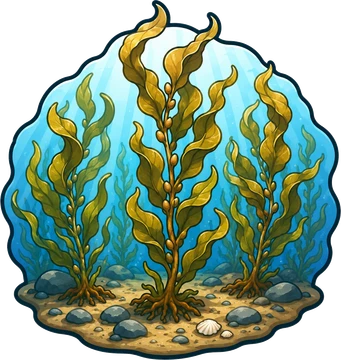

Photo: Randall Spangler, San Carlos Beach, Monterey
Taxonomy
Rarity
Abundance rates how many are in suitable habitat. Find difficulty rates how hard it is to locate one on a daylight snorkel or freedive through 50 ft. A higher find score means a harder search. The rarity category also reflects the kind of encounter; it is not an average of the 2 scores.
Seasonality
Location
Blacksmith live along the eastern Pacific coast from Monterey Bay, California, south to central Baja California, Mexico. They are a reef-associated fish. Adults hold on rocky reef biomes and along the outer edges of kelp forest biomes, especially on steep banks and drop-offs where currents carry food. FishBase records the depth range from about 7 feet to 151 feet, and the Sanctuary Integrated Monitoring Network at Monterey Bay National Marine Sanctuary lists observations to about 270 feet. Adults reach roughly 10 to 12 inches long.
Adult and juvenile blacksmith look different enough that a snorkeler often mistakes them for two species. Adults are blue-black, blue-gray, or violet-gray, with small dark spots concentrated toward the tail and dorsal fin, large scales, and a forked tail. Juveniles carry the tropical damselfish two-tone pattern: a blue or blue-purple front half and a yellow-orange rear half. Juveniles school tighter and stay closer to the reef bottom for cover. Breeding males show a dark bar across the eye, and a nesting male turns pale and blotchy while guarding a clutch.
Deep Dive
Blacksmith belong to the damselfish family and share the reef with the garibaldi, which is their much larger, much brighter, and much more territorial cousin. The two fish live the same coast for the same reasons but make a very different living on it. A garibaldi holds a small home territory on the reef and grazes attached invertebrates. A blacksmith spends the day in open water above the reef, hanging in a loose school and picking zooplankton out of the current.
That feeding style is the reason the species matters for kelp forest ecology far beyond its own biomass. Blacksmith are diurnal midwater plankton-eaters. Adults position themselves above the reef, face into the current, and pick tiny shrimp-like crustaceans called copepods, along with drifting larvae and fish eggs, one at a time as the water carries them past. A trophic-level rating of 2.7 confirms it: a carnivore, but only of the smallest reef-food items. At night the schools break up and the fish shelter in cracks and small caves on the reef, returning to the same shelters over long periods. In 1981, Richard Bray and coauthors published a paper in Science that measured what happens to the plankton the fish eat: because the same fish shelter in the same cracks night after night, they deposit feces on the reef that carry roughly 8 grams of carbon per square meter per year down from the open water. That is a documented, predictable transfer of pelagic food into a reef community that would otherwise depend on kelp for most of its energy, and blacksmith are one of the main animals doing it.
Blacksmith are also part of the best-documented cleaning symbiosis on the California coast. The client is the blacksmith and the cleaner is the señorita, a slim yellow-orange wrasse that lives in the same kelp forests. Blacksmith solicit cleaning by hovering in an unnatural pose over an area where señoritas work, often tilted vertically with fins spread. The señorita then picks over the client, eating small shrimp-like parasites and dead skin off the body, fins, and gill covers. The behavior was carefully described in a 1971 NOAA study by Edmund Hobson that documented cleaning among California inshore fishes, and it is one of the easier things a snorkeler on a Channel Islands reef can see on a calm day: a knot of blacksmith stacked at odd angles over a spot on the reef, with señoritas flicking around them.
Spawning happens through summer and into early fall. A male chooses and cleans a patch of reef, courts one or more females, and, once eggs are laid on the substrate, guards the clutch until it hatches. The eggs stick to the rock and hatch in roughly 3 to 6 days. Nesting males do not tolerate other blacksmith near the site during that window. Documented predators of blacksmith at various life stages include lingcod, moray eels, and kelp bass on the smaller fish, along with blue sharks, harbor seals, and diving seabirds on adults. The abundance of the species and its habit of feeding in the open water make it food for a wide slice of the Southern California nearshore food web.
Where to Find Them
Researched habitat and range candidates
San Diego · 13 beaches
Orange County · 10 beaches
Catalina Island · 14 beaches
Los Angeles · 10 beaches
Channel Islands · 24 beaches
Ventura · 15 beaches
Santa Barbara · 10 beaches
San Luis Obispo · 25 beaches
Monterey · 17 beaches
These locations have suitable habitat within the species range. An assignment is a possible encounter, not a confirmed sighting at every beach. Season, depth, and local conditions still matter. Historical habitat without present-day evidence is excluded.