
Also calledBluebanded Ronquil, Stripedfin Ronquil
Taxonomy
Rarity
Abundance rates how many are in suitable habitat. Find difficulty rates how hard it is to locate one on a daylight snorkel or freedive through 50 ft. A higher find score means a harder search. The rarity category also reflects the kind of encounter; it is not an average of the 2 scores.
Seasonality
Location
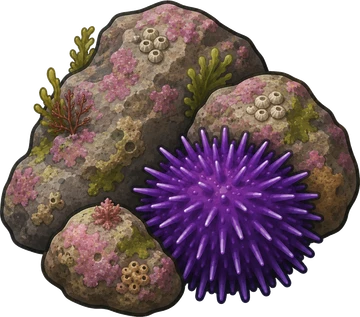
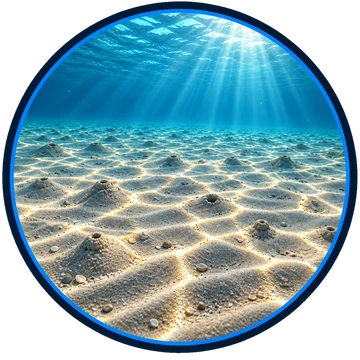
The stripefin ronquil lives on the coast from near San Francisco to northern Baja California, according to FishBase. Wikipedia gives a shorter range starting at Point Conception, and FishBase's wider version is used here. It occurs on rocks and sand along the exposed coast at about 20 to 300 feet, though depth limits vary by source.
Deep Dive
A ronquil has the long body of a blenny, a small bottom-dwelling fish, with a long dorsal fin on the back and a long anal fin on the belly that hold an even height along their full length. This species reaches about 6 inches. Color runs from olive brown to dull red, bluish black or purple with paler patches, and a blue stripe runs the length of the anal fin. Males have obvious blotches on the sides. Females are paler, with a blue spot at the front of the dorsal fin.
The fish is solitary and eats animals without backbones, including tiny crustaceans called amphipods and copepods, marine worms, shrimps and snails. Larger fish and California sea lions eat it. Females lay batches of eggs in sheltered places among the rocks, and the male guards them.
Names are a trap with this fish. FishBase calls this species the stripefin ronquil, while iNaturalist calls it the bluebanded ronquil and gives "stripefin" to its close relative, a fish in the same 2-species genus. Mexican Fish also uses "stripefin" for the relative. The scientific name is the safe label, and a close look is needed to separate the 2 in a photo.
Where to Find Them
Researched habitat and range candidates
San Diego · 14 beaches
Orange County · 10 beaches
Catalina Island · 6 beaches
Los Angeles · 10 beaches
Channel Islands · 21 beaches
Ventura · 15 beaches
Santa Barbara · 10 beaches
San Luis Obispo · 20 beaches
Monterey · 17 beaches
These locations have suitable habitat within the species range. An assignment is a possible encounter, not a confirmed sighting at every beach. Season, depth, and local conditions still matter. Historical habitat without present-day evidence is excluded.