

Taxonomy
Rarity
Abundance rates how many are in suitable habitat. Find difficulty rates how hard it is to locate one on a daylight snorkel or freedive through 50 ft. A higher find score means a harder search. The rarity category also reflects the kind of encounter; it is not an average of the 2 scores.
Seasonality
Location
The golden gorgonian ranges from Point Conception, Santa Barbara south to Panama. Point Conception is the northern wall, the same headland that stops the diamond stingray and the California butterfly ray, and it separates the cold water of the north coast from the warmer Southern California Bight. This is a warm-temperate animal at the cold edge of its range in California.
Depth runs from about 16 feet to 98 feet, with most colonies between 39 and 98. The habitat is rock with water moving over it. Colonies grow on rocky reef in moderate to high flow, on exposed and protected rocky shore alike, and on the reef under kelp forests.
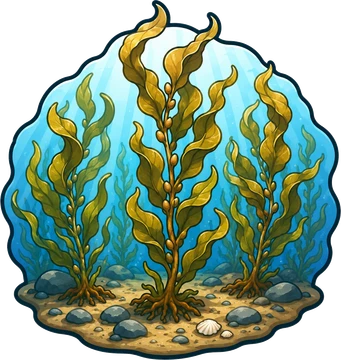
A colony reaches about 3 feet tall. The branches are thick, reddish brown, and they all lie in a single plane, so the whole animal is a flat fan rather than a bush. The polyps that cover it are yellow, and when they are open the colony reads bright yellow to almost orange. That plane is not decoration and it is not random, which is the most useful thing a diver can know about this species.
Deep Dive
The fan is aimed. Golden gorgonian colonies orient themselves perpendicular to the prevailing current, which puts the maximum surface area across the flow of water, and every polyp on that surface is a mouth waiting for what the current carries. A diver who looks at a stand of these fans is reading a record of which way the water usually moves at that spot, written by an animal that has been standing in it for years.
The thing being aimed is not 1 animal. A golden gorgonian colony is thousands of individual polyps, each a tiny cnidarian with its own tentacles and its own gut, all sharing a common skeleton that they build themselves by secreting calcium. What looks like a plant is a colony of animals arranged into the shape of a filter. They feed on plankton and on whatever else drifts past, including the eggs and larvae of other animals, and they do it without moving, without hunting and without any of the machinery a fish needs to make a living.
The skeleton keeps a record. As the colony grows it lays down rings inside the skeleton, in the same way and for the same reason a tree does, so a cross-section of a branch carries the colony's history. That is where the honest limit of this page sits. The rings are described in the literature and the growth rate is not, so how old a 3-foot fan actually is remains unknown. Given that these are slow-building colonial animals, the answer is probably a long time, but this page will not put a number on something nobody has published.
Reproduction is a temperature switch. Golden gorgonians spawn during the months when mean water temperature runs above about 57 degrees, releasing eggs and sperm into the water at the same time so fertilization happens in open water rather than inside the colony. The larvae drift, and the ones that survive settle onto rock and become the founding polyp of a colony that may stand there for decades. Everything about that strategy depends on there being bare rock available and current to deliver the larvae to it.
Two animals are recorded eating them, and 1 of them is already on this site. A small snail lives on the colonies and feeds on them, camouflaged against the branches well enough that divers rarely notice it. The other is the garibaldi, the bright orange fish that is California's state marine fish and a fixture of every kelp reef in the southern part of the state. A fish famous for aggressively defending a patch of reef turns out to be feeding on the sea fans growing in it.
The reason this entry exists at all is worth stating plainly. Before it, this Ichthyopedia had 139 species and not 1 cnidarian: no anemone, no jellyfish, no coral and no sea fan, on a coast where those animals cover the rock. Cnidarians are the group that includes corals, anemones, jellyfish and hydroids, all built on the same basic plan of a soft body ringed with stinging tentacles, and they are among the most abundant things a Southern California diver looks at. The golden gorgonian is where that gap starts closing.
Where to Find Them
Researched habitat and range candidates
San Diego · 13 beaches
Orange County · 10 beaches
Catalina Island · 14 beaches
Los Angeles · 10 beaches
Channel Islands · 24 beaches
Ventura · 15 beaches
Santa Barbara · 9 beaches
These locations have suitable habitat within the species range. An assignment is a possible encounter, not a confirmed sighting at every beach. Season, depth, and local conditions still matter. Historical habitat without present-day evidence is excluded.