


Taxonomy
Rarity
Abundance rates how many are in suitable habitat. Find difficulty rates how hard it is to locate one on a daylight snorkel or freedive through 50 ft. A higher find score means a harder search. The rarity category also reflects the kind of encounter; it is not an average of the 2 scores.
Seasonality
Location
FishBase gives the range as Oregon to southern Baja California. It describes the adults as fish of the surface layer, living both over the open ocean and over the continental shelf. In California they are best known from the waters around Catalina Island, where the summer flyingfish tours have run for about a century.
Deep Dive
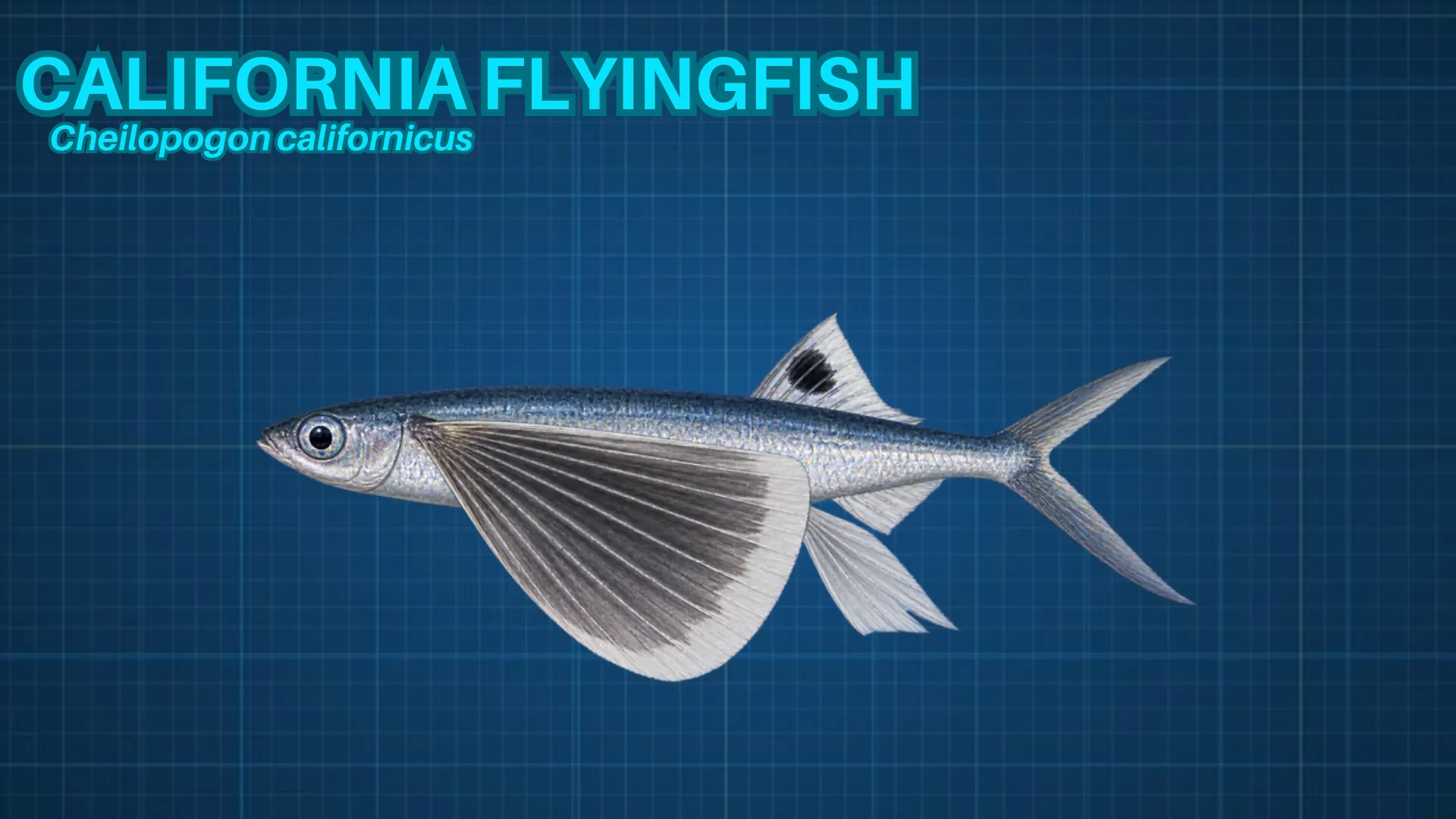
The California flyingfish is the largest of the flyingfishes, according to the Catalina Islander, which reports that big ones reach 18 inches and weigh well over a pound. FishBase lists a maximum of about 15 inches measured to the base of the tail. Its scientific name has shifted over the years, and FishBase notes that since the 1970s it has mostly been treated as a subspecies of a wider flyingfish species, Bennett's flyingfish.
It does not truly fly. FishBase describes it leaping from the water and gliding for long distances above the surface. The Catalina Islander reports glides of up to 45 seconds, or several hundred yards, carried on the lift of the long, wing-like pectoral fins, and explains that the glide helps the fish escape larger predators.
Those predators made the fish part of Catalina's fishing history. The Catalina Islander notes that the island's bluefin tuna were once called leaping tuna for the way they chased flyingfish, and that early anglers of Avalon's Tuna Club caught flyingfish at night and skipped them across the surface as tuna bait. They hold little appeal as food, and the same article warns that flyingfish can have a very offensive, pungent odor.
Watching them became a Catalina tradition. Accounts from a Catalina vacation-rental company and a nature blog both describe the wooden boat Blanche W, built in 1924 for William Wrigley Jr. to take visitors out at night, with powerful spotlights mounted on the bow. The rental company reports that the Blanche W ran for about 90 years before it was retired, and that a newer, faster boat took over the evening tours. The Catalina Islander reported in 2013 that the island celebrated the fish each year with a Flying Fish Festival.
Where to Find Them
Researched habitat and range candidates
San Diego · 7 beaches
Orange County · 5 beaches
Catalina Island · 9 beaches
Los Angeles · 8 beaches
Channel Islands · 24 beaches
Ventura · 3 beaches
Santa Barbara · 7 beaches
San Luis Obispo · 19 beaches
Monterey · 17 beaches
Oregon South Coast · 4 beaches
Oregon Central Coast · 3 beaches
Oregon North Coast · 1 beach
These locations have suitable habitat within the species range. An assignment is a possible encounter, not a confirmed sighting at every beach. Season, depth, and local conditions still matter. Historical habitat without present-day evidence is excluded.