
 El Niño CompendiumEdge of range this season. See every sighting →
Taxonomy
Rarity
Abundance rates how many are in suitable habitat. Find difficulty rates how hard it is to locate one on a daylight snorkel or freedive through 50 ft. A higher find score means a harder search. The rarity category also reflects the kind of encounter; it is not an average of the 2 scores.
Seasonality
Location
This is a rare visitor to California. iNaturalist held 4 California records on October 30, 2026, and 2 of those were flagged captive. A whale shark came up to the fishing boat Triton off Catalina in September 2014. In September 2026, a spotter pilot filmed a shark of about 14 to 16 feet between Malibu and Santa Barbara Island, and a Newport Beach charter met another near San Clemente Island, about 55 miles offshore. The site's El Niño Compendium tracks those sightings.
Whale sharks live in tropical and warm temperate seas everywhere except the Mediterranean. In the eastern Pacific, the 2021 Love checklist runs the range from Patrick's Point in Northern California to northern Chile. FishBase places them in water of about 64 to 86 degrees, usually in the top 330 feet. This page lists offshore spots along the California coast, because all the records read for this page came from open water.
Deep Dive
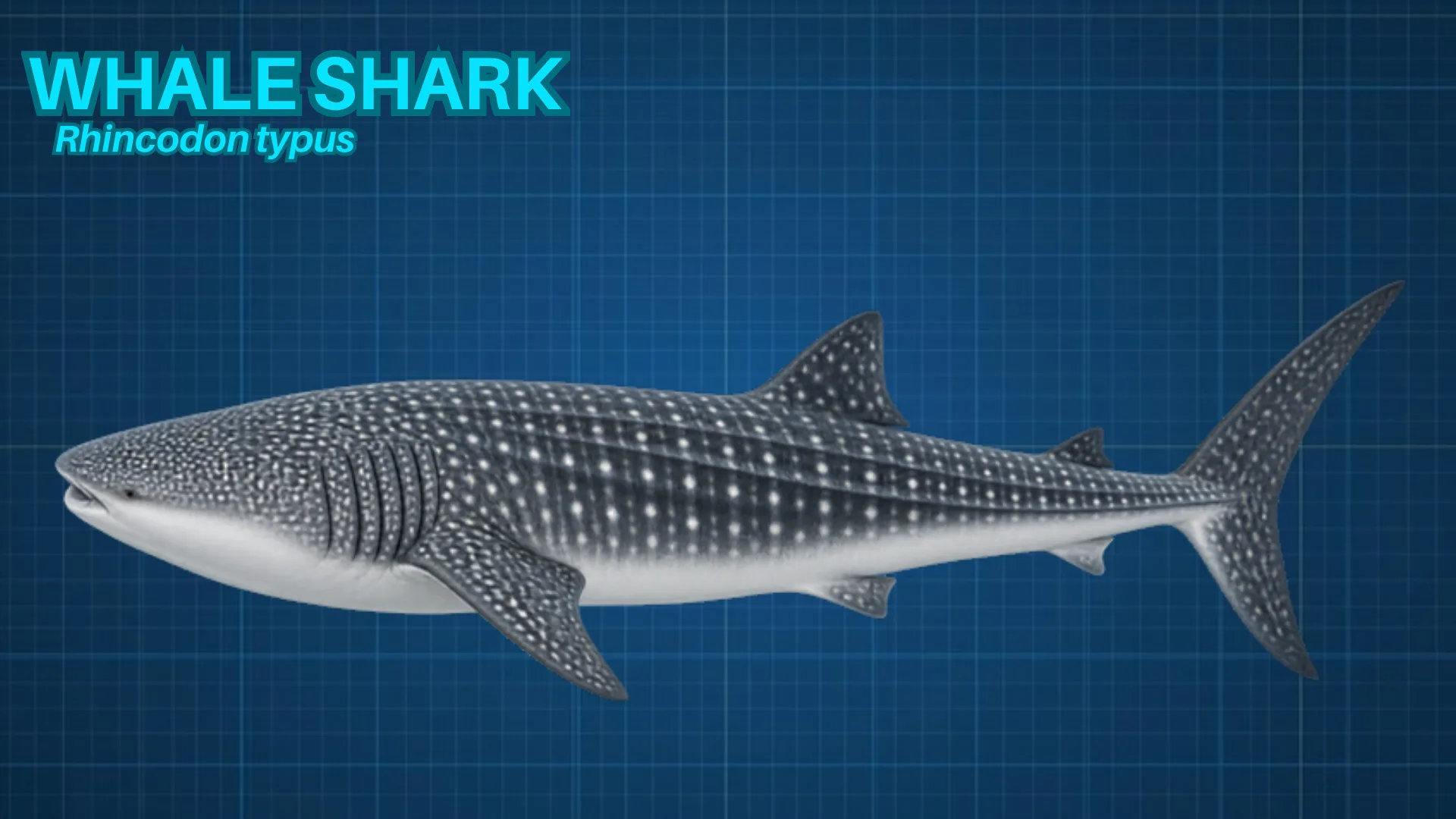
The whale shark is the largest living fish. Reliable lengths reach at least 55.8 feet, and 65.6 feet is probable. The head is broad and flat, with the mouth at the very front. The back and sides carry a checkerboard of pale spots and bars, and 3 ridges run along each side.
It is a filter feeder. It takes in water at or near the surface and strains out plankton, small crustaceans and schooling fish such as sardines and anchovies. Its gills trap prey larger than about 0.1 inch. FishBase says it returns to the same sites each year and often travels near tuna and other open-water fish.
A 36-foot female caught off Taiwan in 1995 carried about 300 young. The eggs hatch inside the mother. Both sexes mature at about 30 feet.
It is harmless to people. The greater danger runs the other way, because boats sometimes strike whale sharks feeding at the surface. California's booklet does not name the species, which leaves it under the general limit by default, and CITES Appendix II covers international trade.
Where to Find Them
Researched habitat and range candidates
San Diego · 2 beaches
Catalina Island · 2 beaches
Los Angeles · 1 beach
Channel Islands · 8 beaches
Ventura · 1 beach
San Luis Obispo · 12 beaches
Monterey · 1 beach
These locations have suitable habitat within the species range. An assignment is a possible encounter, not a confirmed sighting at every beach. Season, depth, and local conditions still matter. Historical habitat without present-day evidence is excluded.