
Whale Shark
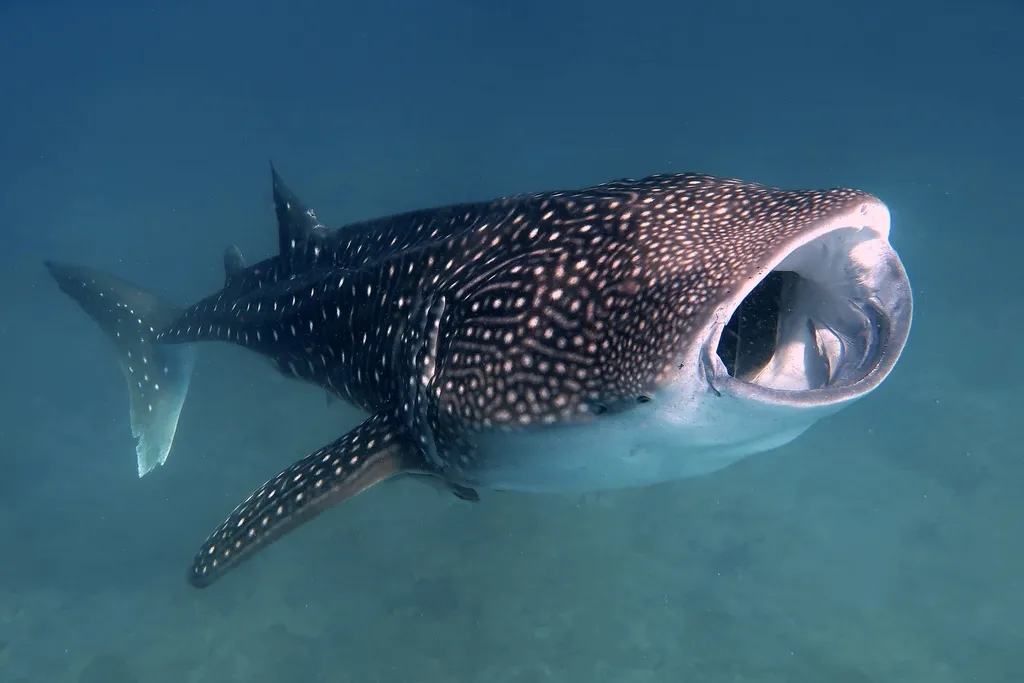
A tropical and warm-water shark that is very seldom seen off Southern California.

Sightings
2026 season, every one sourced
Southern California
- Mid-September, 2026Near San Clemente Island, about 55 miles offshoreMet by a Newport Beach fishing charter
- Sept 9, 2026Between Malibu and Santa Barbara IslandAbout 14 to 16 feet, filmed from the air by spotter pilot Carl Sbarounis
Photos
More of each life stage
No more photos yet. If you photographed this animal in California this season, post it to the Coastal Bulletin.
Home Range
Where it normally lives
Tropical and warm-temperate seas worldwide, except the Mediterranean.
Range source: FishBase · For The Win, Sept 12, 2026: "hundreds of miles north of its typical range"
Whale sharks live in tropical and warm-temperate seas around the world, everywhere except the Mediterranean. They prefer water of about 64 to 86°F. They spend most of their time in the top 330 feet of the open ocean, but they also come in close to shore.
Identification
The whale shark is the largest fish in the world. It has a broad, blunt head and a checkerboard pattern of yellow or white spots. Its huge mouth sits at the very front of the head, ahead of the eyes, and ridges run along its body to the base of the tail. The most reliably measured whale shark was about 39 feet long.
Natural History
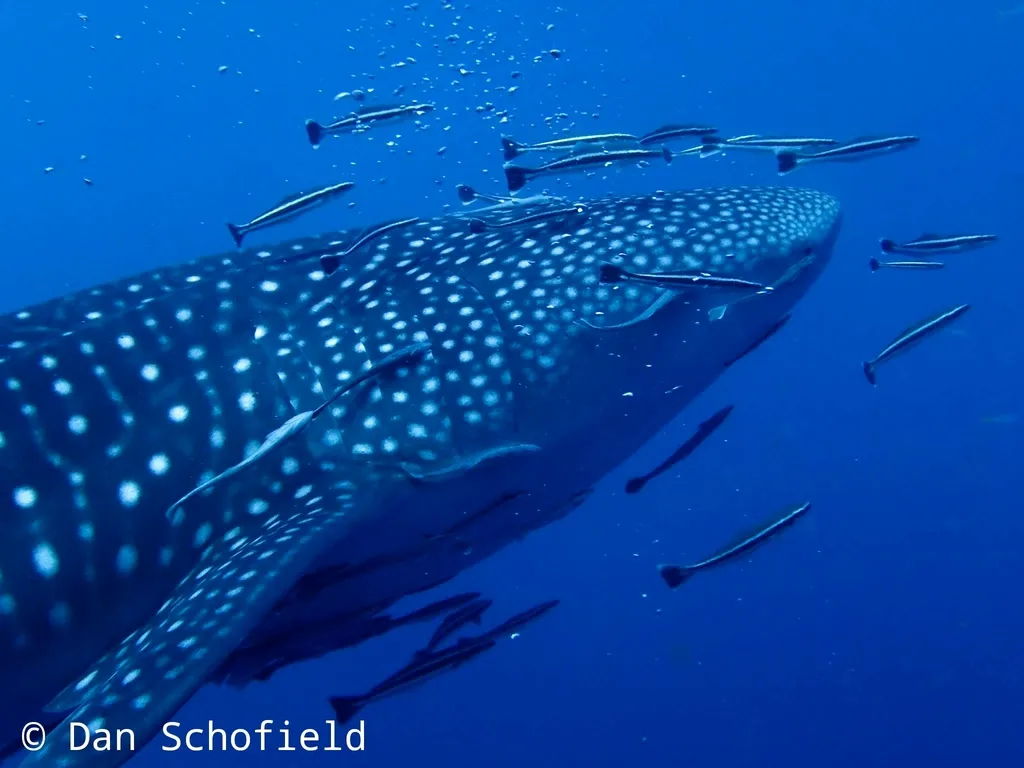
The whale shark is a filter feeder and is harmless to people. It strains plankton, small fish, crustaceans and squid from the water, often hanging upright with its head near the surface as it feeds. It travels alone or in groups of more than 100, and it often swims with schools of mackerel and related fish. Whale sharks migrate across whole oceans, yet they return to the same places year after year. Females give birth to live young, and a single litter can hold more than 300 pups. The species is listed as Endangered, and harpoon fisheries have depleted it in several countries.
In California
On September 9, 2026, spotter pilot Carl Sbarounis filmed a whale shark of about 14 to 16 feet between Malibu and Santa Barbara Island. Chris Lowe of the Cal State Long Beach Shark Lab told KTLA that strong El Niño years bring subtropical visitors up from Mexico, whale sharks among them. In mid-September, a Newport Beach fishing charter met a second whale shark near San Clemente Island, about 55 miles offshore.
Taxonomy
Rarity
Rarity in the compendium is Nautical Nick's call on how likely a diver is to run into the animal on the California coast this season, not how rare it is where it normally lives.