

Taxonomy
Rarity
Abundance rates how many are in suitable habitat. Find difficulty rates how hard it is to locate one on a daylight snorkel or freedive through 50 ft. A higher find score means a harder search. The rarity category also reflects the kind of encounter; it is not an average of the 2 scores.
Seasonality
Location
The Florida Museum counted 69 confirmed sightings worldwide, and Southern California holds some of the best known. The 2nd megamouth ever recorded was caught in a drift gill net off Santa Catalina Island on November 29, 1984. A male of about 16 feet was caught off Dana Point on October 21, 1990, then released and tracked. On September 11, 2022, recreational fishermen about 24 miles off San Diego watched 2 megamouths swimming together near the surface, the 1st such record published. iNaturalist held no California records on October 30, 2026.
The 2021 Love checklist lists Southern California, Punta Eugenia in Baja California, Hawaii and Peru on this side of the Pacific. All the California records read for this page sit in the Southern California Bight, the curved stretch of coast south of Point Conception. The Florida Museum notes that the 2 males caught there in late October and November raise the idea of a fall mating ground. This page lists offshore spots south of Point Conception.
Deep Dive
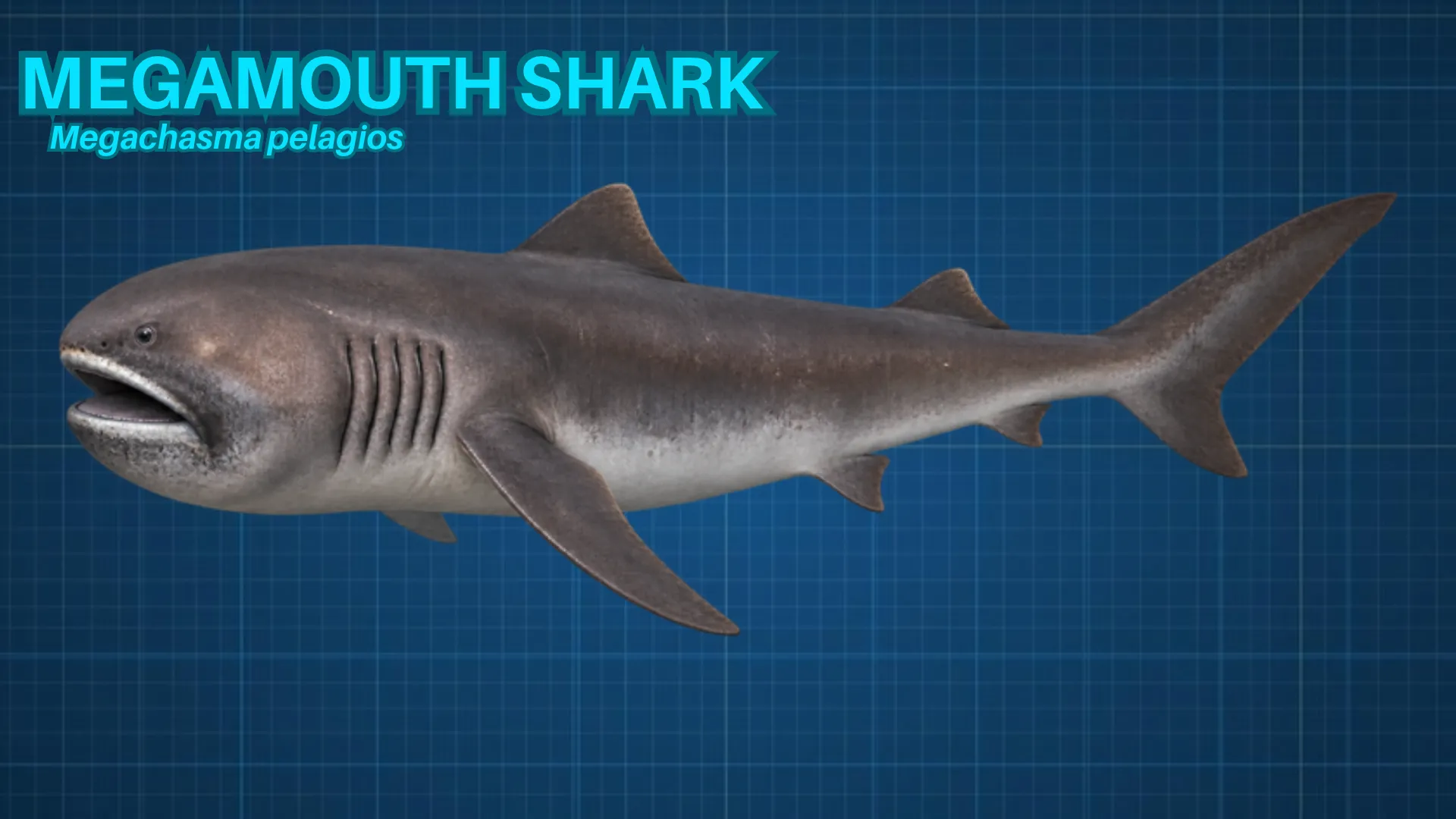
The megamouth is a filter feeder with a large head and the wide mouth that gives it the name. It reaches about 23.3 feet, and a white band runs along the snout. It swims slowly with the mouth open through swarms of krill and other small prey, then sucks them in and pushes the water out through the gills.
The 1990 Dana Point shark was tagged and followed. It stayed at about 40 to 80 feet at night, dropped to about 390 to 525 feet at dawn and came back up at dusk, covering about 39 miles in roughly 50 hours.
In the 2022 San Diego record, the smaller shark, a male, trailed the larger one. The authors compare that to courtship in other sharks, and they call it an interpretation. Nearly all specimens carry scars from cookiecutter sharks.
It is harmless to people. It is a federally prohibited species in West Coast fisheries for highly migratory species, so it may not be kept, even though California's booklet does not name it.
Where to Find Them
Researched habitat and range candidates
San Diego · 2 beaches
Catalina Island · 2 beaches
Los Angeles · 1 beach
Channel Islands · 8 beaches
Ventura · 1 beach
These locations have suitable habitat within the species range. An assignment is a possible encounter, not a confirmed sighting at every beach. Season, depth, and local conditions still matter. Historical habitat without present-day evidence is excluded.