
Taxonomy
Rarity
Abundance rates how many are in suitable habitat. Find difficulty rates how hard it is to locate one on a daylight snorkel or freedive through 50 ft. A higher find score means a harder search. The rarity category also reflects the kind of encounter; it is not an average of the 2 scores.
Seasonality
Location
The 2021 Love checklist gives California exactly 2 records of this shark. iNaturalist held none on October 30, 2026. The shortfin mako is the mako anglers know on this coast.
The range is worldwide in warm seas, with records north to southern Japan. The checklist adds 1 specimen from well off Cabo San Lucas. The Florida Museum describes it as an open-water shark often seen at the surface, and deepwater squid in its stomach suggest it also goes deep. This page lists offshore spots south of Point Conception.
Deep Dive
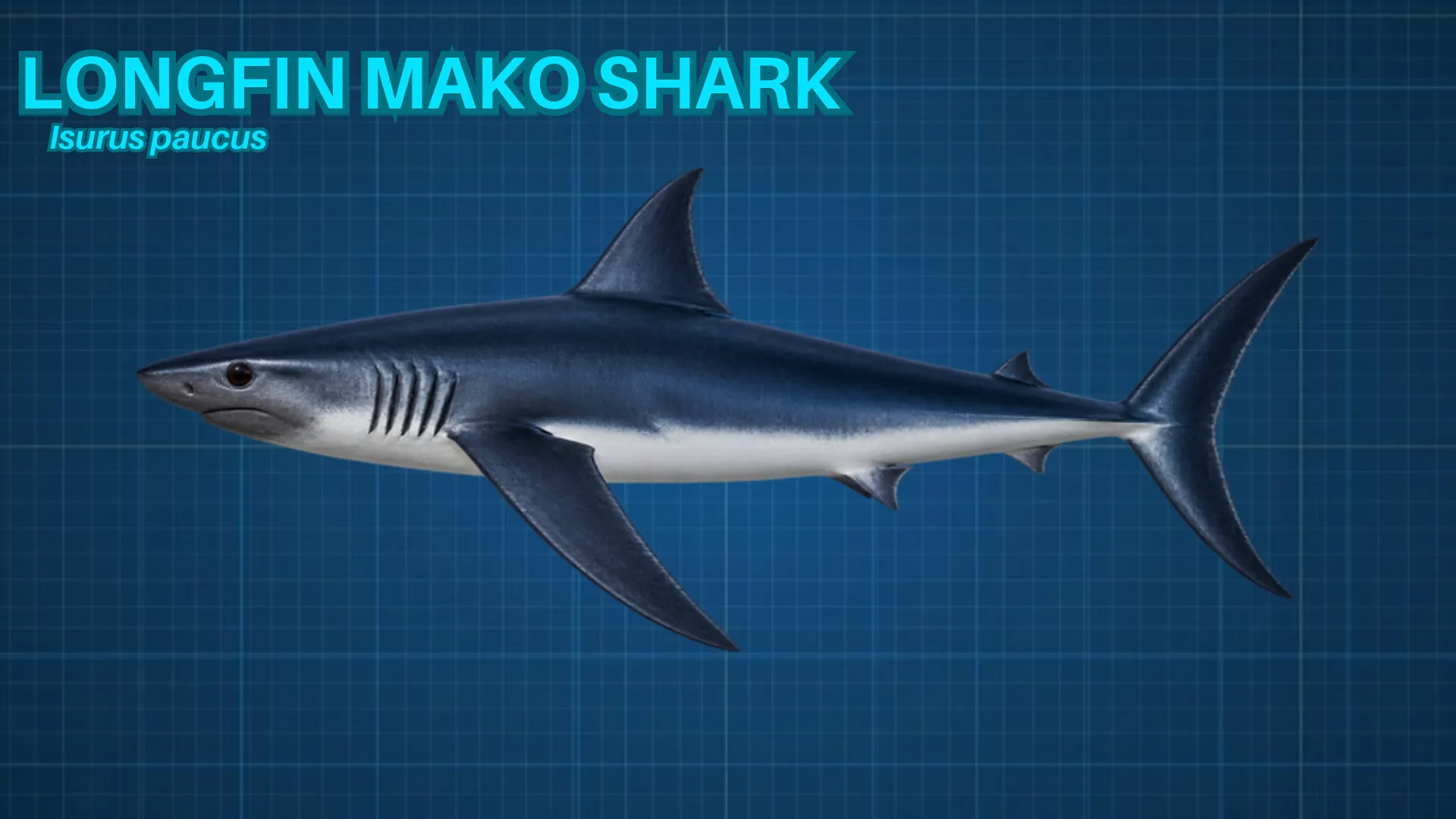
The name describes the difference. The pectoral fins, the paired fins behind the head, are as long as the head or longer, with broad rounded tips. The eyes are large, and the top lobe of the tail is only a little longer than the bottom lobe. It is dark slate blue or gray-black above and white below, and adults have a darker underside to the snout and jaw. It reaches about 14 feet.
Very little is known of its diet, which is presumed to be schooling fish and open-water squid. Like other mackerel sharks, it keeps its muscles, eyes and brain warmer than the water around it. Litters hold 2 to 8 pups, and females are reported mature above about 10 feet.
FishBase calls it potentially dangerous because of its size and teeth. California's limit section names only the shortfin mako, so the general limit of 10 applies to this species on paper, although the booklet's summary table says only "Mako." It is listed on CITES Appendix II.
Where to Find Them
Researched habitat and range candidates
San Diego · 2 beaches
Catalina Island · 2 beaches
Los Angeles · 1 beach
Channel Islands · 8 beaches
Ventura · 1 beach
These locations have suitable habitat within the species range. An assignment is a possible encounter, not a confirmed sighting at every beach. Season, depth, and local conditions still matter. Historical habitat without present-day evidence is excluded.