
Photo: Matt Wilbur, La Jolla Shores
Taxonomy
Rarity
Abundance rates how many are in suitable habitat. Find difficulty rates how hard it is to locate one on a daylight snorkel or freedive through 50 ft. A higher find score means a harder search. The rarity category also reflects the kind of encounter; it is not an average of the 2 scores.
Seasonality
Location
The spotted cusk-eel ranges from Washington to Baja California, and FishBase also lists Ecuador. It calls a Gulf of California record doubtful. The fish lives on sand and mud from the shore to about 920 feet.
Deep Dive
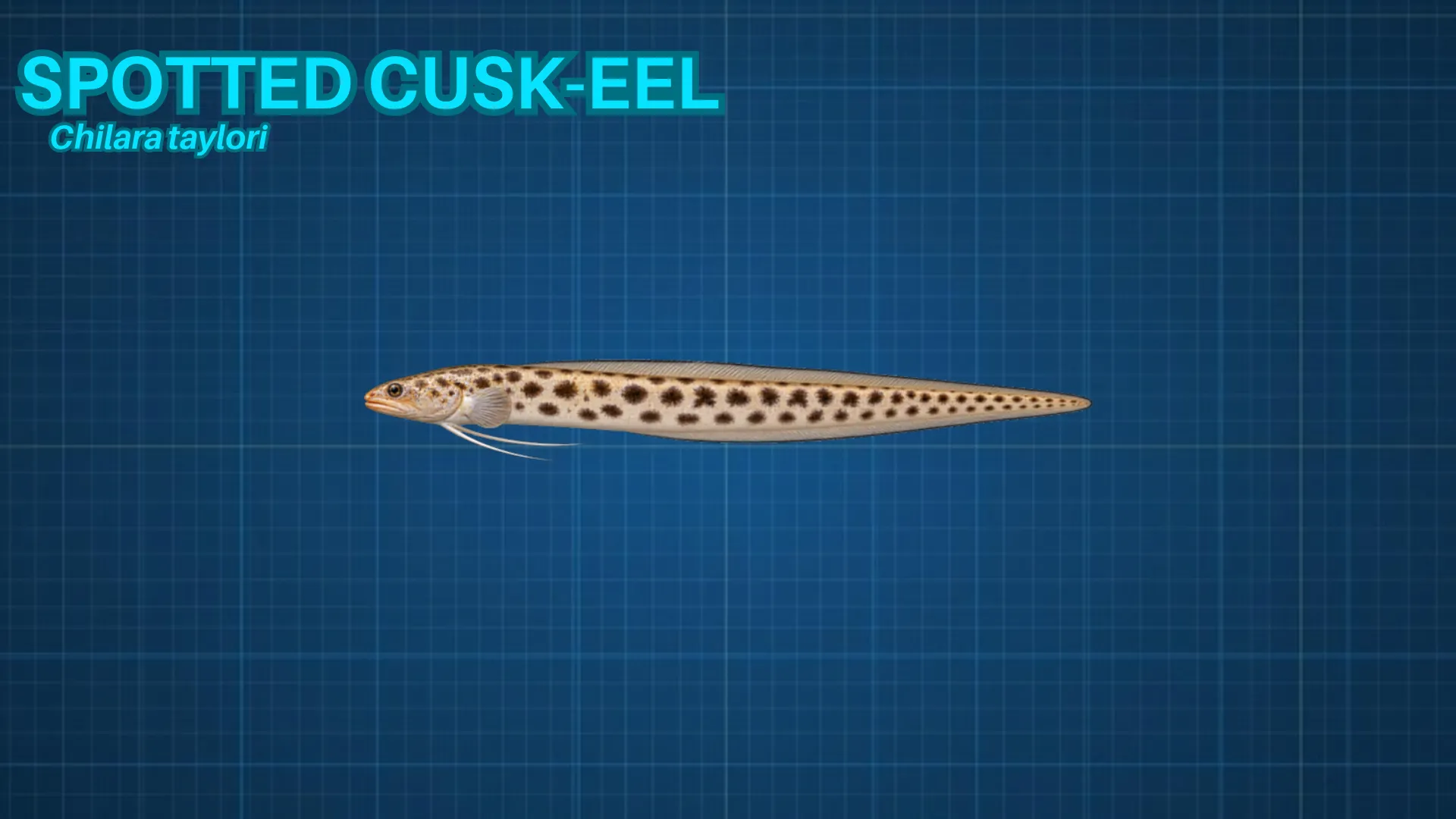
A cusk-eel is not an eel. It is a long, flattened fish that tapers to a point at the tail, and the shape has been compared to a letter opener. This species reaches about 16 inches, and most are near 12 inches. It is creamy brown, with large dark spots that form 3 or 4 rows along the body. The dorsal fin on the back and the anal fin on the belly have black edges. The pelvic fins, the lower paired fins, are reduced to small threads.
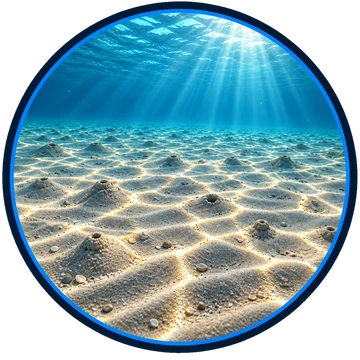
Adults often back into sand tail first and live in holes lined with mucus, and they also use mud, eelgrass and rock rubble. They are mostly active at night and on overcast days, feeding on crustaceans, small clams, marine worms and other invertebrates. Sea lions and cormorants eat them, and Mexican Fish adds gulls, porpoises and seals.
Where to Find Them
Researched habitat and range candidates
San Diego · 3 beaches
Orange County · 1 beach
Los Angeles · 3 beaches
Channel Islands · 4 beaches
Ventura · 1 beach
Santa Barbara · 1 beach
Central Sound · 1 beach
These locations have suitable habitat within the species range. An assignment is a possible encounter, not a confirmed sighting at every beach. Season, depth, and local conditions still matter. Historical habitat without present-day evidence is excluded.