
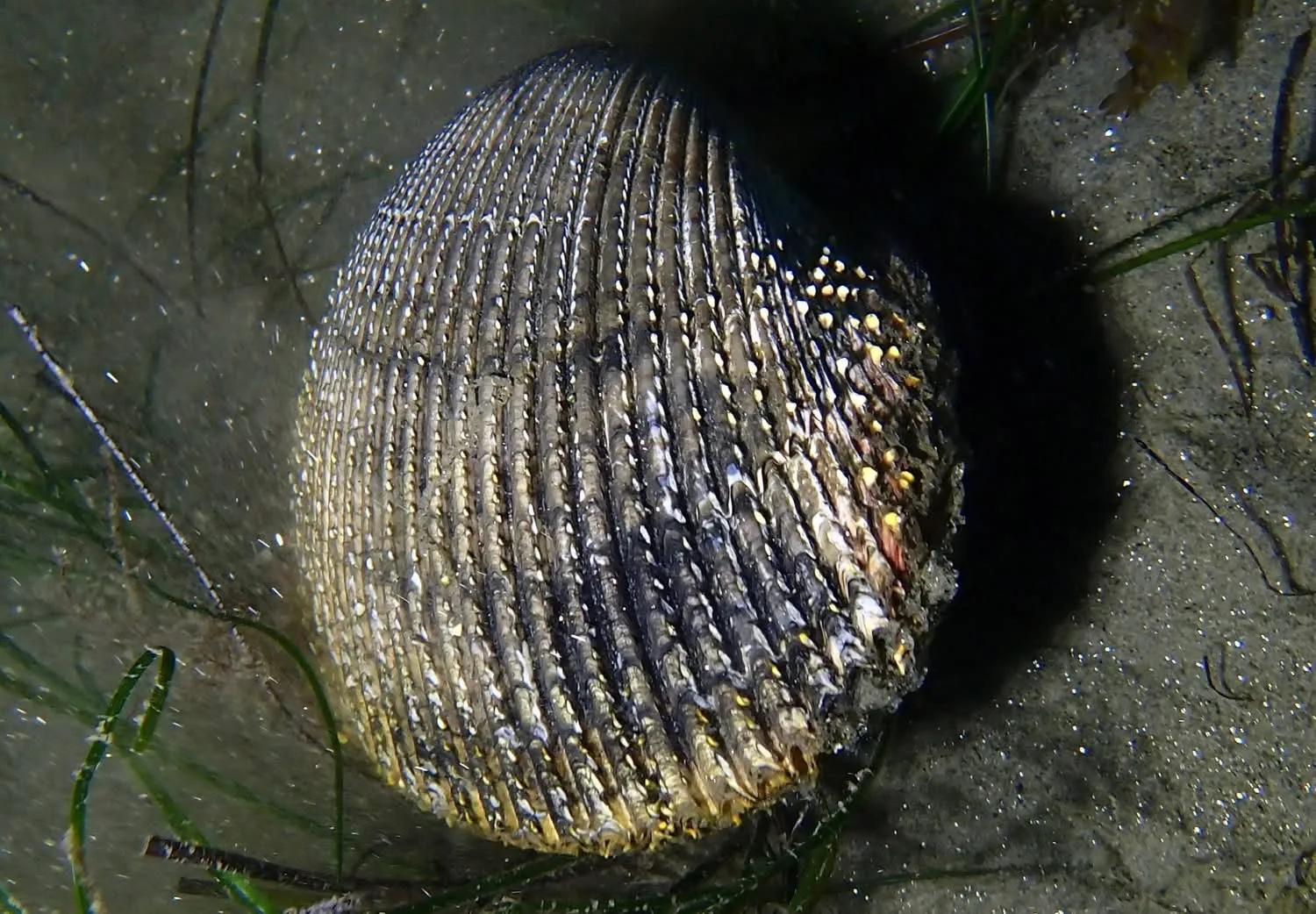
Also calledSpiny Prickly Cockle, Giant Pacific Cockle, Pacific Spiny Cockle

Photo: Ron Smoak, La Jolla Shores, San Diego
Taxonomy
Rarity
Abundance rates how many are in suitable habitat. Find difficulty rates how hard it is to locate one on a daylight snorkel or freedive through 50 ft. A higher find score means a harder search. The rarity category also reflects the kind of encounter; it is not an average of the 2 scores.
Seasonality
Location
The Santa Barbara Museum of Natural History gives its present range as Monterey to the outer coast of Baja California. A Mexican shell collectors' guide places it in bays and on sandy bottoms offshore, from the low tide line down to about 135 feet.
Deep Dive
The spiny cockle is a large cockle. The same shell guide gives a top size of about 5.1 inches long and 4.7 inches high.
It is an old resident of this coast. The Santa Barbara Museum of Natural History says the species is known in California as far back as the Miocene, a span from about 23 million to 5.33 million years ago.
Older books list it under a different genus, and the name spiny prickly cockle is the one iNaturalist uses. Little else about its life, such as its diet, breeding and lifespan, turned up in the sources read.
Where to Find Them
Researched habitat and range candidates
San Diego · 3 beaches
These locations have suitable habitat within the species range. An assignment is a possible encounter, not a confirmed sighting at every beach. Season, depth, and local conditions still matter. Historical habitat without present-day evidence is excluded.