
Munk's Pygmy Devil Ray
Mobula munkiana
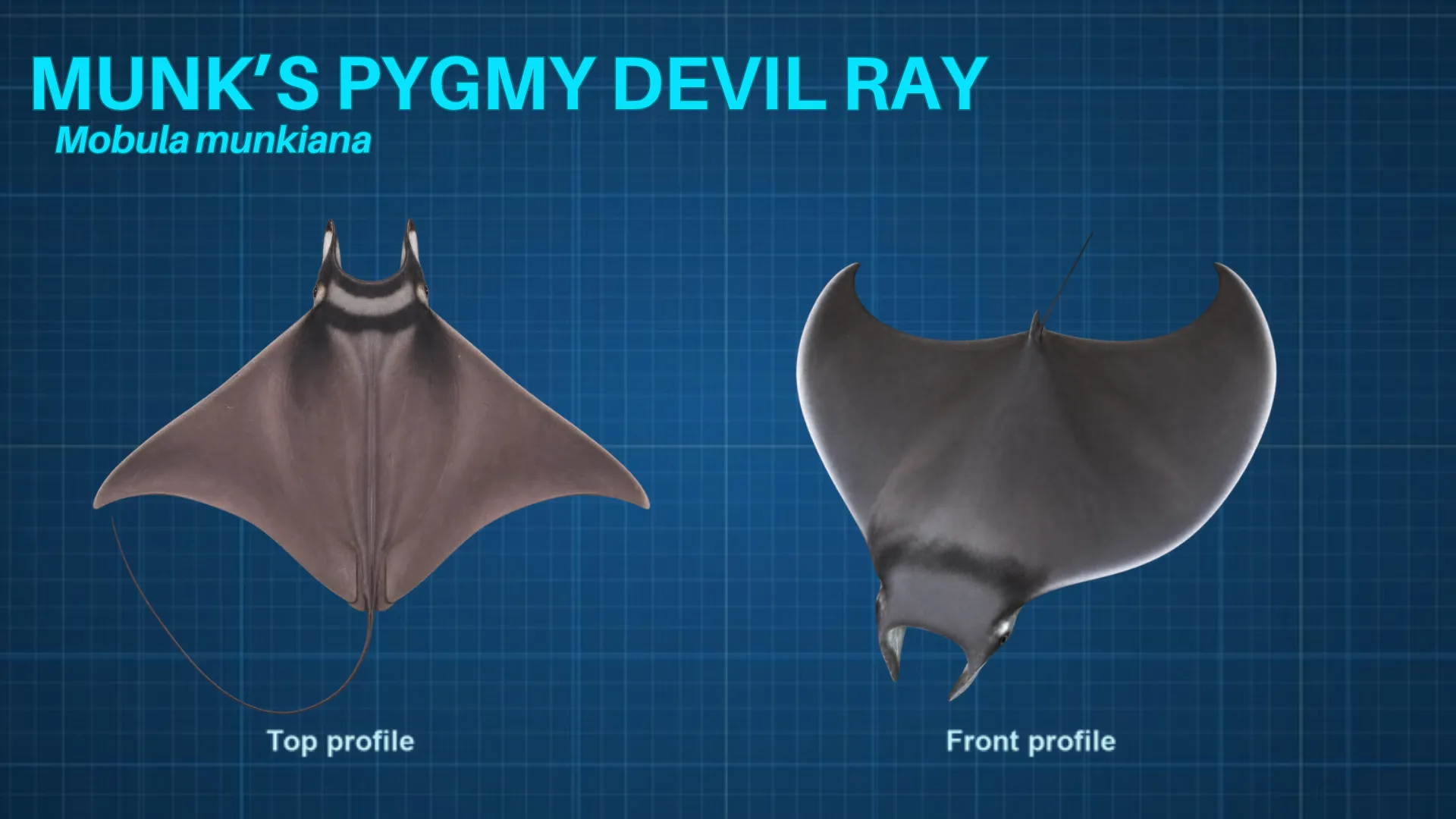
Also calledMunk's devil ray, pygmy devil ray, smoothtail mobula, manta chica
On the Pacific side of Baja California its published range ends at Todos Santos, near the southern tip. Giuseppe Notarbartolo di Sciara, who described the species in 1987, confirmed this as its first documented record in the United States.




Sightings
2026 season, numbered oldest first, every one sourced
- #1Nov 18, 20262 reportsMarine Room, La Jolla ShoresA school of at least 17 over sand close to shore, filmed from a drone at 8:20 AM. Snorkeler Casey Cole swam with about 20 the same morning
Photo: Chris Hart (@lajollamorningreport) Photo: Chris Hart (@lajollamorningreport) Photo: Chris Hart (@lajollamorningreport) Photo: Casey Cole (@casey_cole) Photo: Casey Cole (@casey_cole) Photo: Casey Cole (@casey_cole) Photo: Casey Cole (@casey_cole) Photo: Casey Cole (@casey_cole) Photo: Casey Cole (@casey_cole) - ID
- Nautical Nick, from Chris Hart's video and Casey Cole's photos. Confirmed by Giuseppe Notarbartolo di Sciara, who described the species in 1987
- Source
- La Jolla Morning Report (Chris Hart) drone video, Instagram, Nov 18 · Chris Hart stills from the video, sent to Nick, Nov 18 · Casey Cole dive log, Nov 18
About this fish
What it is, where it comes from, and whether it has been here before
How it lives
Munk's pygmy devil rays swim alone, in small groups, or in schools. At certain times of year they gather by the thousands in the Gulf of California, and in those gatherings they often leap high out of the water. They eat drifting crustaceans, mostly krill in Mexico, and sometimes small schooling fish. Females usually give birth to a single pup, and newborns measure 14 to 16 inches across. Sheltered bays serve as nurseries, and important nursery areas have been found in Mexico. Giuseppe Notarbartolo di Sciara described the species in 1987 and named it for his mentor, the oceanographer Walter Munk, and the specimens behind its description are kept at Scripps Institution of Oceanography in La Jolla. It is listed as vulnerable. Its habit of schooling makes it easy to catch in gillnets, trawls and purse seine nets.
Where it normally lives
Todos Santos in southern Baja California and the Gulf of California south to Peru, including the Galapagos Islands.
This ray lives in coastal water of the eastern Pacific from the Gulf of California south to Peru, including the Galapagos Islands. On the Pacific side of Baja California, the northernmost published record is from Todos Santos, near the southern tip of the peninsula. It swims from the surface to about 100 feet deep, and close to shore it goes all the way down to the bottom.
Range source: Love and colleagues, 2021 checklist of Pacific coast fishes · FishBase · Mexican Fish.com · Manta Trust field guide to manta and devil rays, 2023
In California
The La Jolla Morning Report filmed a school of at least 17 Munk's pygmy devil rays from a drone near the Marine Room at La Jolla Shores at 8:20 AM on November 18, 2026. The rays were swimming over sand in shallow water close to shore. Snorkeler Casey Cole swam with about 20 of them at La Jolla Shores the same morning and photographed them. Giuseppe Notarbartolo di Sciara, the scientist who described the species, confirmed the identification and that this is the first documented record of the species in the United States.
Photos
From California this season
The California photos sit with their numbered sightings above. If you photographed this animal in California this season, send it in.
Identification
How to tell it from the locals
Munk's pygmy devil ray is the smallest devil ray in the eastern Pacific. Females grow to about 4.2 feet across and males to about 3.8 feet. Its body is diamond shaped and wider than it is long. The top side is brownish to mauve gray, with a light gray stripe along the front edge of each wing. Most have a thick black band behind the head like a collar, often with a lighter gray stripe in front of it. The underside is whitish and turns darker gray toward the wing tips. The head is short and wide, with a pair of short head fins that stick forward like horns. The small fin on its back has a dark rim and often a lighter gray middle. The tail is thin, shorter than the body is wide, and has no spine. The spinetail devil ray, also seen off California this year, is much bigger and carries a spine at the base of its tail.
Details
Rarity in the compendium is Nautical Nick's call on how likely a diver is to run into the animal on the California coast this season, not how rare it is where it normally lives.