
Longspine Porcupinefish
Also calledballoonfish, longspined porcupinefish, freckled porcupinefish, longnose porcupinefish, longspined balloonfish, balloon porcupinefish, blotched porcupinefish, pez erizo mapache
FishBase lists it north to Southern California, and Love and colleagues cite a museum record from Bolinas in Northern California. iNaturalist held 2 confirmed wild California records on October 31, 2026, from 2023 and 2025.



Sightings
2026 season, numbered oldest first, every one sourced
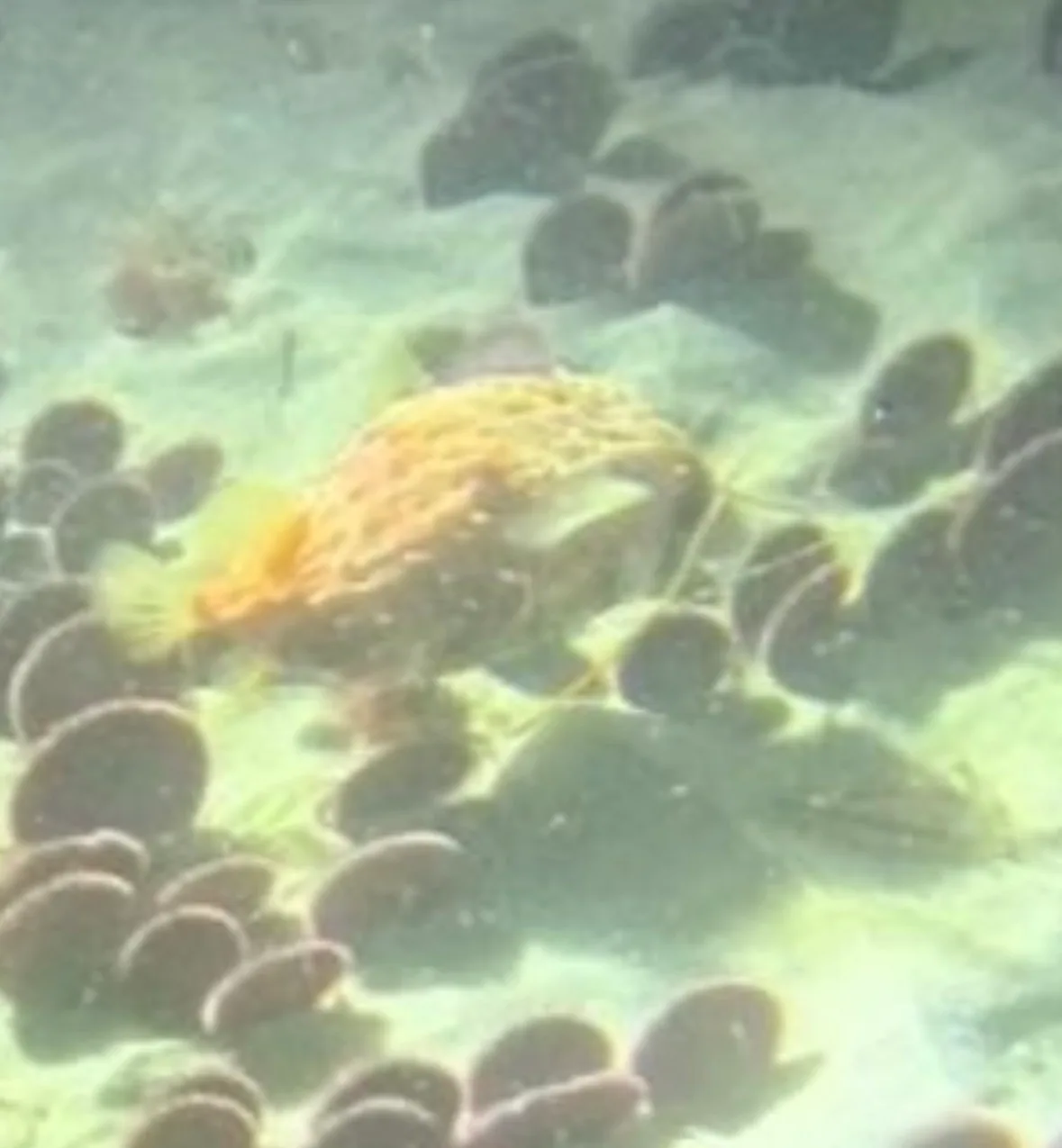
- #1Oct 30, 20261 reportLa Jolla ShoresAdult, on the sand dollar beds at night
Adult Photos: Casey, Emily A and James L- ID
- Nautical Nick, from Casey, Emily A and James L's photo
- Source
- Casey, Emily A and James L photo, sent to Nick, Oct 31
About this fish
What it is, where it comes from, and whether it has been here before
How it lives
Longspine porcupinefish live on shallow reefs and open bottoms, including seagrass beds and rocky ground, and they swim close to the bottom. FishBase gives a depth range of about 7 to 656 feet, usually 7 to 115 feet. They hide in crevices by day and hunt at night, using teeth fused into a beak to crack snails, sea urchins, hermit crabs and crabs. A threatened fish takes in water and inflates, which makes its spines stand out. Adults are solitary, though young fish may form small groups. Juveniles live in open water until they reach about 2 to 4 inches, often alongside floating Sargassum, a brown seaweed.
Where it normally lives
Southern California to Colombia, including the Galapagos Islands, with a museum record from Bolinas in Northern California.
This porcupinefish lives in warm seas around the world. FishBase lists it in the eastern Pacific from Southern California to Colombia, including the Galapagos Islands. Love and colleagues cite a California Academy of Sciences collection record from Bolinas, in Northern California, and run the range south to Easter Island, including the Gulf of California.
Range source: Love et al. 2021, via Zenodo · FishBase
In California
On the night of October 30, 2026, Casey, Emily A and James L photographed an adult longspine porcupinefish on the sand dollar beds at La Jolla Shores, and Nautical Nick identified it from the photo. On October 31, 2026, iNaturalist held 2 confirmed wild California records of this fish, 1 from Palm Beach on Monterey Bay in 2023 and 1 from Tijuana Slough in 2025. A third record from near Fort Bragg in 2025 was still unconfirmed. The other 25 California records on iNaturalist are marked as captive fish.
Photos
More of each life stage
The California photos sit with their numbered sightings above. If you photographed this animal in California this season, send it in.
Identification
How to tell it from the locals
The longspine porcupinefish has a robust, oval body, a wide blunt head and long, sharp spines that stick out when it inflates. Large dark blotches cover its back and sides, with small black spots between them, and it has a brown bar above and below each eye. Adults are olive and brown. The small spots stop short of the fins, which separates it from the spotted porcupinefish, whose spots reach the fins. It can reach about 20 inches, and sources put the common size between 6 and 14 inches.
Details
Rarity in the compendium is Nautical Nick's call on how likely a diver is to run into the animal on the California coast this season, not how rare it is where it normally lives.