
Taxonomy
Rarity
Abundance rates how many are in suitable habitat. Find difficulty rates how hard it is to locate one on a daylight snorkel or freedive through 50 ft. A higher find score means a harder search. The rarity category also reflects the kind of encounter; it is not an average of the 2 scores.
Seasonality
Location
The dusky shark barely reaches California. The 2021 Love checklist sets the northern limit at Redondo Beach, citing a 1983 field guide. iNaturalist held 1 California record on October 30, 2026, and that was an animal at Aquarium of the Bay in San Francisco. No dated wild California sighting turned up for this page.
In the eastern Pacific the range runs from Redondo Beach to the Gulf of California and the Revillagigedo Islands. Adults usually live about 660 to 1,310 feet down, and young sharks stay shallower. This page lists Redondo Beach for the checklist record and the offshore spots south of it.
Deep Dive
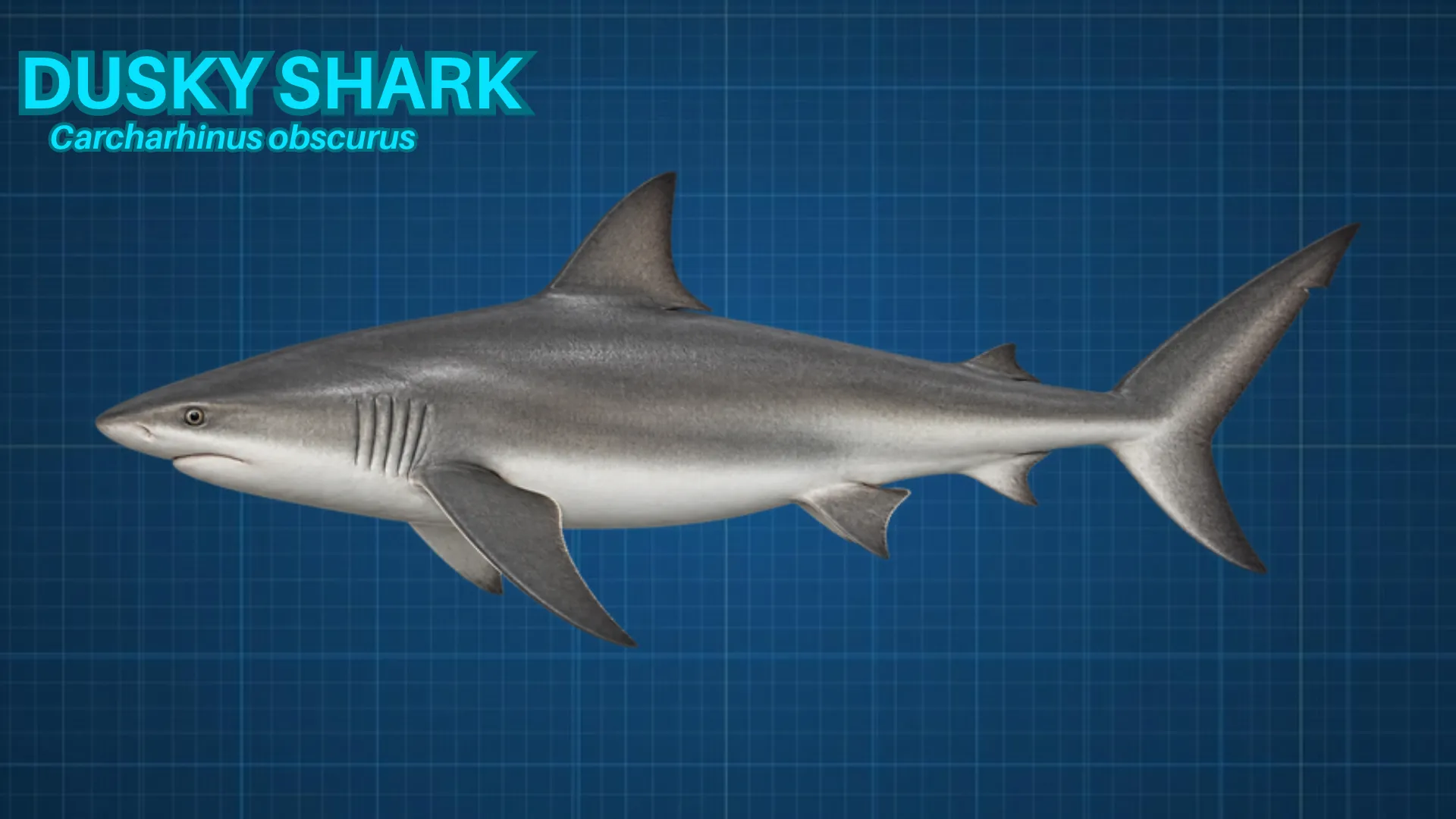
The dusky shark is a large, plain requiem shark, blue-gray above and white below, with a broad rounded snout. The fins of adults are unmarked, while juveniles have dusky tips on some fins. A low ridge runs along the back between the 2 dorsal fins, which helps separate it from the copper shark. The Galapagos shark is its closest lookalike, and a 2019 study reported hybrids of the 2 in the eastern Pacific. It reaches about 13.8 feet.
The diet includes bottom and open-water fish, other sharks, skates, rays, squid and octopus, snails and crustaceans.
Slow reproduction leaves it exposed to fishing. Mexican Fish, a reference site on the fishes of Mexico, says both sexes take about 20 years to mature. Sources disagree on pregnancy, with FishBase giving about 16 months and Mexican Fish 22 months. Mexican Fish reports declines above 80% over the past 100 years and says about 70% of released sharks die.
FishBase rates it as capable of injuring people. California's booklet does not name it, so the general limit of 10 applies on paper.
Where to Find Them
Researched habitat and range candidates
San Diego · 2 beaches
Catalina Island · 2 beaches
Los Angeles · 2 beaches
Channel Islands · 1 beach
These locations have suitable habitat within the species range. An assignment is a possible encounter, not a confirmed sighting at every beach. Season, depth, and local conditions still matter. Historical habitat without present-day evidence is excluded.