
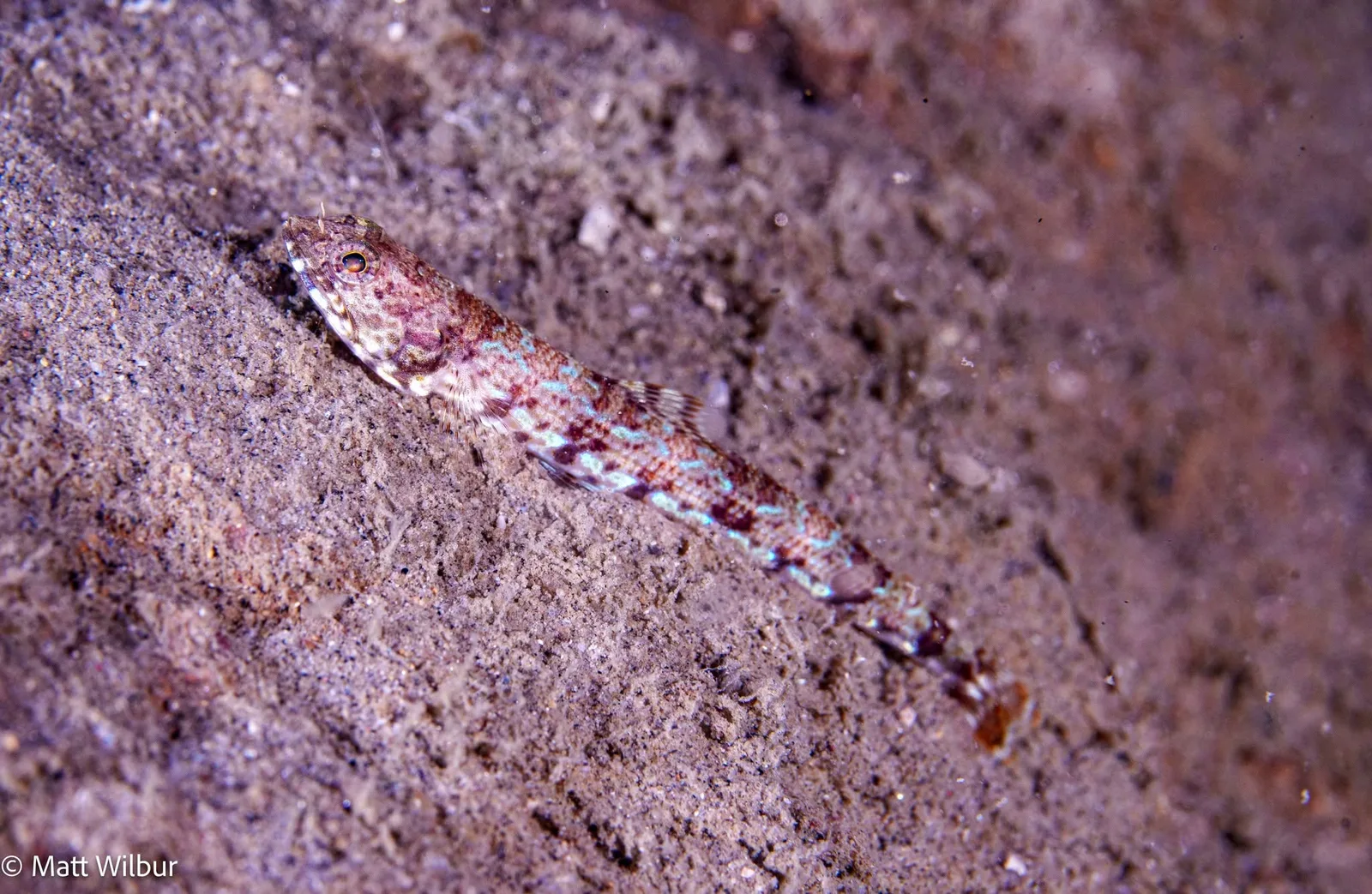
Also calledSauro Lizardfish, Banded Lizardfish, Reef Lizardfish
Taxonomy
Rarity
Abundance rates how many are in suitable habitat. Find difficulty rates how hard it is to locate one on a daylight snorkel or freedive through 50 ft. A higher find score means a harder search. The rarity category also reflects the kind of encounter; it is not an average of the 2 scores.
Seasonality
Location
Love and colleagues give the range as about 4 miles south of the U.S.-Mexico border to Chile, including the Gulf of California, the Galapagos and other offshore islands. FishBase starts it farther south, at Guaymas, Mexico. It commonly sits on sand patches around rocky reefs and on slopes of boulders and gravel, at about 3 to 90 feet, and Love and colleagues list it as deep as about 512 feet. The California lizardfish is a local relative in the same family, so any stray record needs a careful look.
Deep Dive
A lizardfish is a predator with a wide flat head and a very large mouth lined with rows of fine pointed teeth. The calico lizardfish reaches about 11 inches measured to the base of the tail fin, with most near 6 inches. It is reddish brown, with 5 saddle marks across the back that run down the sides as irregular bars, and 10 to 12 blotches on the lower sides. The author of Mexican Fish reports from personal catches that fish from under 50 feet are normally brown and those from deeper are always deep red.
It is a solitary fish that perches motionless on its pectoral fins, the paired fins behind the head. It is active at night and may bury itself in sand by day with only the eyes and mouth showing. It pounces on prey that swims past.
Where to Find Them
Researched habitat and range candidates
San Diego · 2 beaches
These locations have suitable habitat within the species range. An assignment is a possible encounter, not a confirmed sighting at every beach. Season, depth, and local conditions still matter. Historical habitat without present-day evidence is excluded.