
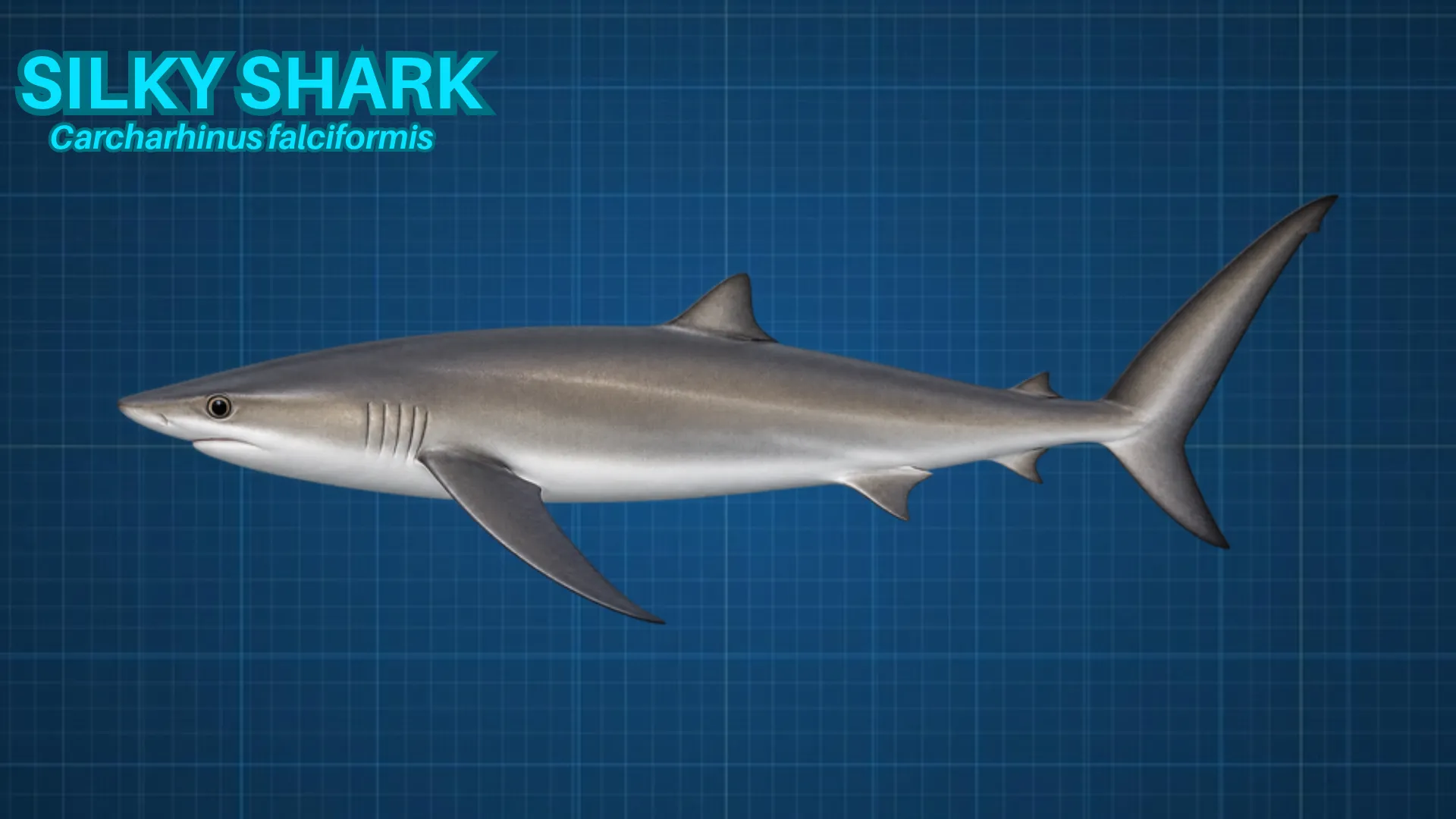
Also calledtiburón piloto

Taxonomy
Rarity
Abundance rates how many are in suitable habitat. Find difficulty rates how hard it is to locate one on a daylight snorkel or freedive through 50 ft. A higher find score means a harder search. The rarity category also reflects the kind of encounter; it is not an average of the 2 scores.
Seasonality
Location
No published range read for this page reaches California. The 2021 Love checklist stops at central Baja California, and FishBase stops at southern Baja. The reason for the page is a set of 8 photos posted to iNaturalist from San Diego County on October 22, 2026, which reached research grade with 5 people agreeing on the identification. The location is hidden on the record, and an early suggestion of soupfin shark was outvoted.
The range covers warm seas worldwide, and Mexican Fish, a reference site on the fishes of Mexico, says it needs water above about 73 degrees. It lives mainly in open water near the edge of the continental shelf, the shallow edge of the continent, and spends most of its time near the surface. This page lists the 2 offshore spots near that San Diego County record.
Deep Dive
The skin gives the shark its name. It is smooth to the touch, covered in tiny overlapping scales. The body is slender, metallic brown-gray above and white below. The best marks are a small rounded 1st dorsal fin set behind the tips of the pectoral fins, the paired fins behind the head, and a tiny 2nd dorsal fin with a long free tip. The pectoral fins are very long and sickle-shaped. It reaches about 11.5 feet.
Young silky sharks form schools, sometimes with tuna. It feeds on squid and many fish, including tuna. FishBase describes a quick-moving, aggressive shark that is regarded as dangerous. Mexican Fish says documented attacks are rare but that it may act aggressively toward divers.
Mexican Fish ranks it 2nd only to the blue shark as the most caught shark in the world, and it is listed on CITES Appendix II. California's booklet does not name it, so the general limit of 10 applies.
Where to Find Them
Researched habitat and range candidates
San Diego · 2 beaches
These locations have suitable habitat within the species range. An assignment is a possible encounter, not a confirmed sighting at every beach. Season, depth, and local conditions still matter. Historical habitat without present-day evidence is excluded.