
Bullseye Puffer
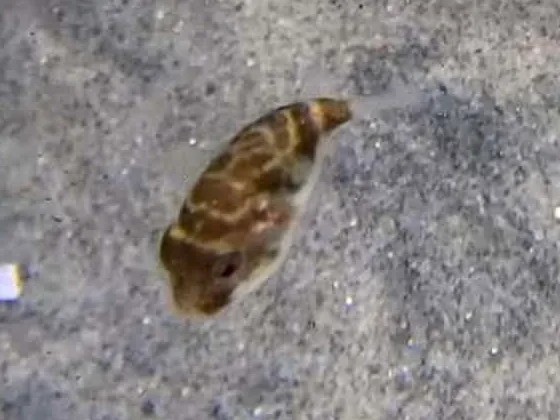
Also calledbotete diana, botete
Love and colleagues list it north to Redondo Beach, so its listed range reaches Southern California. iNaturalist held 6 California records from 2020 to 2025 on November 1, 2026, and none from 2026.


Sightings
2026 season, numbered oldest first, every one sourced
- #2Oct 26, 20261 reportScripps Pier, La JollaA very young juvenile near the surface
Juvenile Juvenile Juvenile Photos: Allison Wylot- ID
- Nautical Nick, from Allison Wylot's photos
- Source
- Allison Wylot photos, sent to Nick, Nov 1
- #1Oct 20, 20261 reportLa Jolla CanyonJuvenile
Juvenile Photos: Jon Malgaya- ID
- Nautical Nick, from Jon Malgaya's photo
- Source
- Jon Malgaya photo, sent to Nick, Nov 1
About this fish
What it is, where it comes from, and whether it has been here before
How it lives
Bullseye puffers live mostly in the sea and stay near the bottom, usually over sand and sometimes around rocky reefs and nearby sand patches. Young fish live in estuaries. Love and colleagues list records from the surface down to 344 feet. FishBase says the fish makes a loud grating noise. Mexican Fish describes it as exceedingly well camouflaged and says it may not be able to blow itself up as other puffers do. The species is poorly studied, and the sources read for this page do not describe its diet or breeding.
Where it normally lives
Redondo Beach in Southern California to Pisco, Peru, including the Gulf of California and the Galapagos Islands.
Love and colleagues list the bullseye puffer from Redondo Beach to Pisco, Peru, including the Gulf of California and the Galapagos Islands. FishBase gives California to Peru and the Galapagos Islands.
Range source: Love et al. 2021, via Zenodo · FishBase · Mexican Fish.com
In California
On October 20, 2026, Jon Malgaya photographed a juvenile bullseye puffer in La Jolla Canyon, and on October 26, Allison Wylot photographed a very young one at Scripps Pier. Nautical Nick identified both from the photos. iNaturalist held 6 California records from 2020 to 2025 on November 1, 2026, from Imperial Beach north to Bolsa Chica in Huntington Beach, and none from 2026.
Photos
More of each life stage
The California photos sit with their numbered sightings above. If you photographed this animal in California this season, send it in.
Identification
How to tell it from the locals
The bullseye puffer has a moderately long body, a large blunt head and raised eyes with a yellow iris. Its back is olive-brown and its underside is white and unusually flat. Narrow yellowish lines, bars and slanted bands cross the head and back, and a double oval on the back gives the fish its name. Small dark spots cover the head, sides and upper back, while the fins have no spots. It has no scales and no pelvic fins, and small spines cover its head and body. Mexican Fish says the markings on the back make it easy to identify, though they fade quickly after death.
Details
Rarity in the compendium is Nautical Nick's call on how likely a diver is to run into the animal on the California coast this season, not how rare it is where it normally lives.