
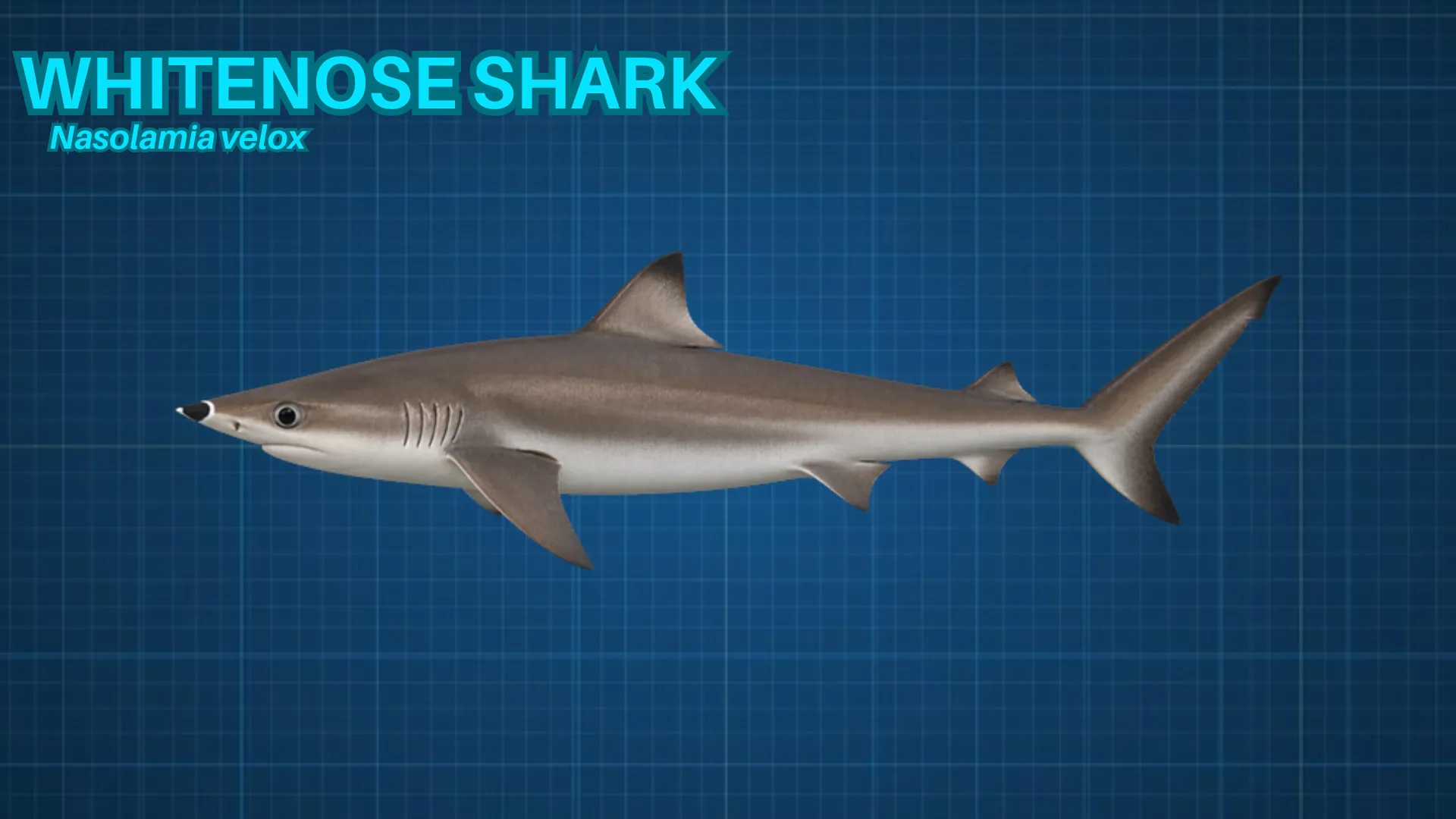
Also calledtiburón coyotito
Taxonomy
Rarity
Abundance rates how many are in suitable habitat. Find difficulty rates how hard it is to locate one on a daylight snorkel or freedive through 50 ft. A higher find score means a harder search. The rarity category also reflects the kind of encounter; it is not an average of the 2 scores.
Seasonality
Location
California's claim on this shark rests on a record off Malibu. The 2021 Love checklist starts its range there, and iNaturalist held no California records on October 30, 2026. Mexican Fish, a reference site on the fishes of Mexico, says it is rare even in Baja California, appearing mainly during warm-water periods, and that it is missing along the central and northwest Baja coast from Guerrero Negro north.
The range runs from off Malibu to Puerto Pizarro in Peru, including central Baja California, the Gulf of California and the Galapagos. It lives near the bottom on the continental shelf, the shallow edge of the continent, both inshore and offshore. FishBase says most records come from about 50 to 80 feet. Malibu is the only spot listed on this page.
Deep Dive
The very long, cone-shaped snout gives this shark its look. The body is slender, brownish gray above with a metallic sheen, and white below. The large oval nostrils sit close together. There is no ridge on the back between the dorsal fins. It reaches about 5.4 feet, and it is the only species in its genus, its group of closest relatives.
Mexican Fish separates it from 2 lookalikes. A blue shark's dorsal fin starts well behind the tips of the pectoral fins, and a Pacific sharpnose shark has grooves at the corners of the mouth and widely spaced nostrils.
It eats small fish such as anchovies, along with crabs. A stomach study from Ecuador found jumbo squid to be its most important prey. Little else is known about its age, growth or movements. FishBase rates it harmless to people. California's booklet does not name it, so the general limit of 10 applies on paper.
Where to Find Them
Researched habitat and range candidates
Los Angeles · 1 beach
These locations have suitable habitat within the species range. An assignment is a possible encounter, not a confirmed sighting at every beach. Season, depth, and local conditions still matter. Historical habitat without present-day evidence is excluded.