
Reef Cornetfish
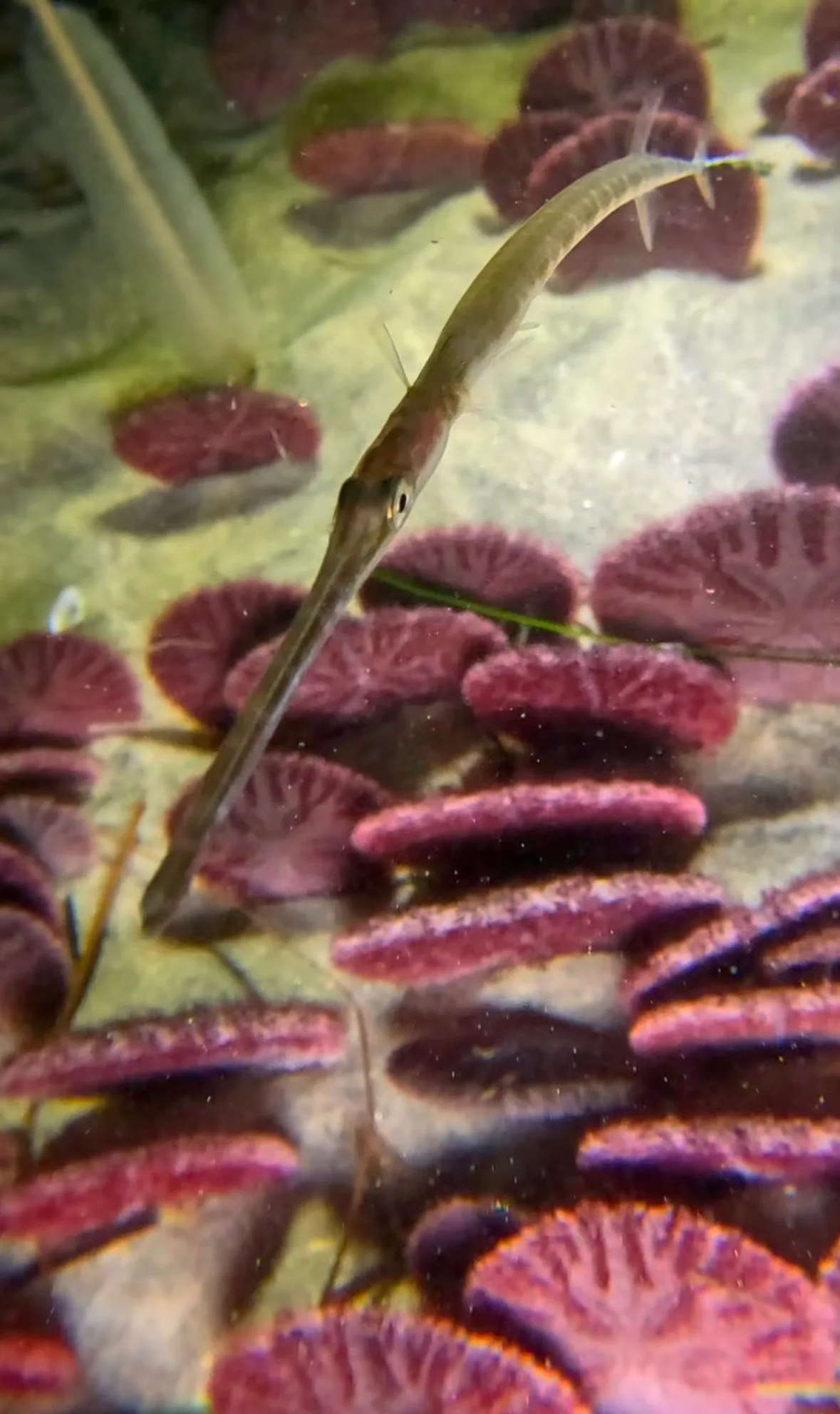
Also calledbluespotted cornetfish, corneta pintada
Love and colleagues list California records from Laguna Beach and San Clemente Island, so its listed range reaches Southern California. iNaturalist held 5 California records on November 2, 2026, all from October 2026.
Sightings
2026 season, numbered oldest first, every one sourced
- #6Oct 28, 20262 reportsRedondo Beach
- #5Oct 23, 20261 reportRedondo Beach
- Source
- iNaturalist 410670525
- #4Oct 20, 20261 reportLa Jolla CanyonPhotos: Jon Maglaya
- ID
- Nautical Nick, from Jon Maglaya's photos
- Source
- Jon Maglaya photos, sent to Nick, Nov 2
- #3Oct 19, 20261 reportSan Diego County
- Source
- iNaturalist 409603279
- #2Oct 19, 20261 reportLa Jolla CanyonPhotos: Jon Maglaya
- ID
- Nautical Nick, from Jon Maglaya's photos
- Source
- Jon Maglaya photos, sent to Nick, Nov 2
- #1Oct 14, 20261 reportRedondo Beach
- Source
- iNaturalist 409660217
About this fish
What it is, where it comes from, and whether it has been here before
How it lives
Reef cornetfish live on reefs and nearby sandy bottoms, and over seaweed beds. They avoid areas with heavy surge. They swim alone or in schools, and they eat small fishes, shrimps and squids. Love and colleagues list records from the surface down to 433 feet. The fish lays eggs, and the sources read for this page give no other breeding details.
Where it normally lives
Warm seas around the world. In the eastern Pacific, from Laguna Beach and San Clemente Island in Southern California to northern Chile, including the Gulf of California and the Galapagos Islands.
The reef cornetfish lives in warm seas around the world. In the eastern Pacific, Love and colleagues list it from Laguna Beach and San Clemente Island in Southern California to northern Chile, including the Gulf of California and the Galapagos Islands. FishBase says it has also spread into the Mediterranean Sea through the Suez Canal.
Range source: Love and colleagues, 2021 checklist of Pacific coast fishes · FishBase · Mexican Fish.com
In California
Love and colleagues list California records from Laguna Beach and San Clemente Island. On October 19 and 20, 2026, Jon Maglaya photographed reef cornetfish in La Jolla Canyon, and Nautical Nick identified them. iNaturalist held 5 California records on November 2, 2026, all from October 2026: 4 from Redondo Beach and 1 from San Diego County.
Photos
From California this season
The California photos sit with their numbered sightings above. If you photographed this animal in California this season, send it in.
Identification
How to tell it from the locals
The reef cornetfish is a long, thin fish with a very long tube-shaped snout and a forked tail. A long white thread, called a filament, trails from the middle of the tail. Its pattern changes. Mexican Fish says a resting fish shows dark bars that help it blend in, and those bars fade into thin blue stripes when it swims. It normally has 2 blue stripes along the top of the back and 2 rows of blue spots next to the dorsal fin, the fin on its back. FishBase describes it as green on the back and silvery white below, with orange dorsal and anal fins. It reaches about 5 feet 3 inches.
The Pacific cornetfish is the closest look-alike. It is a uniform orange-brown, and its tail filament is usually dark.
Details
Rarity in the compendium is Nautical Nick's call on how likely a diver is to run into the animal on the California coast this season, not how rare it is where it normally lives.