
Pacific Cornetfish
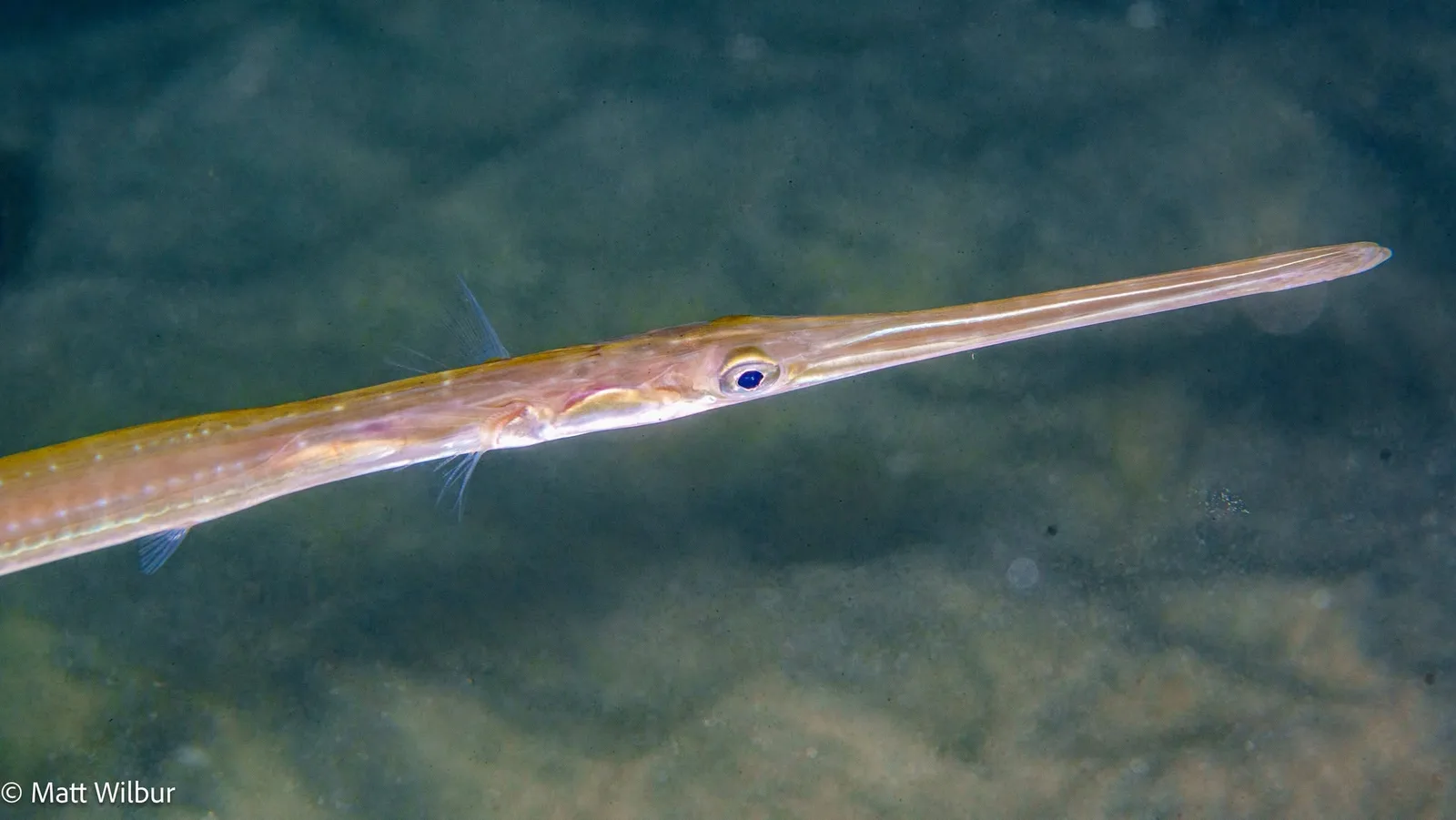
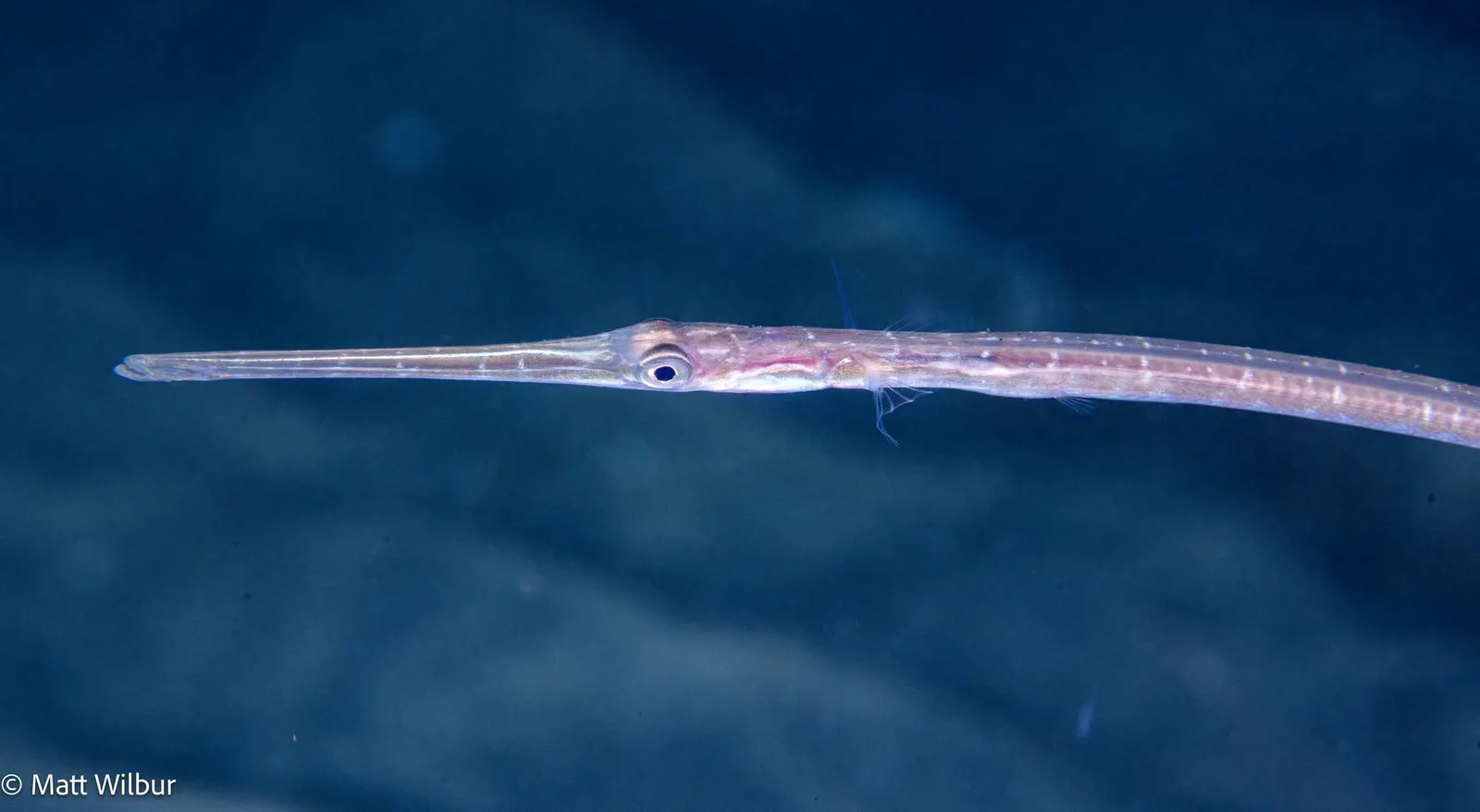
Also calleddeepwater cornetfish, corneta flautera
Identified by Nautical Nick from Matt Wilbur's photos. iNaturalist held no California records of this fish on October 30, 2026.

Sightings
2026 season, numbered oldest first, every one sourced
Southern California
- #1Oct 28, 2026La Jolla ShoresAdults over 2 feet long, with thinner, paler juveniles
Adult 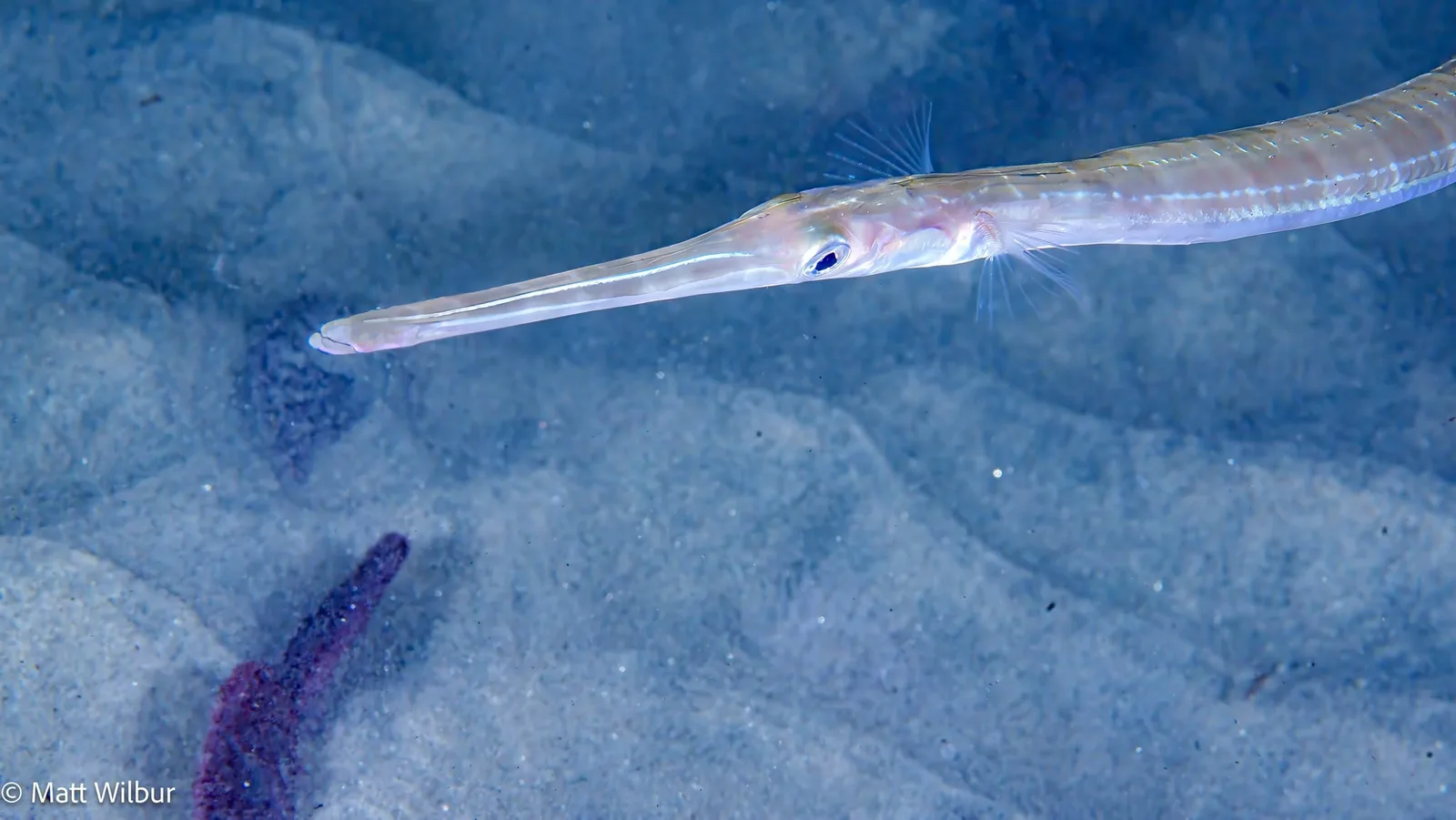
Adult 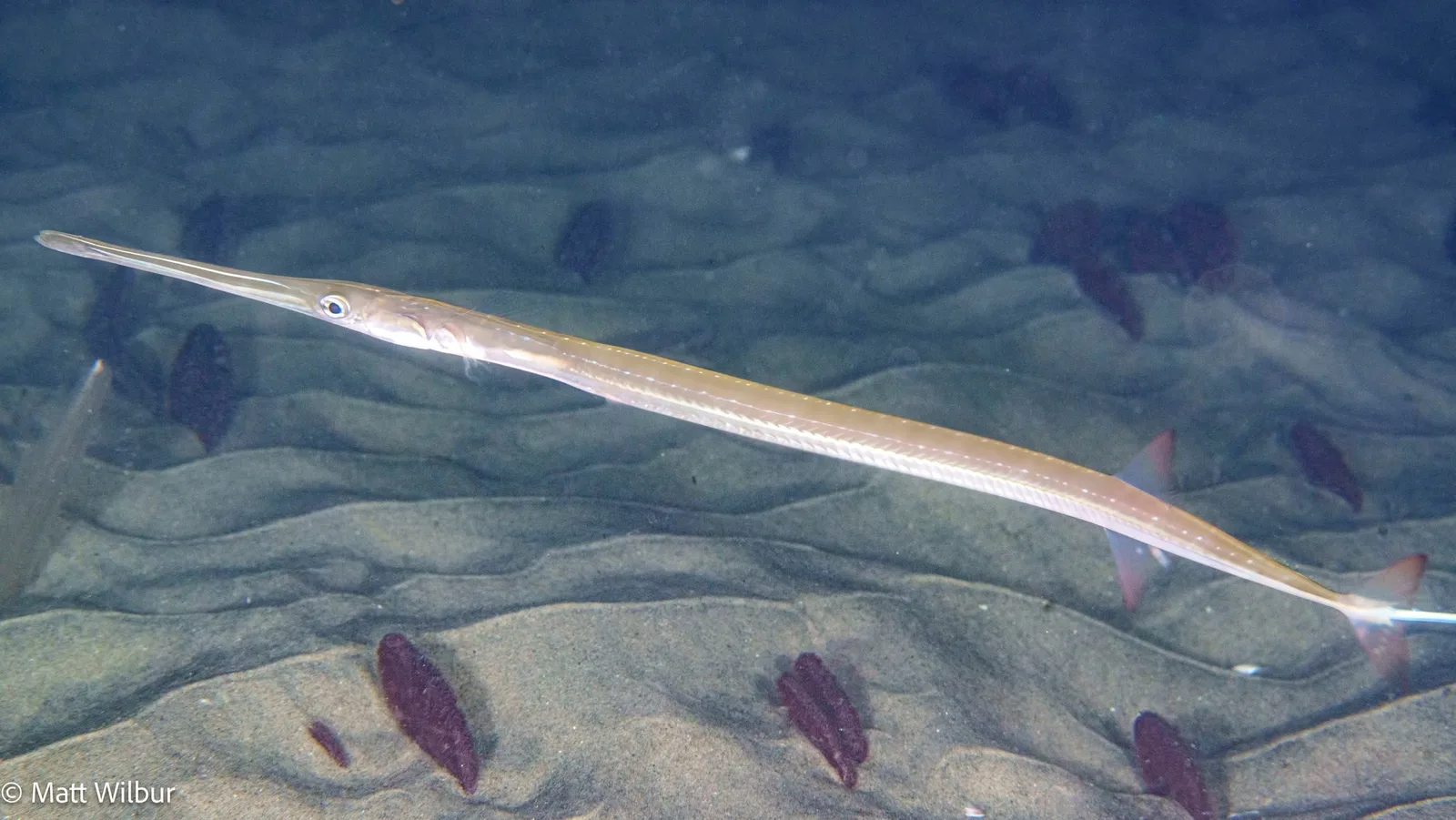
Adult 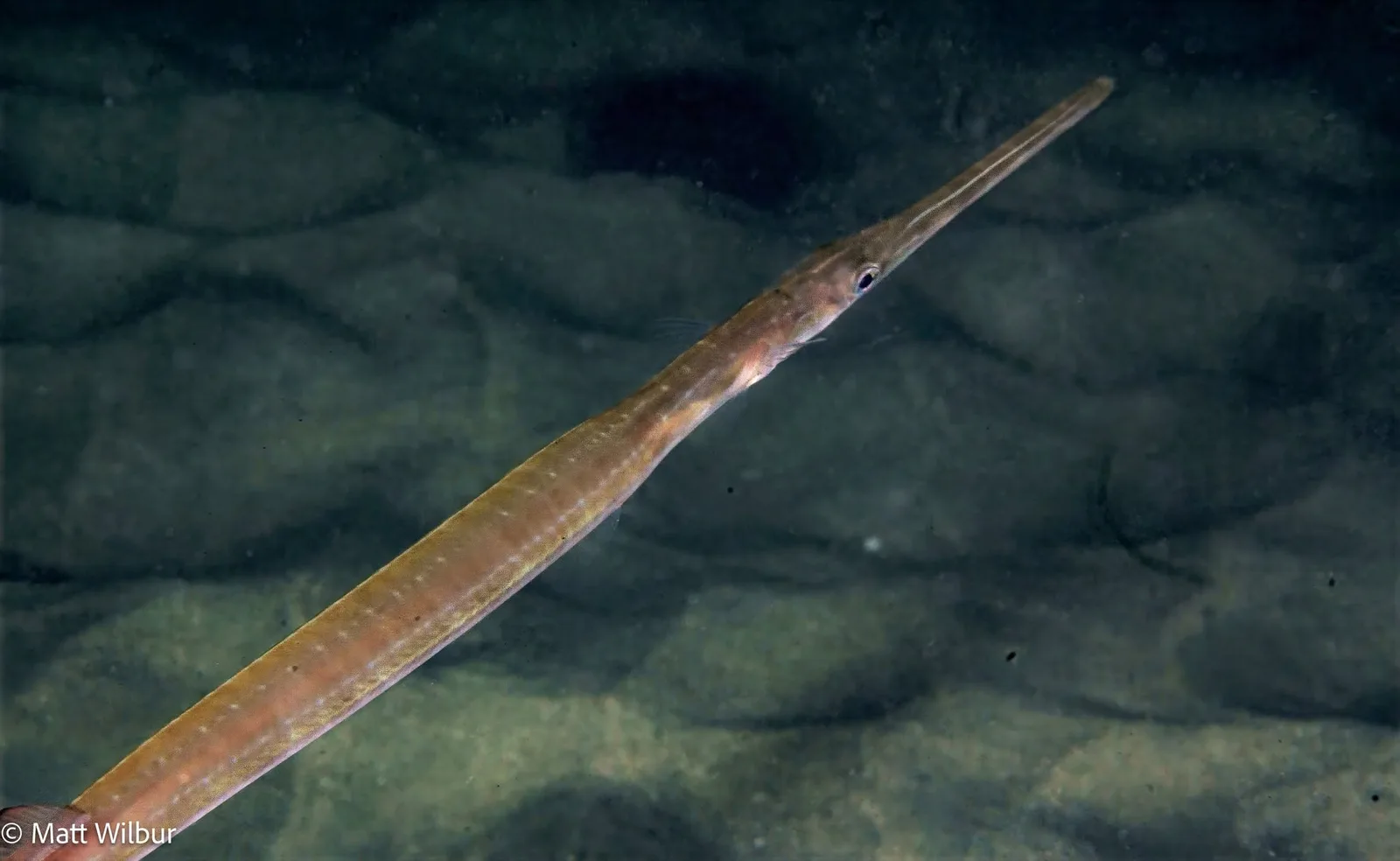
Adult 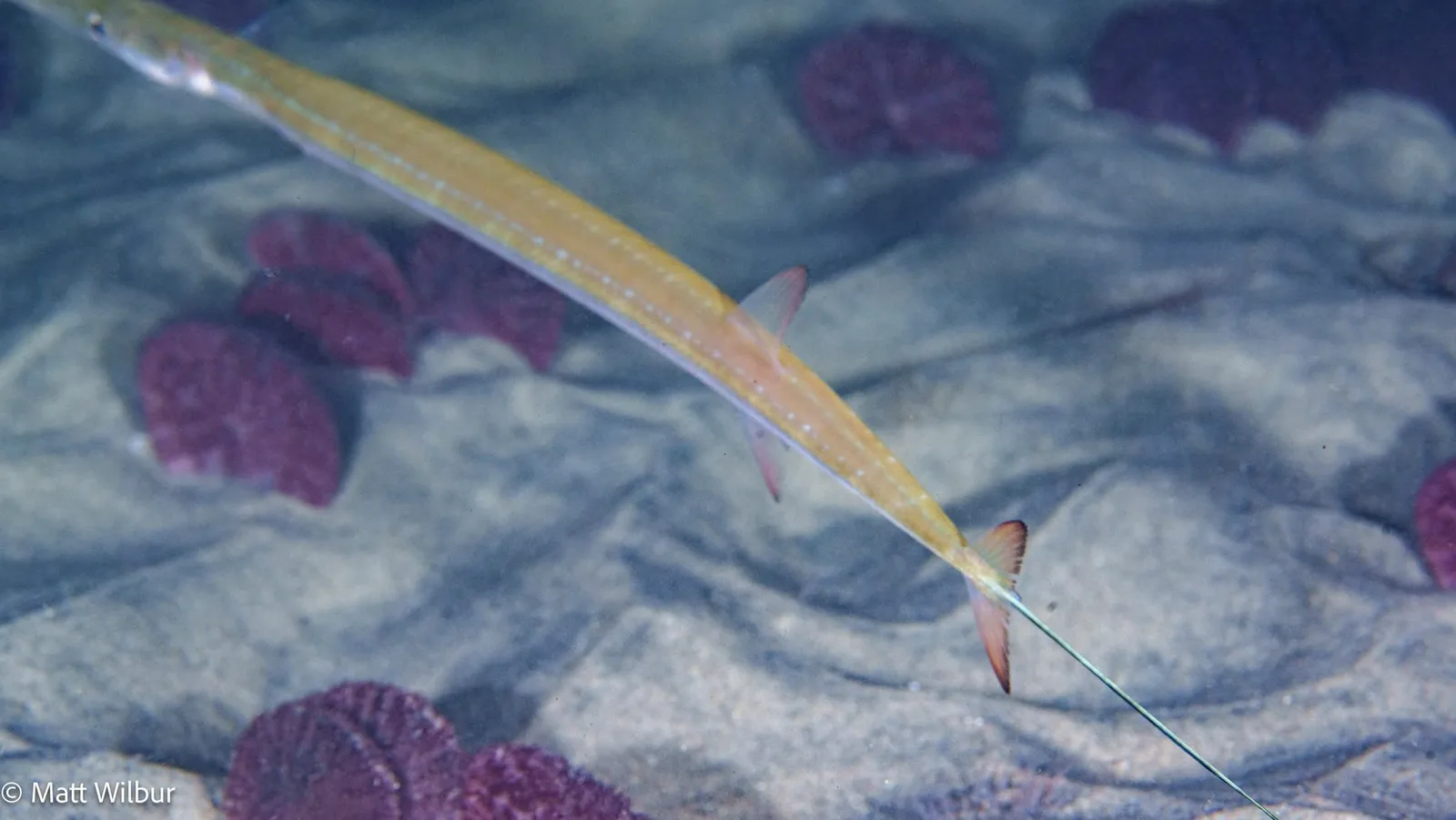
Adult Juvenile 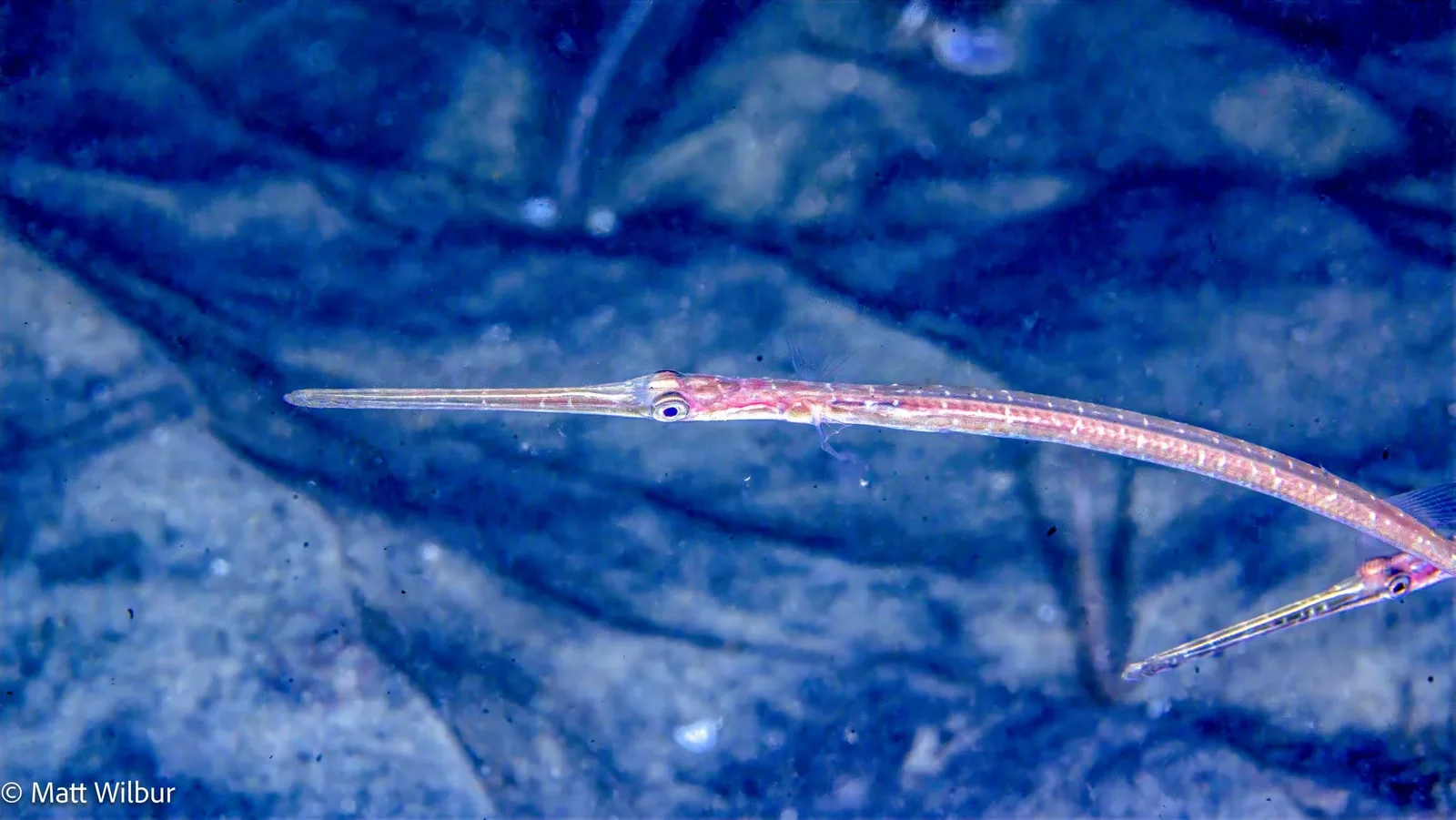
Juvenile 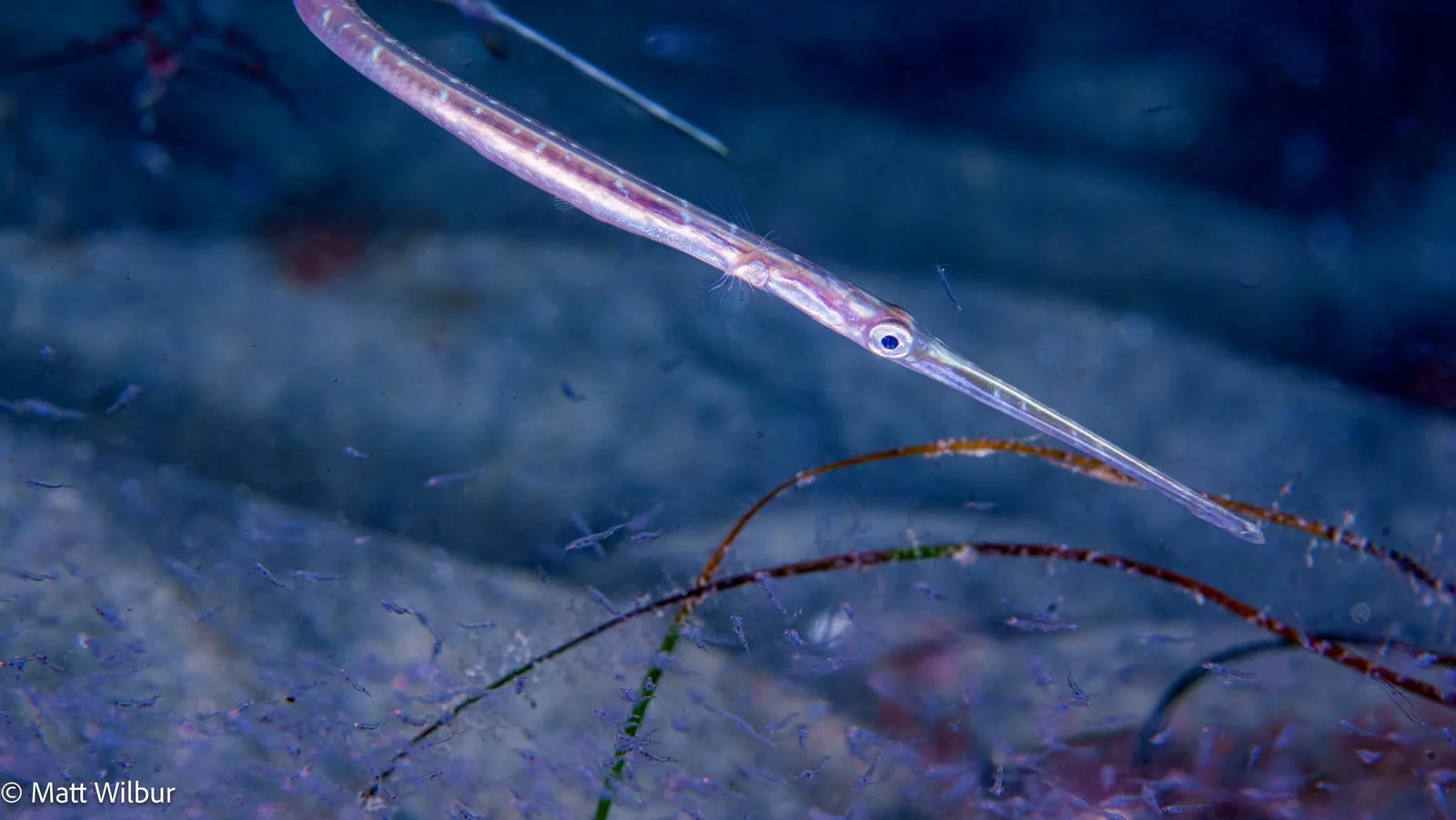
Juvenile 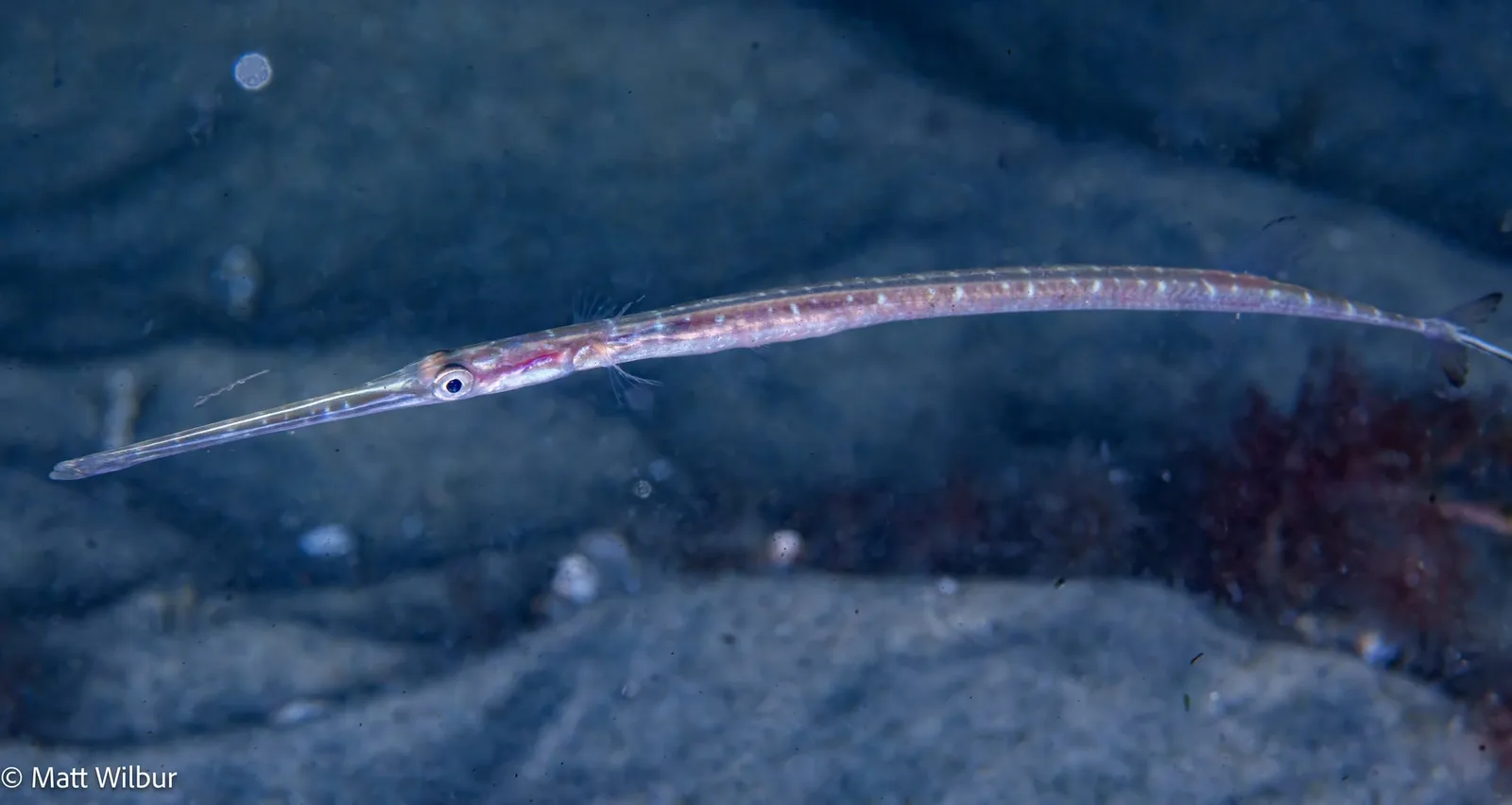
Juvenile 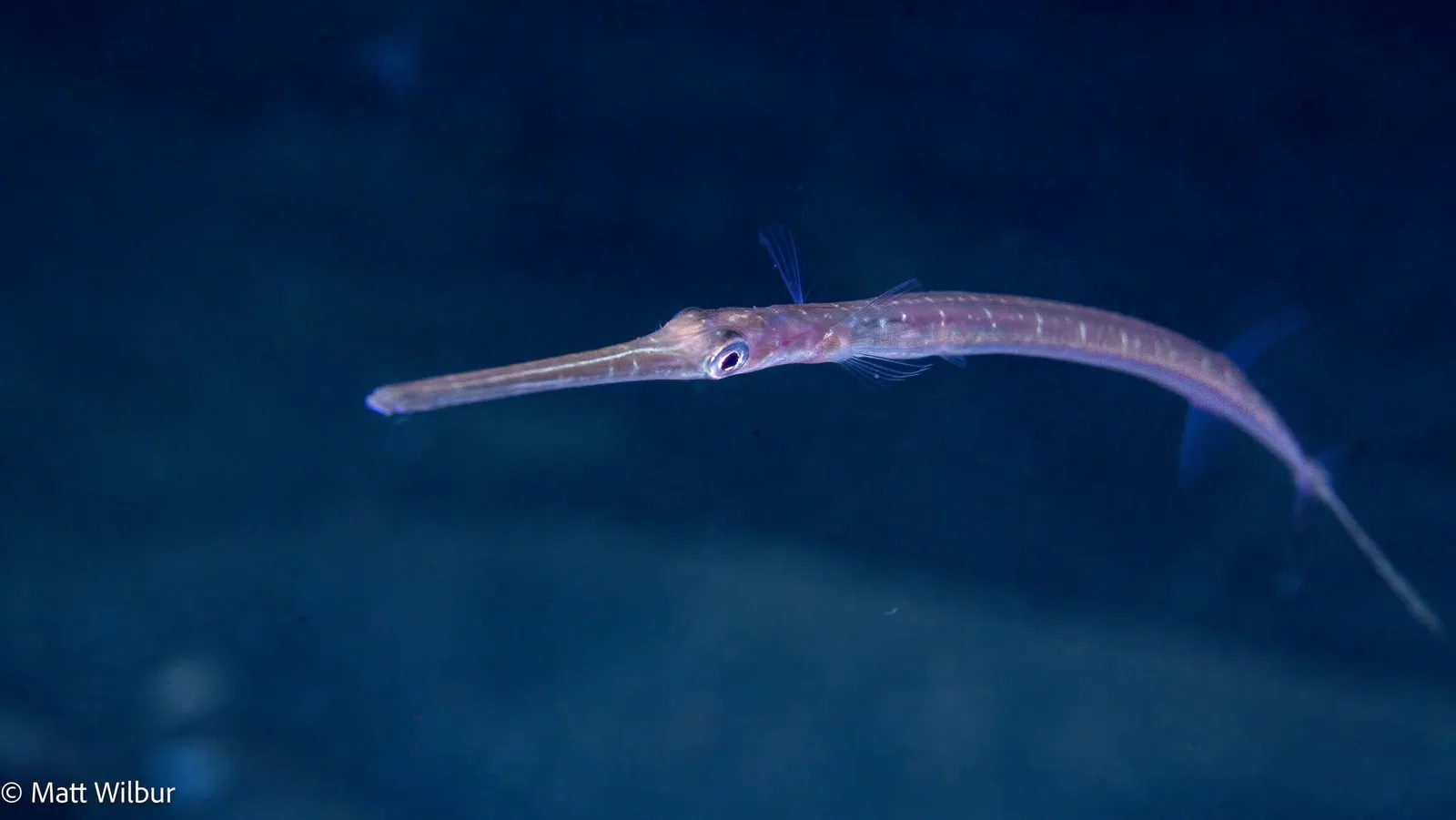
Juvenile 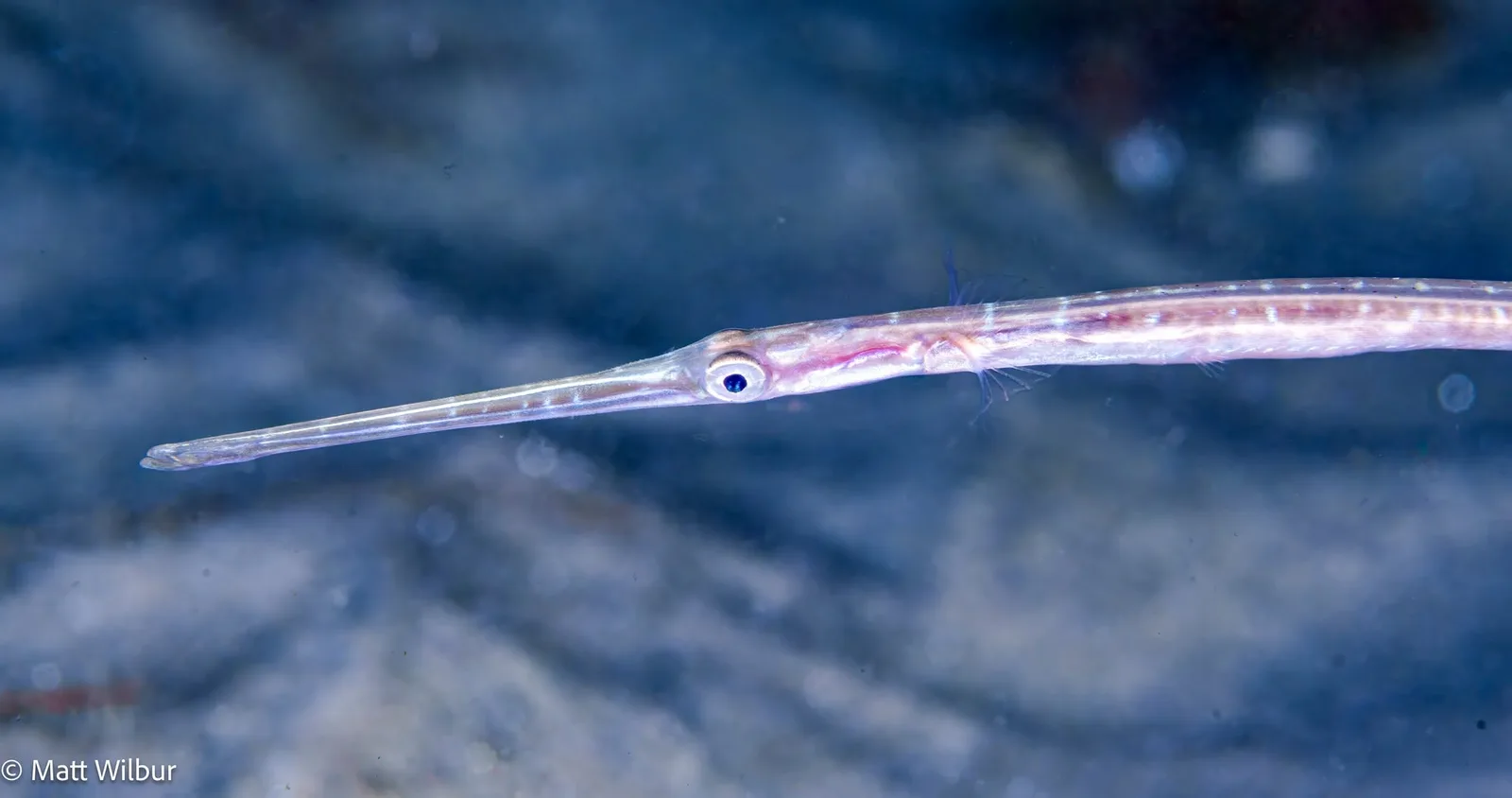
Juvenile Photos: Matt WilburID: Nautical Nick, from Matt Wilbur's photosSource: Matt Wilbur photos, Facebook, Oct 28
Photos
More of each life stage
The California photos sit with their numbered sightings above. If you photographed this animal in California this season, post it to the Coastal Bulletin.
Home Range
Where it normally lives
Southern California, the Gulf of California and western Baja California south to Peru, including many offshore islands.
Range source: FishBase · Mexican Fish.com
This cornetfish lives from Southern California and the Gulf of California south along western Baja California to Peru, including many offshore islands. Adults stay mostly deeper than about 100 feet over soft and hard bottoms.
Identification
The Pacific cornetfish is a long, thin fish with a very long tubular snout and widely spaced eyes. It is a uniform orange-brown with a lighter underside, and its dorsal and anal fins have orange bases. Its forked tail usually carries a long, dark central filament, though some fish lack it. Smaller fish may be barred. It reaches about 4 feet, though most are much smaller.
The reef cornetfish is the closest look-alike. It is tan-brown with blue spots, and its long tail filament is white.
Natural History
The Pacific cornetfish feeds on small fishes and lays eggs. Field guides call it poorly studied. It is often taken for fishmeal, and it is also sold fresh, salted, dried or smoked.
In California
California records are rare. 2 small fish caught at Huntington Beach during the 1997 to 1998 El Niño were the first reported from the state. On October 28, 2026, Matt Wilbur photographed adults and thinner, paler juveniles at La Jolla Shores, and Nautical Nick identified all of them as this species. iNaturalist held no California records of it on October 30, 2026.
Taxonomy
Rarity
Rarity in the compendium is Nautical Nick's call on how likely a diver is to run into the animal on the California coast this season, not how rare it is where it normally lives.