
Olive Ridley Sea Turtle
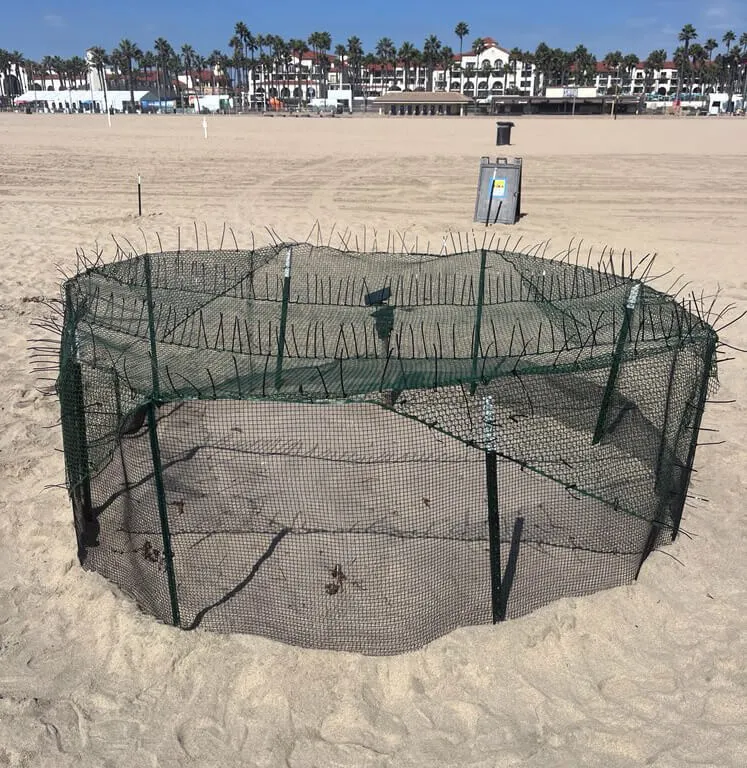
Its range at sea reaches southern California. The nests are what is out of range: the first sea turtle nests ever recorded on the U.S. West Coast.


Sightings
2026 season, every one sourced
Southern California
- Sept 16 and about Sept 19, 2026Seal Beach, and near Huntington Beach Pier about 8 miles away2 different turtles, each dug a nest and laid eggs
Photos
From California this season
Home Range
Where it normally lives
At sea from southern California to northern Chile; nearest normal nesting near Todos Santos, Baja California Sur.
Range source: NOAA Fisheries species page · NOAA Fisheries, Sept 25, 2026
Olive ridleys live in tropical waters of the Pacific, Indian and Atlantic oceans. In the eastern Pacific their range runs from southern California to northern Chile, so a turtle at sea off California is inside its range. Nesting is a different story. The nearest regular nesting beaches are in the western Cape region of Baja California near Todos Santos, with a few scattered nests near Magdalena Bay, and Mexico's nesting season runs from about July to December.
Identification
The olive ridley is one of the smallest sea turtles, about 2 to 2.5 feet long and up to about 100 pounds. It is named for the olive green color of its heart-shaped shell, and adults range from olive to grayish green. The shell has 5 to 9 pairs of plates along each side, and each flipper carries 1 or 2 claws. It looks very much like its Atlantic relative, the Kemp's ridley.
Natural History
Olive ridleys spend most of their lives in the open ocean, and they have been seen more than 2,400 miles from shore. They eat algae, crustaceans, sea squirts and mollusks, and they can dive to about 500 feet to feed on the bottom. On a few beaches in the world, hundreds to thousands of females come ashore together to nest in a single mass event called an arribada. A female nests 1 to 3 times a season and lays about 100 eggs each time, and the temperature of the sand decides whether the hatchlings are male or female. The species matures at about 14 years. The population is listed as Vulnerable worldwide, and the nesting colonies on Mexico's Pacific coast are listed as endangered under the U.S. Endangered Species Act.
In California
On September 16, 2026, an olive ridley dug a nest and laid eggs near Seal Beach, Orange County. NOAA Fisheries called it the first recorded nest of any sea turtle species on the U.S. West Coast. About 3 days later a second turtle nested about 8 miles away near Huntington Beach Pier, and a photo comparison by a Southwest Fisheries Science Center biologist confirmed they were 2 different turtles. The eggs were moved to the Aquarium of the Pacific in Long Beach on September 25. NOAA named warm water from ongoing marine heatwaves and the coming El Niño as likely key factors.
Taxonomy
Rarity
Rarity in the compendium is how often the animal has been reported on the California coast this season, not how rare it is where it normally lives. It moves as new sightings come in.