
Longnose Puffer
Also calledlobeskin puffer, botete verrugoso, botete
Love and colleagues list it north to Redondo Beach, so its listed range reaches Southern California. iNaturalist held 11 wild California records on October 31, 2026, and 6 of them were from October 2026.


Sightings
2026 season, numbered oldest first, every one sourced
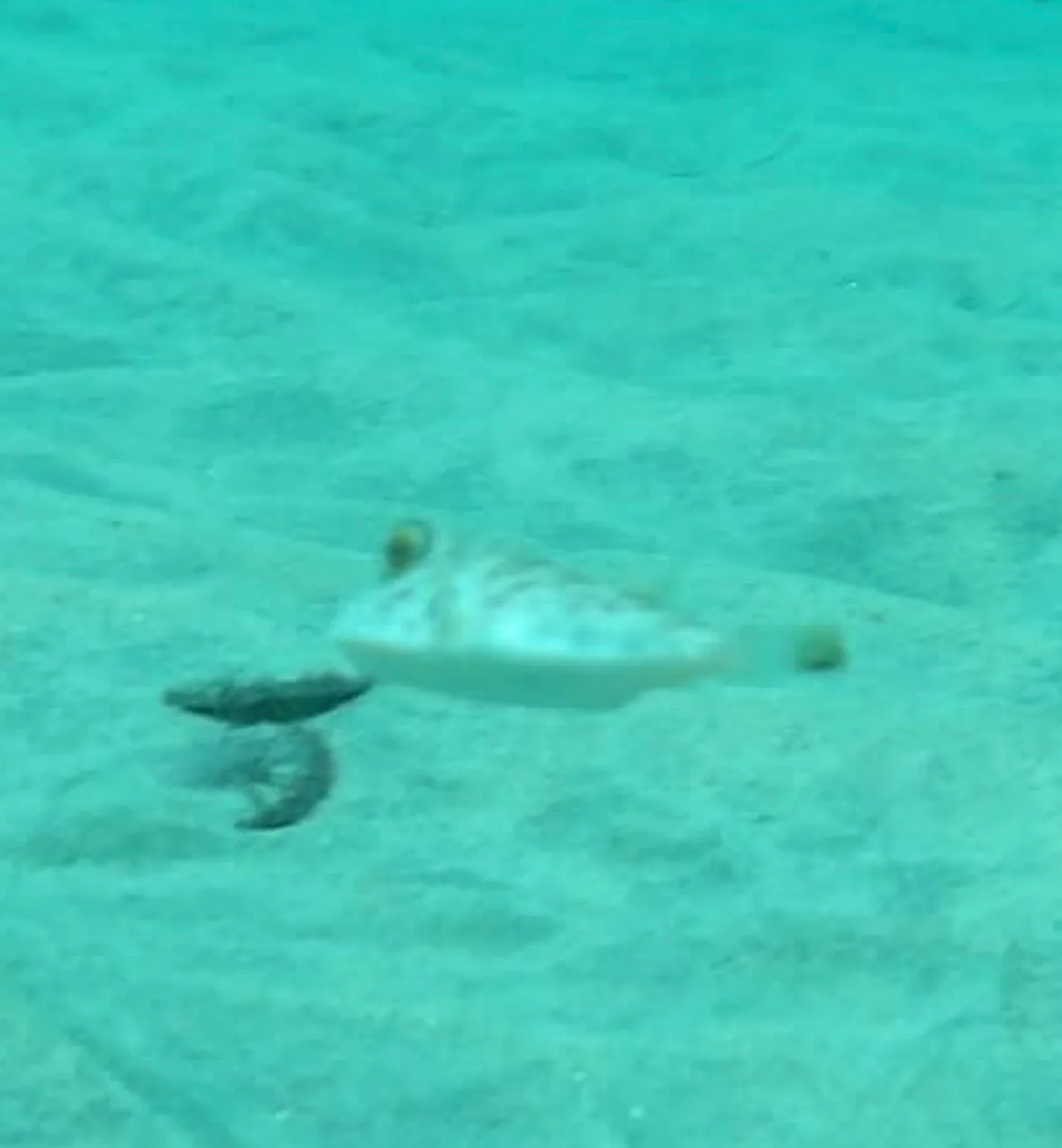
- #7Oct 31, 20261 reportLa Jolla ShoresPhotos: Zach Skelton
- ID
- Nautical Nick, from Zach Skelton's photos
- Source
- Zach Skelton photos, sent to Nick, Oct 31
- #6Oct 27, 20261 reportThe Wall, La Jolla
- Source
- iNaturalist 411388320
- #5Oct 25, 20261 reportSan Diego County
- Source
- iNaturalist 411096247
- #4Oct 25, 20261 reportScripps Coastal TrailAbout 2 inches, washed up and returned to the sea
- Source
- iNaturalist 410893512
- #3Oct 23, 20261 reportSan Diego County
- Source
- iNaturalist 410790827
- #2Oct 18, 20261 reportSan Diego County
- Source
- iNaturalist 409211452
- #1Oct 1, 20261 reportSan Pedro ChannelJuvenile, about 0.4 inch, netted at the surface
- Source
- iNaturalist 405480451
About this fish
What it is, where it comes from, and whether it has been here before
How it lives
Longnose puffers live on the bottom in sandy and weedy areas, and they are commonly caught in bays, estuaries and shallow coastal water. FishBase gives a depth range of about 33 to 197 feet, and Love and colleagues list records from the surface down to 351 feet. Mexican Fish describes them as exceedingly well camouflaged and able to blow themselves up like balloons, probably as a defense. The species is poorly studied, and the sources read for this page do not describe its diet or breeding.
Where it normally lives
Redondo Beach in Southern California to central Chile, including the southern and central Gulf of California and the Galapagos Islands.
Love and colleagues list the longnose puffer from Redondo Beach to central Chile, including the southern and central Gulf of California and the Galapagos Islands. FishBase gives California to Chile.
Range source: Love et al. 2021, via Zenodo · FishBase · Mexican Fish.com
In California
On October 31, 2026, Zach Skelton photographed a longnose puffer at La Jolla Shores, and Nautical Nick identified it from the photos. iNaturalist held 11 wild California records on the same day, and 6 of them were from October 2026. Those include a juvenile about 0.4 inch long netted in the San Pedro Channel on October 1 and a fish about 2 inches long that washed up near Scripps on October 25 and was returned to the sea.
Photos
From California this season
The California photos sit with their numbered sightings above. If you photographed this animal in California this season, send it in.
Identification
How to tell it from the locals
The longnose puffer has a moderately long, inflatable body, a long narrow snout and large raised eyes with a dip in the head between them. It is olive-brown with mottling and many small light blue spots, and skin flaps on its back each have a large black blotch behind them. Its underside is white and unusually flat, with a row of short brown bars along the edge. It has no scales and no pelvic fins. The naked puffer looks similar, but it has smooth skin and 3 dark bars on its back. The longnose puffer can reach about 14 inches.
Details
Rarity in the compendium is Nautical Nick's call on how likely a diver is to run into the animal on the California coast this season, not how rare it is where it normally lives.