
Spinetail Devil Ray
Mobula mobular
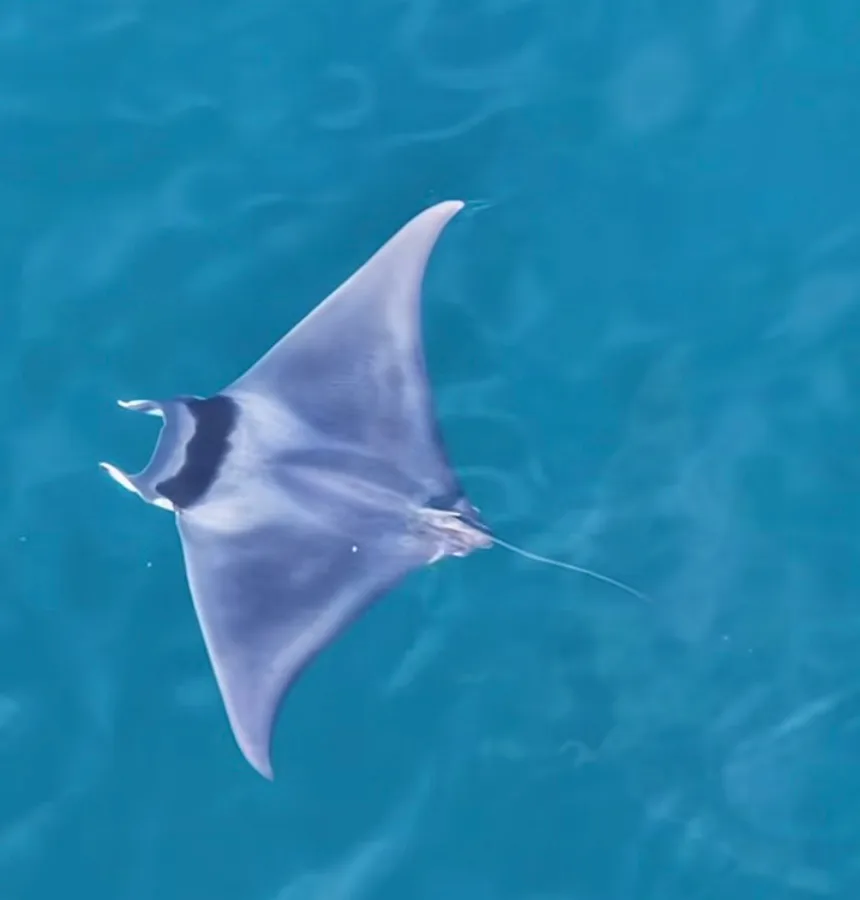
Also calledgiant devil ray, Japanese devil ray, spinetail mobula
Its listed range reaches central California, but iNaturalist held only 1 California record before 2026, from 2013.

Sightings
2026 season, numbered oldest first, every one sourced
- #5Oct 5, 20261 reportOffshore San DiegoPhotos: Tyler Hobbs (@tylerhobbsphoto_)
- ID
- Nautical Nick, from Tyler Hobbs's photos
- Source
- Tyler Hobbs photos, sent to Nick, Nov 6
- #4Sept 13, 20261 reportOff Los Angeles (exact spot hidden)
- Source
- iNaturalist 401139161
- #3Sept 13, 20261 reportOff San Diego (exact spot hidden)
- Source
- iNaturalist 400104317
- #2Sept 13, 202610 reportsOffshore San Diego (exact spot not shared)10 rays, in the same spot as his September 10 sightingPhotos: Tyler Hobbs (@tylerhobbsphoto_)
- ID
- Nautical Nick, from Tyler Hobbs's photos
- Source
- Tyler Hobbs photos, sent to Nick, Nov 6 · iNaturalist 400079587
- #1Sept 10, 20264 reportsOffshore San Diego (exact spot not shared)4 raysPhotos: Tyler Hobbs (@tylerhobbsphoto_)
- ID
- Nautical Nick, from Tyler Hobbs's photos
- Source
- Tyler Hobbs photos, sent to Nick, Nov 6 · iNaturalist 399133074
About this fish
What it is, where it comes from, and whether it has been here before
How it lives
Spinetail devil rays live in open water over the continental shelf and around offshore islands, alone or in groups. They feed mainly on krill. A ray funnels the krill into its mouth with its head fins and strains them out of the water with plates on its gills. Tracking has shown them staying near the surface at night to feed. A female usually has 1 large pup after a 12-month pregnancy, then rests 1 to 3 years before the next. The species is listed as critically endangered. Fishing nets catch many by accident, and its gill plates sell for a high price.
Where it normally lives
Warm seas worldwide; central California to Peru, including the Gulf of California.
This ray lives in warm seas around the world. In the eastern Pacific, the Pacific coast fish checklist lists it from central California to Peru, including the Gulf of California. Even so, iNaturalist held only 1 California record before 2026, from 2013. It usually stays in the top 165 feet but can dive much deeper.
Range source: Love and colleagues, 2021 checklist of Pacific coast fishes · FishBase
In California
Wildlife photographer Tyler Hobbs found 4 spinetail devil rays offshore of San Diego on September 10, 2026. He returned to the same spot on September 13 and found 10. He has not shared where it is. Other observers logged spinetail devil rays off San Diego and off Los Angeles on September 13, and Hobbs photographed another offshore of San Diego on October 5.
Photos
From California this season
The California photos sit with their numbered sightings above. If you photographed this animal in California this season, send it in.
Identification
How to tell it from the locals
The spinetail devil ray is a large ray, bluish black on top and white underneath, often with dark patches on the white. The small fin on its back has a bright white tip. Its head is short, with short head fins tipped in black. The tail is long and thin like a whip, often as long as the body is wide. Most have a short, saw-edged spine near the base of the tail, which gives the species its name. The spine carries venom. Young ones have 2 white crescents on the shoulders that fade with age.
Details
Rarity in the compendium is Nautical Nick's call on how likely a diver is to run into the animal on the California coast this season, not how rare it is where it normally lives.