
Ocellated Turbot
Also calledplatija ocelada
Identified by Nautical Nick from 2 photos. iNaturalist held no California records of this fish on October 30, 2026.

Sightings
2026 season, numbered oldest first, every one sourced
Southern California
- #2Oct 30, 2026La Jolla Canyon
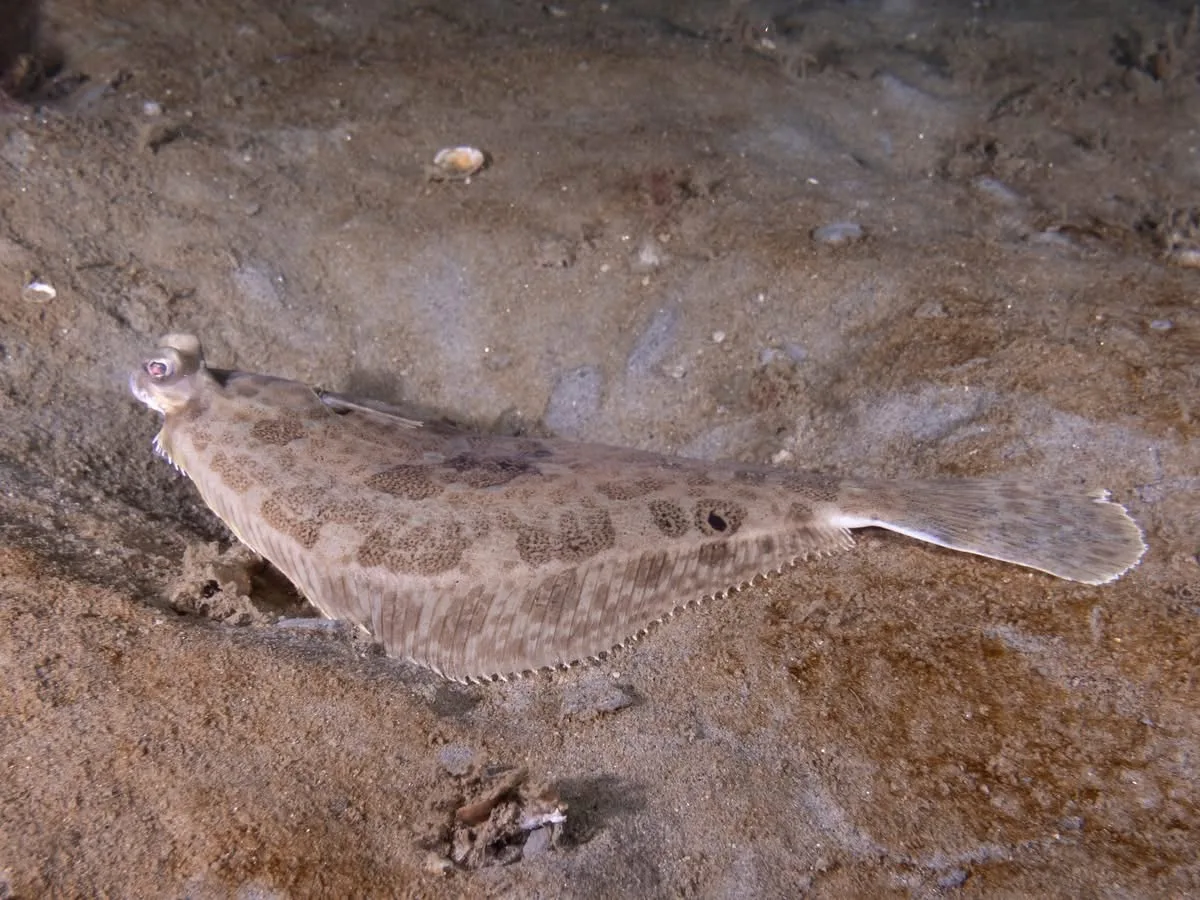 Photos: Dan GehlhaarID: Nautical Nick, from Dan Gehlhaar's photoSource: Dan Gehlhaar photo, sent to Nick, Oct 30
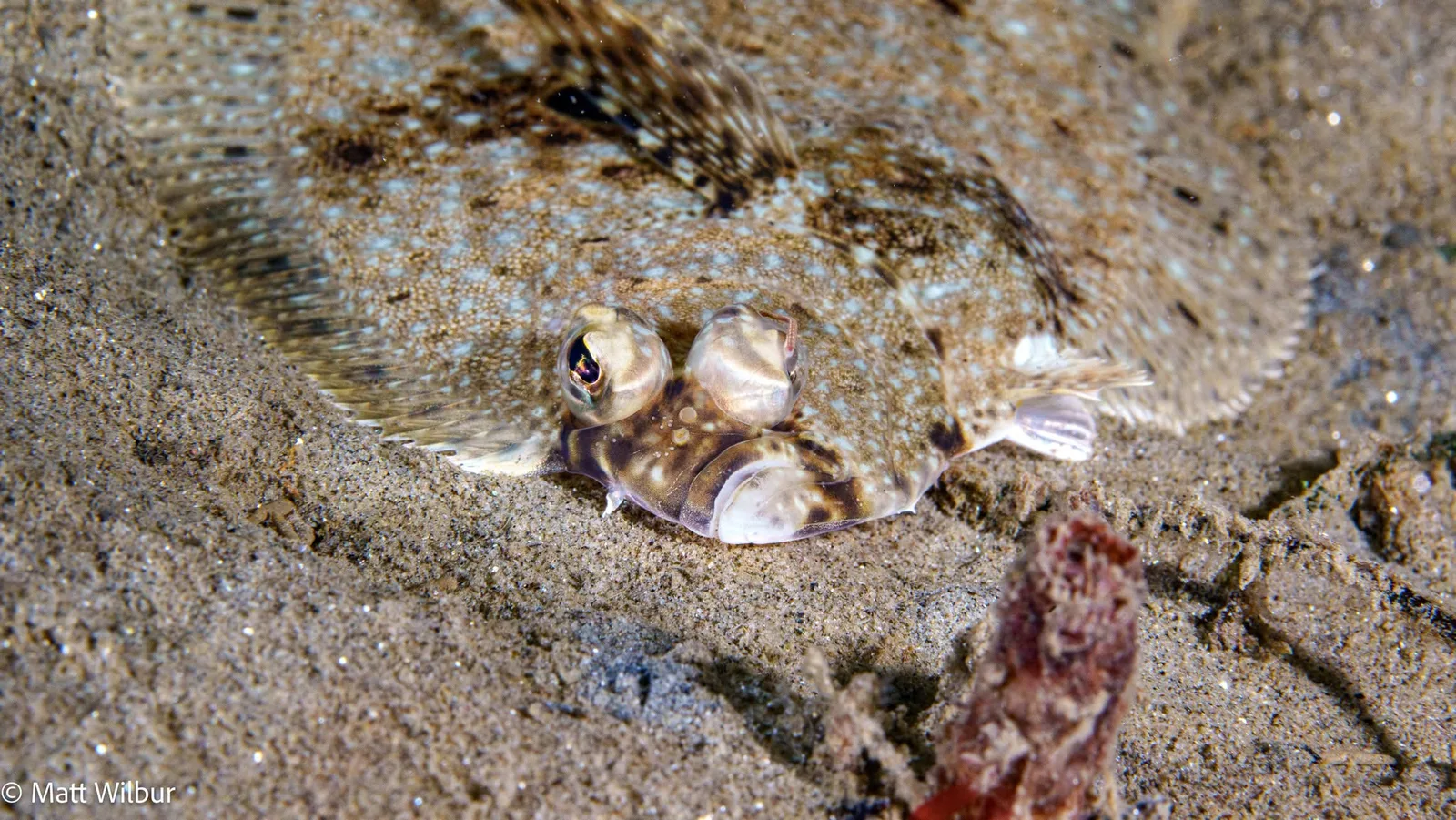
- #1Aug 31, 2026La Jolla ShoresPhotos: Matt WilburID: Nautical Nick, from Matt Wilbur's photoSource: Matt Wilbur photos, Facebook, Sept 1
Photos
From California this season
The California photos sit with their numbered sightings above. If you photographed this animal in California this season, post it to the Coastal Bulletin.
Home Range
Where it normally lives
Magdalena Bay, Baja California Sur, south along the Baja southwest coast, and the northern two-thirds of the Gulf of California.
Range source: Mexican Fish.com · FishBase
This turbot has a limited range in Mexican waters. Its published range starts at Magdalena Bay, Baja California Sur, runs south along Baja's southwest coast, and includes the northern two-thirds of the Gulf of California. It lives from about 3 to 460 feet deep.
Identification
The ocellated turbot is a small flatfish with an oval, strongly flattened body and both eyes on its right side. It is pale brown with irregular white spots. A large black spot ringed in white sits in the middle of its back, and 2 large blotches lie near the edge of the body toward the rear of the dorsal and anal fins. Its mouth is small, and its tail is small and rounded. It reaches about 9.4 inches.
Other turbots in the region lack the white-ringed spot. The fantail sole, common in Southern California, also carries dark spots, with 1 at the base of its tail.
Natural History
The ocellated turbot lives on and within sandy and muddy bottoms. It lies half buried and well camouflaged, then ambushes crustaceans and small fish. Its reproduction, age and growth are poorly studied.
In California
On October 30, 2026, Dan Gehlhaar photographed a flatfish in La Jolla Canyon that Nautical Nick identified as an ocellated turbot. He identified a second fish in a photo Matt Wilbur took at La Jolla Shores on August 31, 2026. iNaturalist held no California records of the species on October 30, 2026.
Taxonomy
Rarity
Rarity in the compendium is Nautical Nick's call on how likely a diver is to run into the animal on the California coast this season, not how rare it is where it normally lives.