
Mandapam Eubranchus
Eubranchus mandapamensis
Also calledAnnulorhina mandapamensis, Eubranchus cf. mandapamensis
Its known range is the Indian and western Pacific oceans, with a few records in Mexico. iNaturalist held no California record before November 11, 2026.

Sightings
2026 season, numbered oldest first, every one sourced
- #5Nov 21, 20264 reportsMission Point Park, Mission Bay, San Diego
- #4Nov 19, 20263 reportsMission Point Park, Mission Bay, San DiegoOn brown seaweed, plus a ribbon of its eggs on sargassum weedPhotos: Siobhan O'Neill (nudib1tch)
- #3Nov 17, 20261 reportMission Point Park, Mission Bay, San Diego
- #2Nov 16, 20261 reportMission Point Park, Mission Bay, San Diego4 seen on kelp, rocks and drifting sargassum weed, 2 photographed
Photo: Tory Bush, iNaturalist, CC BY 4.0 Photo: Tory Bush Photo: Tory Bush, iNaturalist, CC BY 4.0 - #1Nov 11, 20261 reportMission Point Park, Mission Bay, San DiegoThe first California record. Found drifting about 6 feet below the surface, about 1.2 inches long by Tory's estimate
Photo: Tory Bush, iNaturalist, CC BY 4.0 Photo: Tory Bush, iNaturalist, CC BY 4.0 Photo: Tory Bush, iNaturalist, CC BY 4.0 Photo: Tory Bush Photo: Tory Bush Photo: Tory Bush
About this fish
What it is, where it comes from, and whether it has been here before
How it lives
It feeds on hydroids, small animals that look like tiny plants. The published records run from a tide pool in India to about 30 feet deep in the Gulf of California, and most of the animals measured were under half an inch long.
Where it normally lives
Indian and western Pacific oceans, from Tanzania to Hawaii, with a few eastern Pacific records in the Gulf of California and Jalisco, Mexico.
The species was described in 1968 from Mandapam in southeastern India. Scattered records since then reach across the Indian and Pacific oceans, from Tanzania to Hawaii. In the eastern Pacific it is very rare. The earliest record there found for this page is a specimen Terry Gosliner of the California Academy of Sciences collected on September 20, 1985, at Punta la Gringa in Bahía de los Ángeles, on the Gulf of California side of Baja California. Hans Bertsch found another at the same point in June 1996, and divers have photographed a few on Mexico's mainland coast at Bahía de Banderas since 2003.
Range source: Bertsch 2014, The Festivus · Sea Slug Forum · California Academy of Sciences specimen 71472, via GBIF
In California
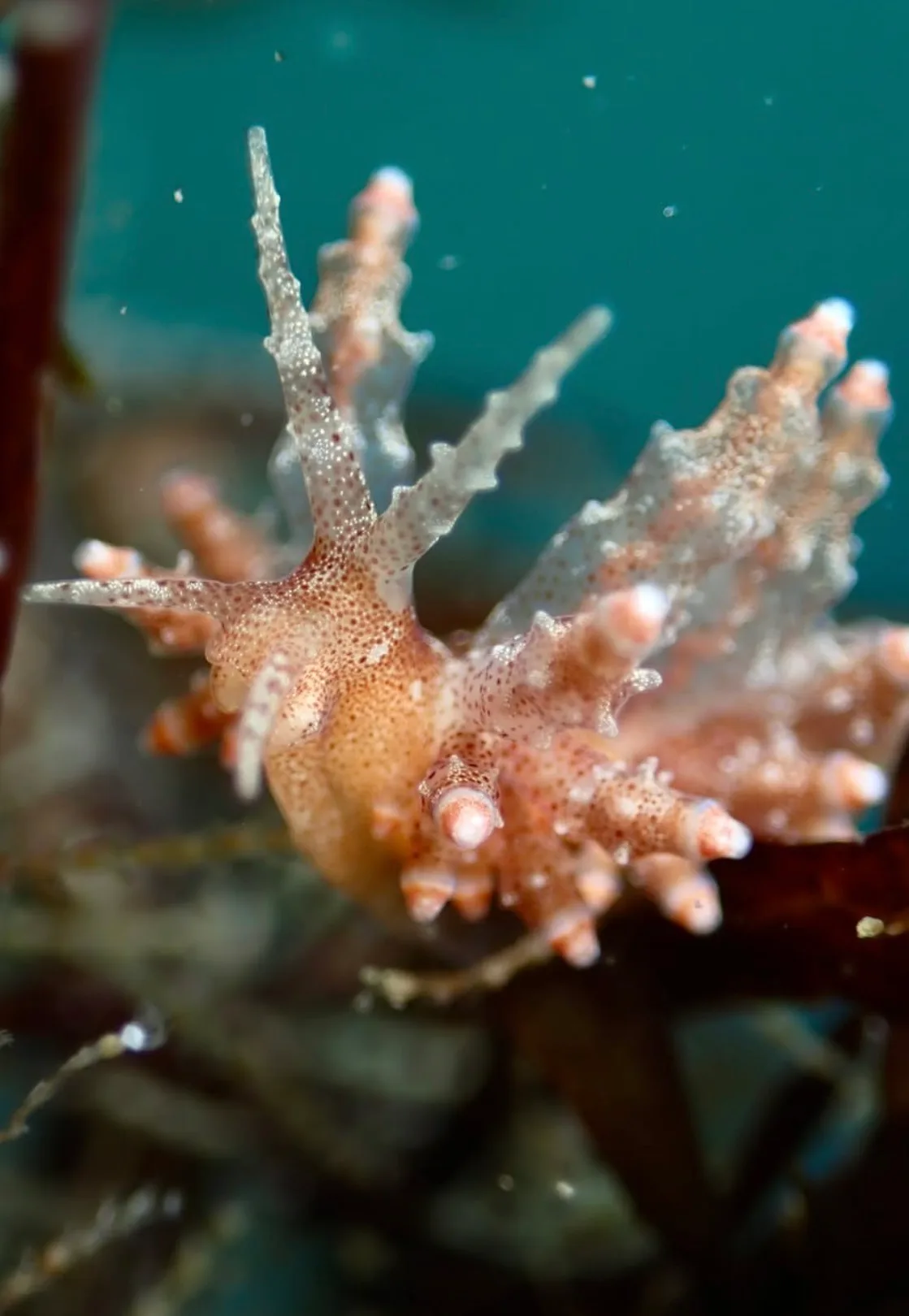
On November 11, 2026, Tory Bush found one at Mission Point Park, beside the entrance channel to Mission Bay in San Diego. It was drifting about 6 feet below the surface, and Tory moved it onto a rock to photograph it. San Diego's sea slug community identified it as this species, and a scientist commenting on the record called it a new record for California. iNaturalist held no earlier California record. Tory counted 4 at the same spot on November 16, on kelp, rocks and drifting sargassum weed, and divers had logged 10 records there by November 21. On November 19, Siobhan O'Neill photographed several on brown seaweed there, along with a white ribbon of its eggs on sargassum weed.
The name is still provisional. Because the San Diego animals differ from the species' description, some specialists think they may be a different species. On November 20, they agreed to file the records on iNaturalist under the family only, with a placeholder name, until specimens can be studied and their DNA tested.
Photos
From California this season
The California photos sit with their numbered sightings above. If you photographed this animal in California this season, send it in.
Identification
How to tell it from the locals
The Mandapam eubranchus is a tiny nudibranch, a sea slug with no shell. It carries soft finger-like growths called cerata along its back. In this species the cerata are swollen and rounded, with rings of small rounded bumps. Its rhinophores, the 2 sensory horns on its head, are ringed, a trait few of its close relatives share. The first description, from India in 1968, gave it gray spots over the body and orange patches on the cerata.
The San Diego animals are pale orange-pink and finely speckled, with pale pink tips on the cerata. Their horns carry scattered bumps instead of clean rings, so they do not match the species' description exactly.
Details
Rarity in the compendium is Nautical Nick's call on how likely a diver is to run into the animal on the California coast this season, not how rare it is where it normally lives.