
Guineafowl Puffer
Arothron meleagris
Also calledGuineafowl pufferfish, black puffer, golden puffer
Its published range on the Pacific side of Baja ends near Todos Santos, about 850 miles south of Catalina Island. No earlier wild California record turned up.
Sightings
2026 season, numbered oldest first, every one sourced
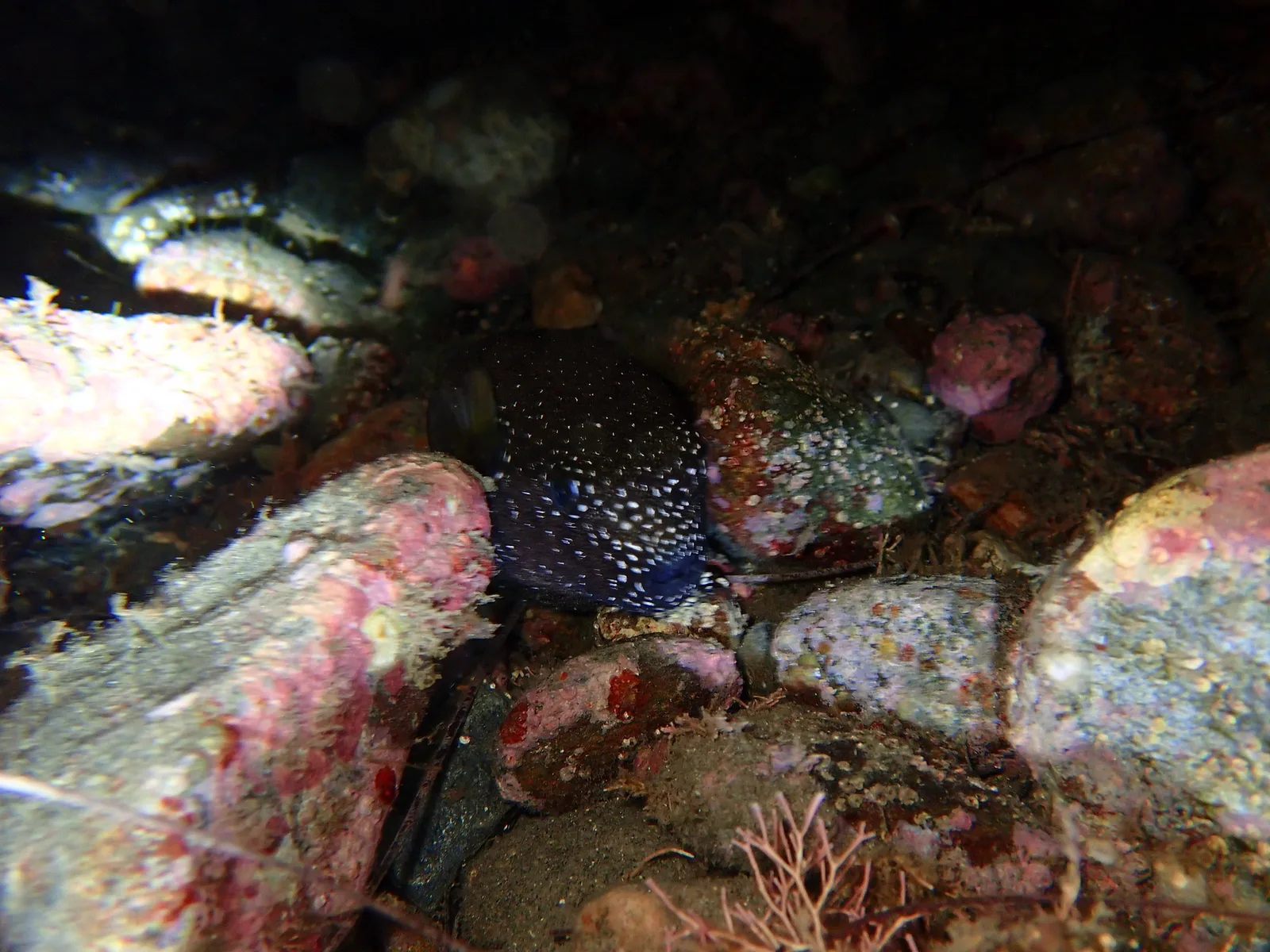
- #1Nov 10, 20261 reportCatalina Island, northwest of AvalonBlack form, among rocks; Ben Frable of Scripps passed it to Nick
Adult Photos: mickey_ki, iNaturalist, CC BY-NC 4.0
About this fish
What it is, where it comes from, and whether it has been here before
How it lives
The guineafowl puffer lives alone on rocky and coral reefs. It feeds mostly on the tips of branching corals, and it also eats sponges, seaweed, small animals and dead matter. FishBase lists it as poisonous to eat.
Where it normally lives
Tropical Indian and Pacific oceans; in the eastern Pacific from the Todos Santos area near the tip of Baja California, and the central and southern Gulf of California, to Peru, including the Galapagos.
The guineafowl puffer lives across the tropical Indian and Pacific oceans, north to the Ogasawara Islands of Japan. In the eastern Pacific its range runs from the Todos Santos area near the tip of Baja California, and the central and southern Gulf of California, south to Peru, including the Galapagos. Catalina Island is about 850 miles north of Todos Santos in a straight line. It lives from about 3 feet to about 470 feet deep.
Range source: Love and colleagues, 2021 checklist of Pacific coast fishes · Mexican Fish.com · FishBase
In California
On November 10, 2026, an iNaturalist user who goes by mickey_ki photographed a black guineafowl puffer among rocks on Catalina Island, northwest of Avalon. Ben Frable of Scripps Institution of Oceanography passed the sighting to Nautical Nick.
The 2021 checklist of Pacific coast fishes by Milton Love and colleagues has no California record of the species. Every guineafowl puffer logged on iNaturalist in California before this one was in an aquarium.
Photos
More of each life stage
The California photos sit with their numbered sightings above. If you photographed this animal in California this season, send it in.
Identification
How to tell it from the locals
Almost every guineafowl puffer is black all over and covered in small white spots. Fewer than 1 in 100 are bright yellow, with a scattering of white and black spots. Like other puffers, it can blow itself up like a balloon. It can reach about 18 inches.
Details
Rarity in the compendium is Nautical Nick's call on how likely a diver is to run into the animal on the California coast this season, not how rare it is where it normally lives.