
Unplugging the Deep: Why More than 900 Oceanic Sensors Are Being Removed For Good
The National Science Foundation is pulling more than 900 sensors from the Atlantic and Pacific, ending a decade of uninterrupted ocean data. Why? Yet another instance of the Trump Administration pulling funding from something vital.
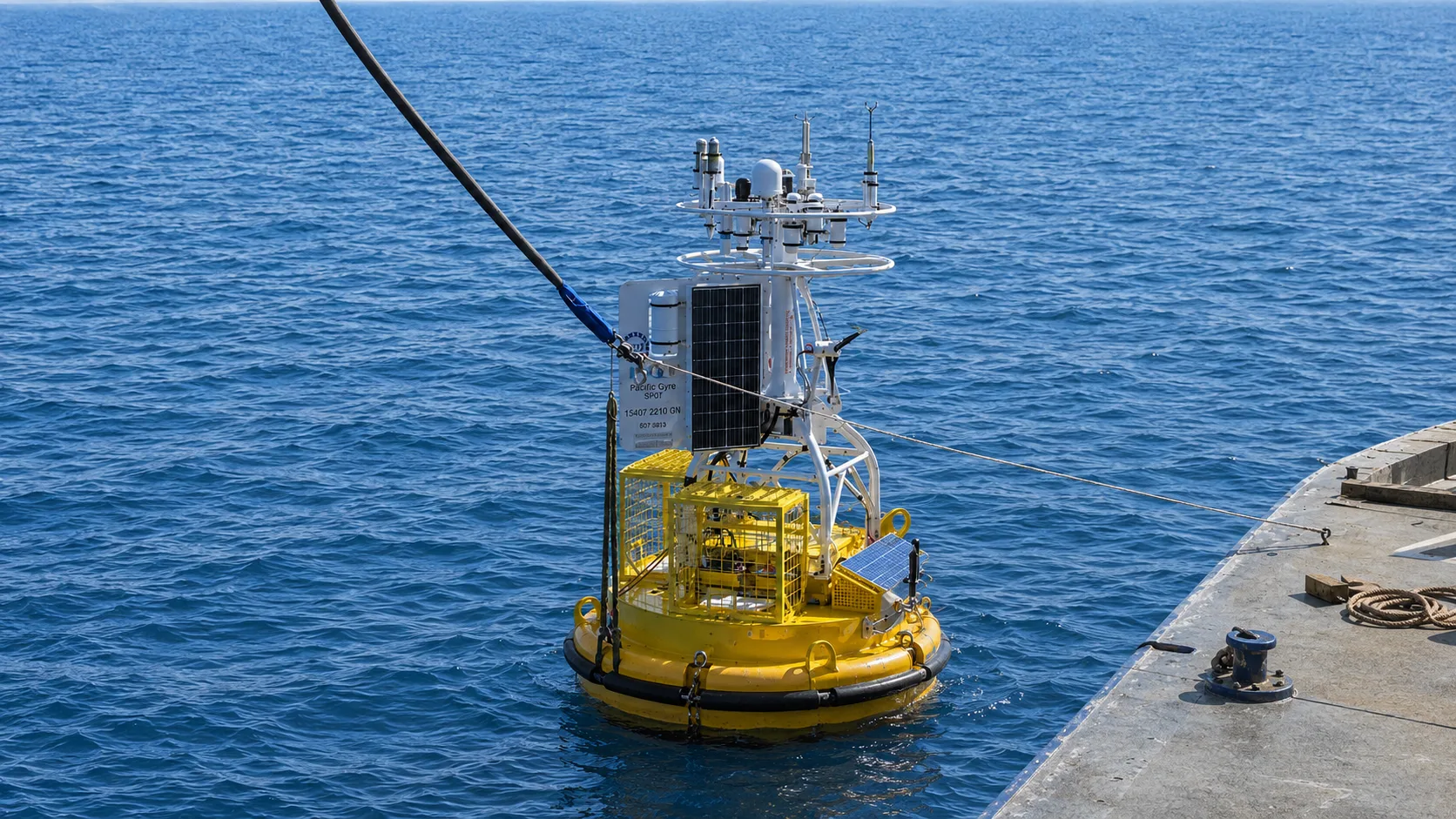

This month, a research vessel off the coast of Oregon hauled a buoy and its chain of instruments out of the water. The gear had measured the temperature, chemistry, and oxygen of the Pacific without a break since 2016, part of the only system ever built to watch the open ocean around the clock. Now it is being pulled out for good.
It is one small piece of a much larger shutdown. Over the next year, the National Science Foundation will remove more than 900 deep-sea sensors from the Atlantic and Pacific, dismantling four of the five arrays that make up the $386 million Ocean Observatories Initiative. The instruments give scientists a live feed of a changing ocean, from the currents that steer the climate to the chemistry that fisheries depend on. The Trump administration proposed gutting the program in 2025 and again in 2026. Congress refused both times. The sensors are coming out anyway.
The National Science Foundation, which funds the initiative, calls the move a "descoping." It notified Woods Hole Oceanographic Institution, the project's lead partner, on May 8, and the initiative confirmed the plan publicly on May 21. The Coastal Endurance Array off Oregon and Washington is scheduled to be gone this month. The arrays in the Irminger Sea near Greenland, at Station Papa in the Gulf of Alaska, and off the U.S. Atlantic coast are slated for removal in 2027.
For scientists, the loss is the continuity. The instruments record the physical, chemical, geological, and biological state of the ocean without interruption, the kind of record a single research cruise cannot reproduce. "Ocean observing systems are important because they are like our eyes and ears in the water," Rebecca Helm, a marine biologist at Georgetown University, told Scientific American. "They're providing invaluable information on the state of the ocean that is hard to get any other way."
Some of that information bears on questions of global consequence. The Irminger Sea array has tracked the Atlantic Meridional Overturning Circulation, the vast conveyor of warm and cold water that helps regulate the climate of the North Atlantic and that some researchers believe is weakening. The Endurance Array sits in waters that account for roughly a quarter of the annual global fish catch.
"Sustained ocean observations are how we detect emerging risks in real time, from shifts in circulation to changes in chemistry and ecosystem health," Helen Findlay, a biological oceanographer at the Plymouth Marine Laboratory in England, said in a statement. "Without them, we are effectively choosing to navigate an increasingly volatile ocean with diminishing visibility."
The foundation describes the decision differently. In a statement, it said it is not cancelling the initiative and that all data already collected will stay available through the OOI Data Center. It cast the change as "a nimbler approach to prioritize support for evolving scientific priorities and emerging technologies," and pointed to a 2025 National Academies report on the coming decade of ocean science.
One of that report's authors pushed back on how it was used. Jim Yoder, a co-chair of the survey, told the Bulletin of the Atomic Scientists that the committee had called for a "revisioning and restructuring" of the initiative, not its end. "The DSOS committee definitely did not want to see OOI disbanded," he said.
The cuts the administration sought were steep, an 80 percent reduction in the program's budget proposed in 2025 and 2026 and rejected by Congress each time, according to the New York Times. On June 15, a group of senators from both parties, joined by two House committees, sent letters asking the foundation to reverse course.
Continuous ocean monitoring is a recent achievement. For most of the history of the field, knowledge of the deep sea arrived in scattered snapshots from expeditions like that of HMS Challenger, the British ship whose four-year voyage beginning in 1872 is often credited with founding modern oceanography. Moored networks like the Ocean Observatories Initiative, completed in 2016 and designed to run for 25 years, traded the snapshot for a steady feed. Pieces of the network have gone quiet before: the foundation discontinued its array in the Argentine Basin in 2018 after three years, and removed its Southern Ocean array in 2020 after five.
One piece will survive. The Regional Cabled Array, a line of seafloor sensors running from the Oregon coast out to the Juan de Fuca plate, will keep operating for the foreseeable future, the initiative said. The rest will come up over the side of a ship, sensor by sensor, and the unbroken record they kept will stop.
Sources
- Apple News / The Associated Press, "Scientists lose critical climate record as ocean observatory will go dark under Trump funding cuts" (reference article), https://apple.news/AKgXAKCtqS1Kcmm9vgd19WQ
- Scientific American, "Trump administration takes aim at crucial ocean monitoring network", https://www.scientificamerican.com/article/trump-administration-takes-aim-at-crucial-ocean-monitoring-network/
- Bulletin of the Atomic Scientists, "Why the National Science Foundation is ripping monitoring instruments out of the ocean", https://thebulletin.org/2026/06/why-the-national-science-foundation-is-ripping-monitoring-instruments-out-of-the-ocean/
- The Oregonian / OPB, "Lawmakers fight to stop the Trump administration's dismantling of a $386M ocean observatory project", https://www.opb.org/article/2026/06/15/ocean-observatories-national-science-foundation/
- Ocean Observatories Initiative, "Announcement on OOI Descoping" (May 21, 2026), https://oceanobservatories.org/2026/05/announcement-on-ooi-descoping/