

Three in Four Weeks: Australian Sharks Keep Killing Spearfishermen
Three spearfishers have been killed off Australia in a month. Here are the numbers behind the danger, and the warming water that may be shifting it.
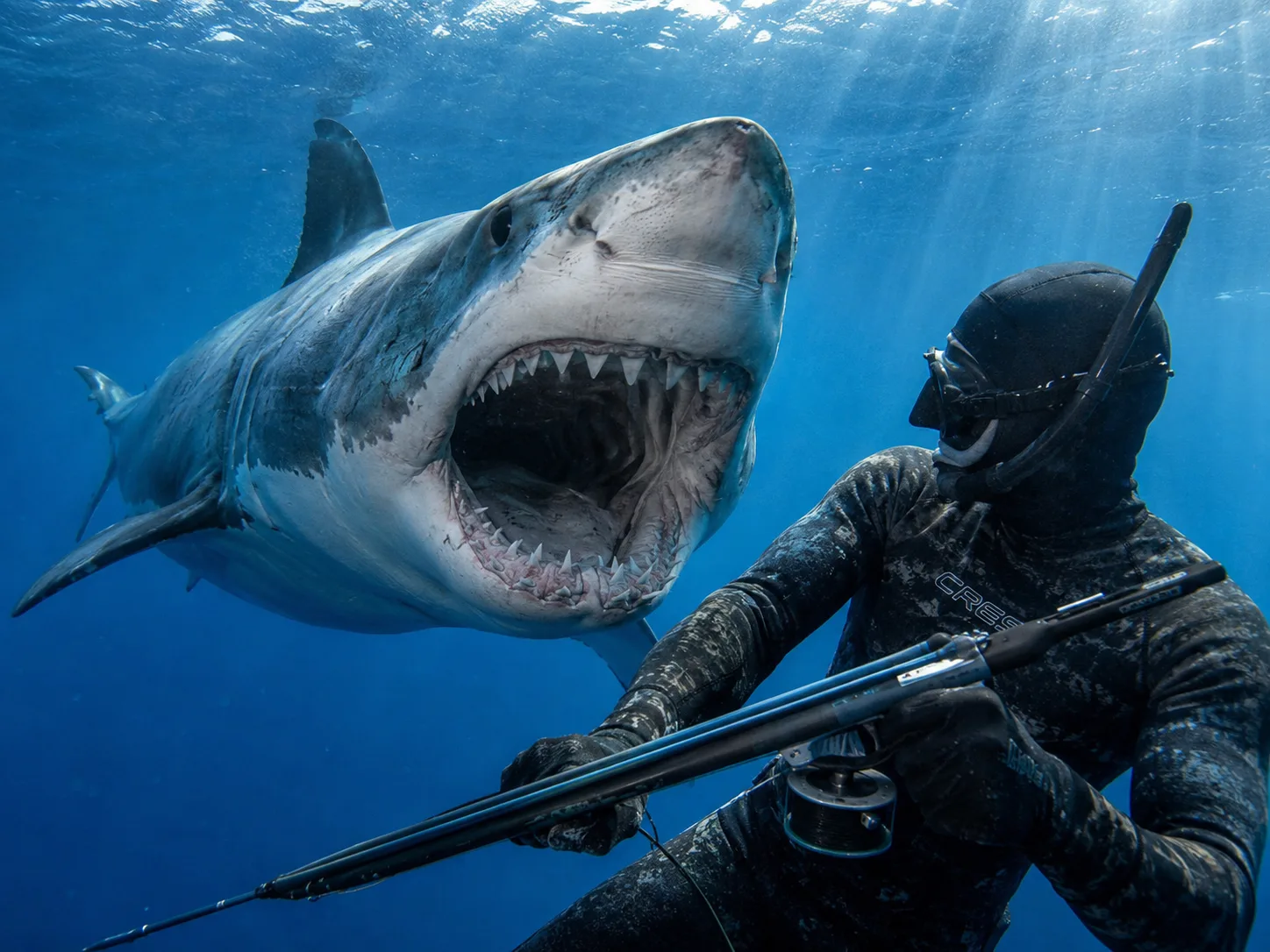
On Saturday, June 6, Daniel Turpin, a 35-year-old spearfisher, was in the water with his family off the coast near Albany, Western Australia, about 250 miles (400 kilometers) southeast of Perth, when a shark struck. His family rushed him to shore, where paramedics were waiting. He could not be revived. Authorities suspect a white shark, commonly called a great white, about 4.5 meters (15 feet) long, rather than a bull shark.
Turpin's death was Australia's third fatal shark attack in four weeks, in a country that has averaged about three shark deaths in an entire year. Every one of the three victims was spearfishing. That thread runs through the whole cluster, and it points to a risk that the usual shark-attack statistics tend to hide.
The deaths came in quick succession. On May 16, a great white believed to be about 4 meters (13 feet) long killed spearfisher Steven Mattaboni at a reef near Rottnest Island, off the southwest coast of Western Australia, biting his legs as his diving partners fought to get him to shore. On May 24, on the opposite side of the continent near Cairns, 39-year-old spearfisher Michael Jensz was killed at Kennedy Shoal, a reef within the Great Barrier Reef, with a bite to the head; charter crews reported bull sharks in the area that day. Turpin's death off Albany made three.
Spearfishing changes the math. A speared fish thrashes and bleeds, and according to the International Shark Attack File, run by the Florida Museum of Natural History, those vibrations and that blood can draw a shark in or even tip it into a frenzy. A diver's silhouette, seen from below, can also read like a seal or a sea lion. Most spearfishers who are bitten are defending their catch when it happens. Because the catch provokes the encounter, the file classifies most spearfishing bites as "provoked," which sets them apart from the unprovoked-attack totals that make headlines. Worldwide in 2025, the file logged 65 unprovoked bites and 29 provoked ones. The risk to a diver carrying a bleeding fish is real, and much of it sits in that second, quieter column.
The numbers that do exist point clearly at a few species. Across the file's record of confirmed unprovoked attacks, the white shark leads every other species, with 351 attacks and 59 deaths. The tiger shark follows with 142 attacks and 39 deaths, and the bull shark with 119 attacks and 26 deaths. Researchers call these three the "Big Three," not because they are unusually aggressive but because they are large, they frequent the shallows where people swim and dive, and their teeth are built to shear rather than grip. Almost any shark longer than about 1.8 meters (6 feet) can injure a person, but these three account for the overwhelming share of serious bites. Two of the three Australian victims were taken by suspected white sharks.
Where a spearfisher dives shapes which of the Big Three is the concern. Australia ranks among the world's leading locations for shark attacks, along with the United States and South Africa. The gravest encounters tend to come in the cooler, temperate waters that white sharks patrol, the same belt that runs along southern Australia, South Africa, and California. On tropical reefs, the danger shifts toward tiger and bull sharks. The waters off Albany, cool and rich with the seals and fish that white sharks hunt, sit squarely in white-shark country.
The Shark Attack File's advice to spearfishers is practical and blunt: kill a speared fish quickly to stop its vibrations, never string the catch from your body, avoid murky water, and move each fish to a boat or shore between shots. Dive with a buddy. If a shark closes in, face it and keep eye contact; if it bites, target the eyes and gills. None of it removes the risk, but each step lowers it.
For all the alarm, fatal attacks remain rare, though the recent trend has turned the wrong way. Australia keeps one of the longest records of shark encounters in the world, a database reaching back to 1791. In more than two centuries it logs nearly 1,300 incidents, of which around 260, fewer than a quarter, were fatal. The country averaged about three shark deaths a year over recent decades, but the count has climbed lately: one death in 2024, five in 2025, and already four in 2026. Three of this year's deaths came in a single month.
Why now is harder to answer. Australian scientists believe that warming seas and increasingly crowded coastal waters are reshaping the migratory patterns of sharks, moving them into places and seasons where they meet people more often. Warm water shifts the fish that sharks hunt, and the sharks follow the fish. The same broad forces are at work along other coastlines where people share the water with sharks, including California.
The science is unsettled, and a run of three deaths in four weeks may owe something to chance. What is not in question is the trend the researchers are tracking. As the ocean off Albany warms in step with the rest of the Pacific, the spearfishers who work these coasts are left to read water that no longer behaves the way it used to.
Sources
- MeatEater (reference article provided by the editor), Christopher Bancroft, "3 Spearfishermen Dead After String of Shark Attacks in Australia", https://www.themeateater.com/fish/spearfishing/3-spearfishermen-dead-after-string-of-shark-attacks-in-australia
- Apple News / The Cool Down, "Spearfisher killed off Australia in suspected 15-foot great white attack, the 3rd fatal case in 4 weeks", https://apple.news/APKlWazhaRfSvv404v5qOrQ
- CBS News / AP / AFP, "Shark kills spearfisher in front of friends in Australia: Terrifying thing to see", https://www.cbsnews.com/news/shark-kills-spearfisher-australia-terrifying-thing-to-see/
- ABC News, "Daniel Turpin named as diver killed in shark attack near Albany", https://www.abc.net.au/news/2026-06-07/daniel-turpin-named-as-diver-killed-in-shark-attack-albany/106770000
- International Shark Attack File, Florida Museum of Natural History, "Species Implicated in Attacks", https://www.floridamuseum.ufl.edu/shark-attacks/factors/species-implicated/
- International Shark Attack File, Florida Museum of Natural History, "Advice to spearfishers", https://www.floridamuseum.ufl.edu/shark-attacks/reduce-risk/advice-to-spearfishers/