

Munk's Pygmy Devil Ray Spotted in USA for First Time, Photographed in La Jolla Shores
A school of small, stingless devil rays from Mexico turned up off the Marine Room on November 18, the first documented record of the species in the United States, in the town where the oceanographer it is named for spent his 80-year career.
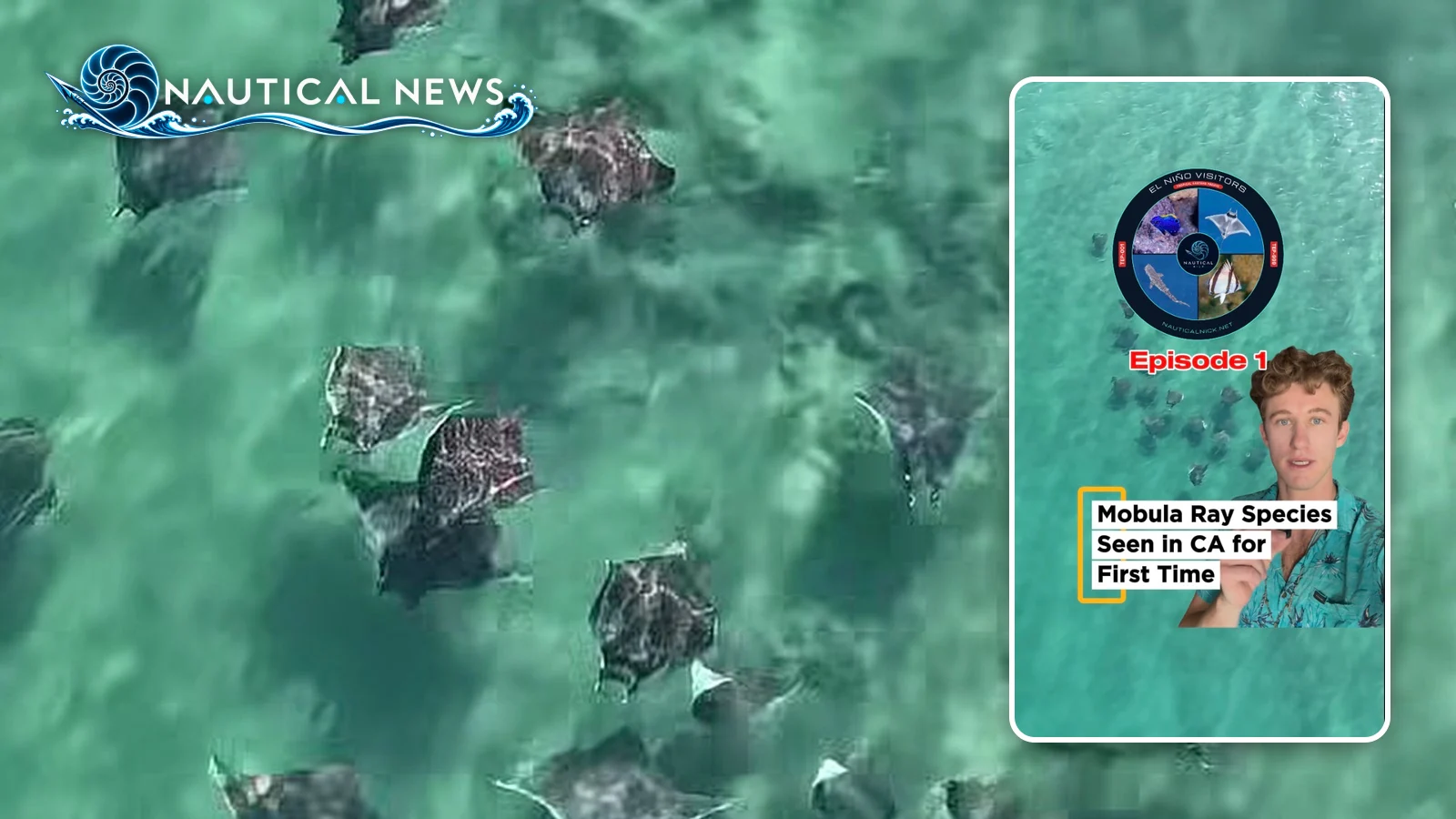
At 8:20 a.m. on Wednesday, November 18, drone photographer Chris Hart of the La Jolla Morning Report flew out over the Marine Room at La Jolla Shores and found a school of dark, diamond-shaped rays gliding over the sand in shallow green water. His video showed at least 17 of them. He posted it to Instagram right away with a short caption, "Unexpected visitors at the Marine Room," and with it became the first person known to have found and photographed the species in the United States.
The visitors were Munk's pygmy devil rays (Mobula munkiana), a species that normally lives from the Gulf of California to Peru and had never been documented in the United States. Nautical Nick founder Nick Meyers was the first to identify them, from Hart's video, according to lajolla.ca, and Giuseppe Notarbartolo di Sciara, the Italian scientist who described the species in 1987, later confirmed the identification. The rays are named for Walter Munk, the Scripps Institution of Oceanography scientist who lived in La Jolla and worked at Scripps for 80 years. They turned up just down the beach from his old institution, where the specimen that defines the species is still kept.
A morning at the Marine Room
Hart's post drew attention almost at once, according to Meyers. Snorkeler Adena Lamar suited up and swam out to the school, and the videos she filmed among the rays carried the sound of humpback whales in the background, Meyers said. Casey Cole, a Nautical Nick ambassador, followed her into the water at La Jolla Shores and filmed the rays up close.
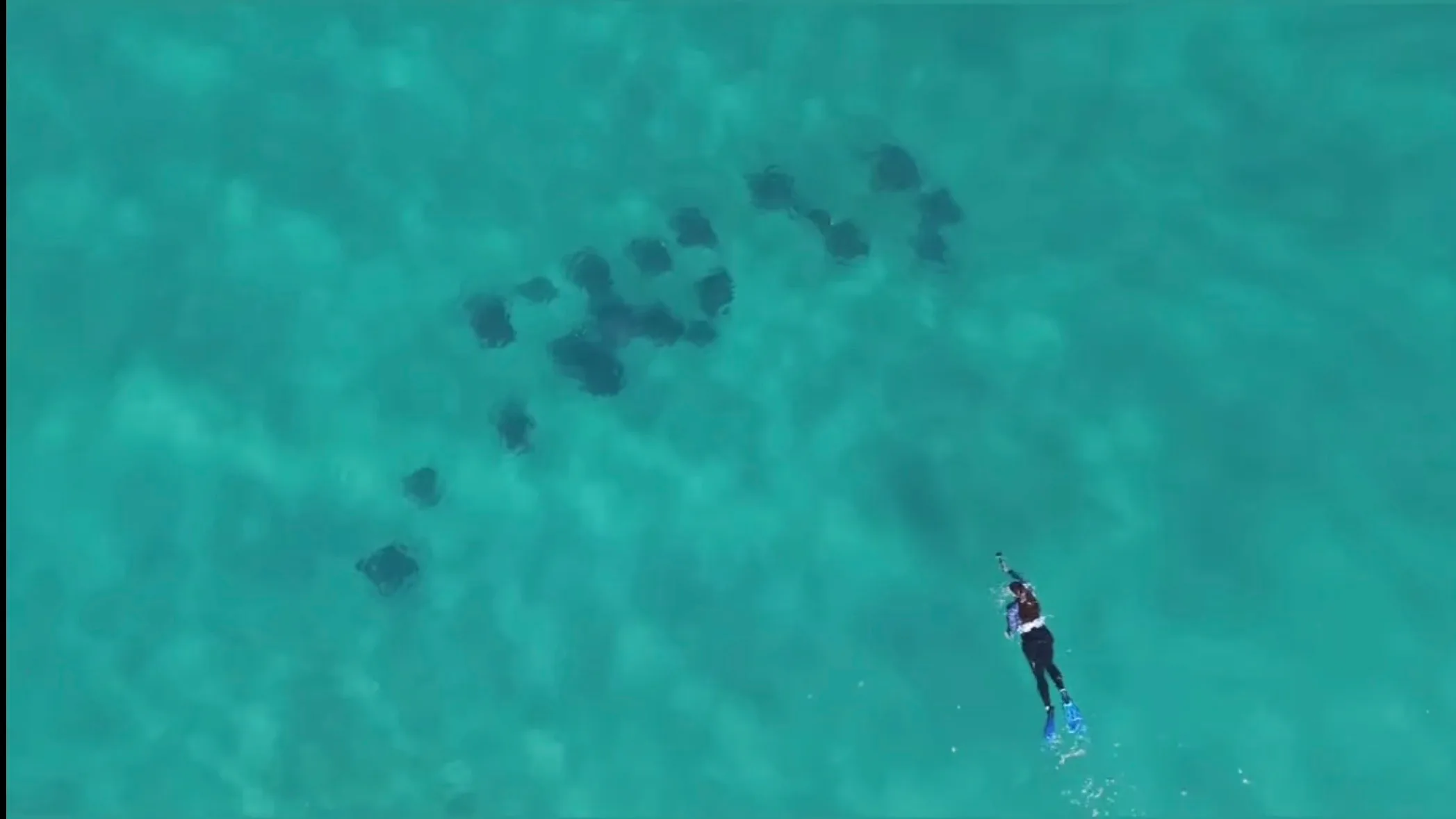 A snorkeler swims out to the school off the Marine Room. Photo: Chris Hart, @lajollamorningreport
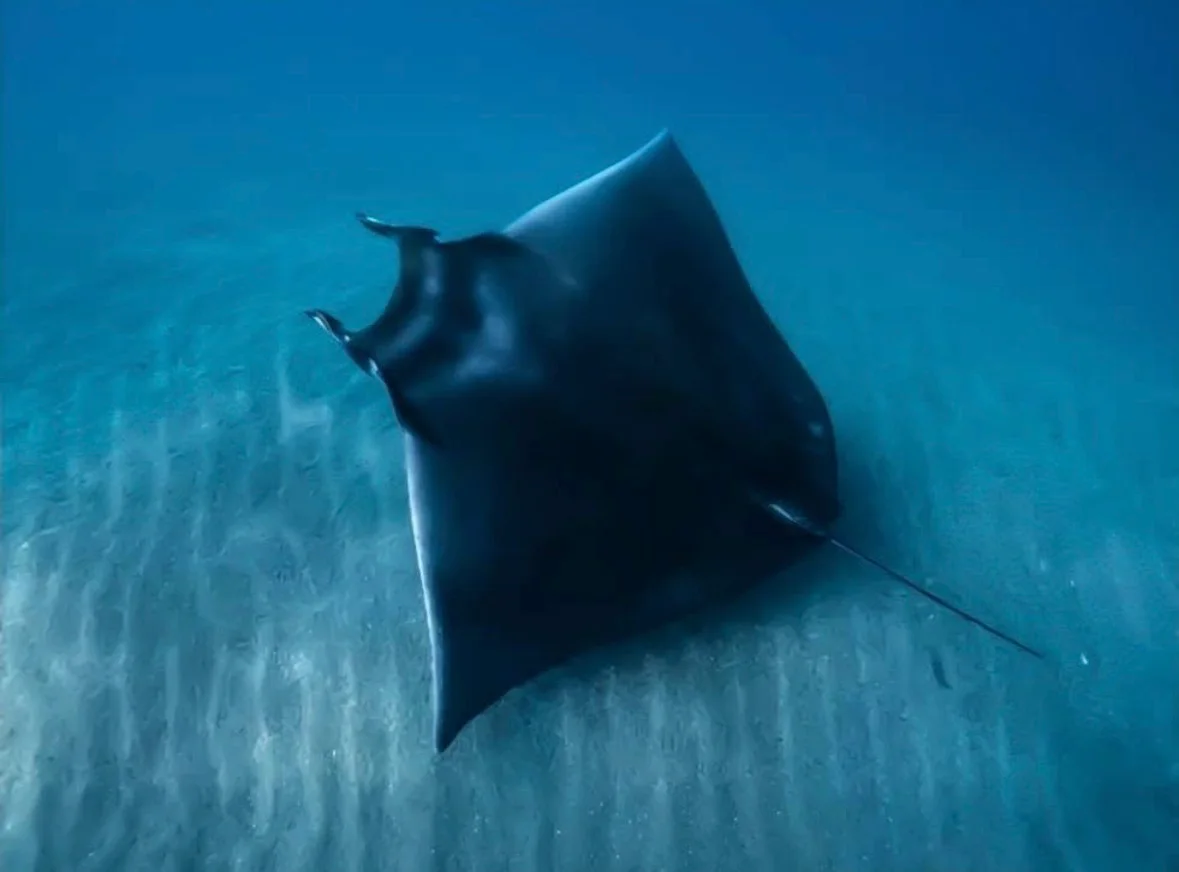 A Munk's pygmy devil ray over the sand at La Jolla Shores, November 18. Photo: Casey Cole
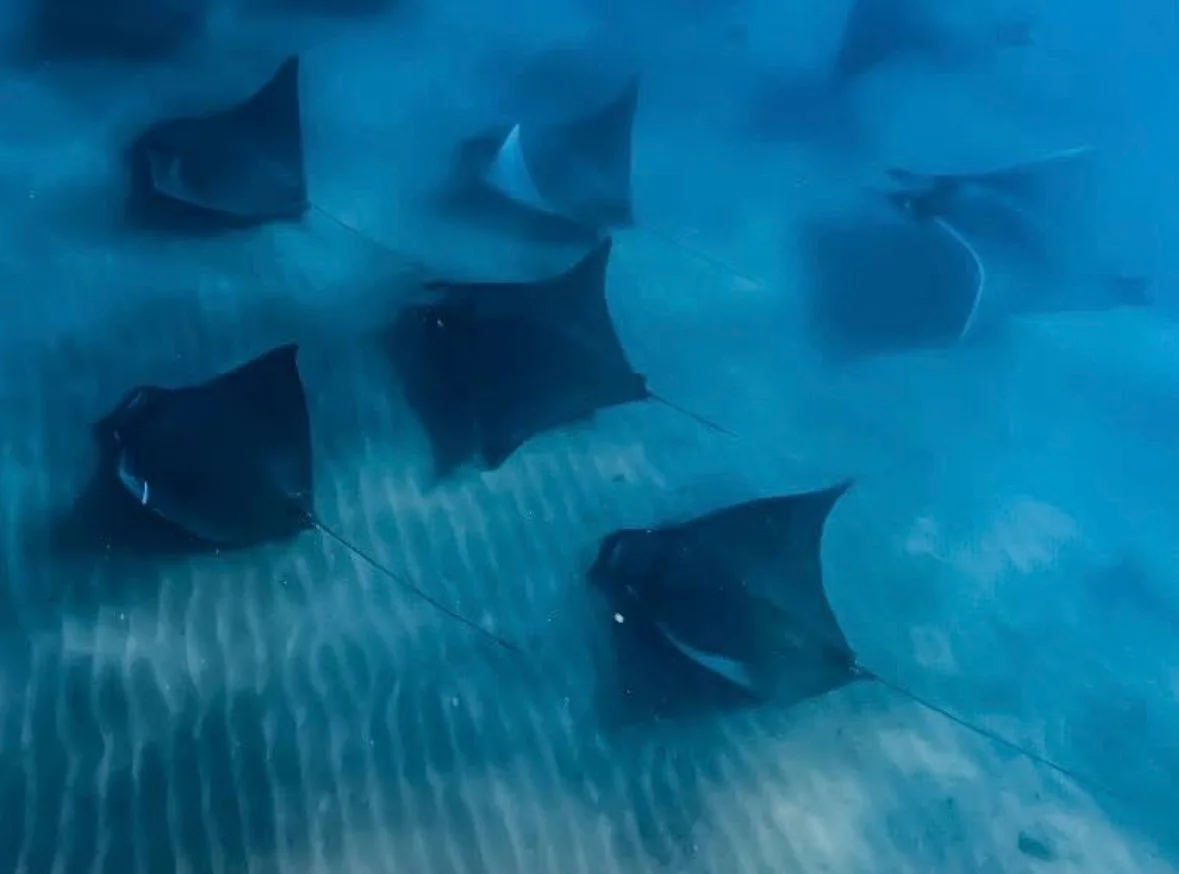 Part of the school over the sand ripples. Photo: Casey Cole
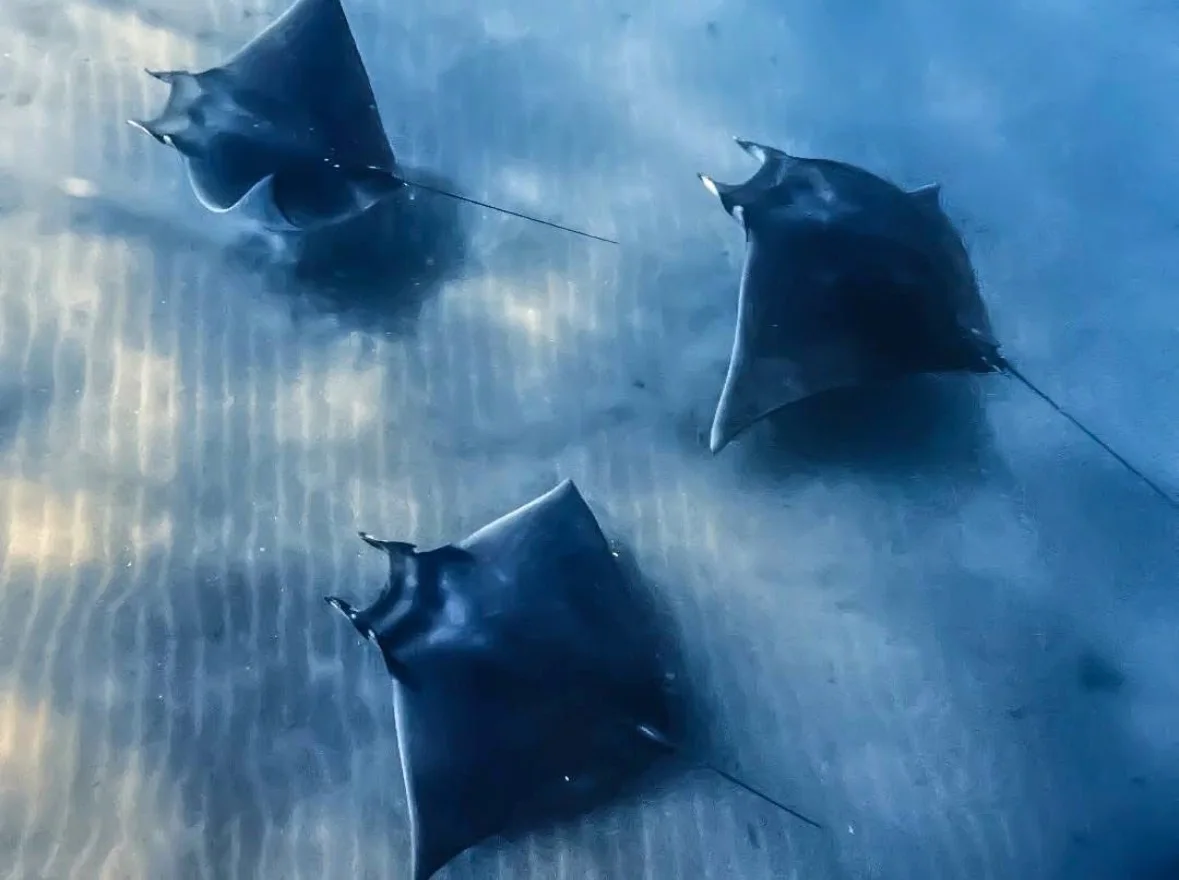 3 rays from above, head fins curled forward. Photo: Casey Cole
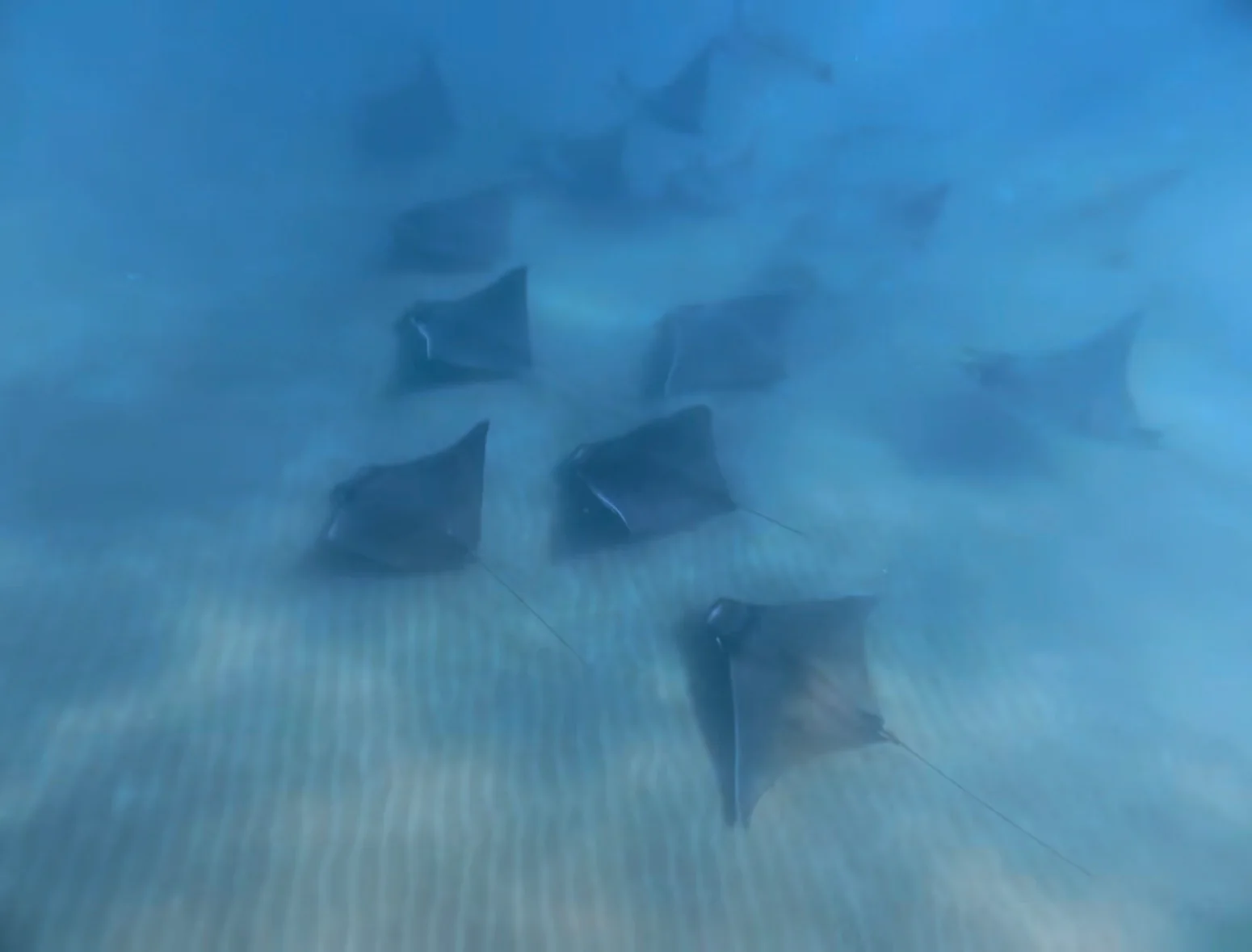 The school fading into the blue. Photo: Casey Cole
Naming the rays
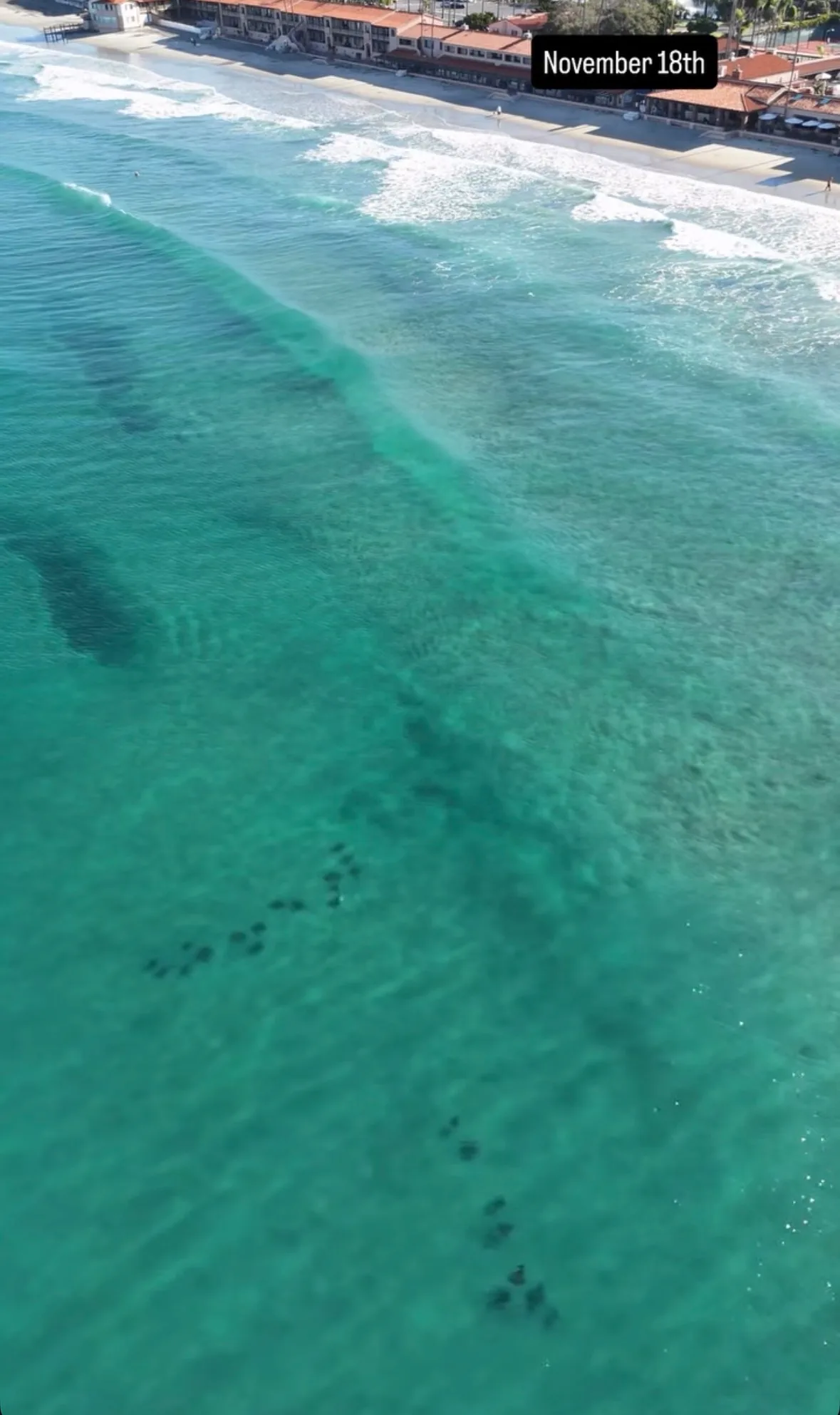 The school off La Jolla Shores on November 18. Photo: Chris Hart, @lajollamorningreport
Nobody yet knew what the rays were. People recognized them as mobulas, the family of manta and devil rays, and comments guessed manta rays or spinetail devil rays, Meyers said. He saw Hart's video at about 10 a.m. and at first took the rays for spinetail devil rays, a much larger relative that made its own rare appearance in La Jolla several weeks earlier, according to lajolla.ca. Their size changed his mind. The spinetail devil ray stretches 6 to 11 feet across, the outlet reported, while the Munk's pygmy devil ray measures 3 to 4 feet. A 2023 field guide to manta and devil rays published with the Manta Trust, which Notarbartolo di Sciara co-wrote, lists the largest females at 130 centimeters (about 4.2 feet) across and males at 115 centimeters (about 3.8 feet). That makes it the smallest of the 5 manta and devil rays that live in the eastern Pacific. Its thin tail carries no spine, so it cannot sting.
After working through the region's devil rays, Meyers settled on the Munk's pygmy devil ray and began posting the identification in the comments under other people's videos of the school. Lajolla.ca reported that he was the first to identify the species.
Notarbartolo di Sciara found the reel Meyers posted about the rays and left a public comment under it: "It actually almost makes me cry ... I have described the species." When Meyers asked him in a message whether the rays were Munk's pygmy devil rays, he answered from the footage.
"Yes I think you have identified the species correctly," he wrote. "I cannot tell the size from the video but their shape is typical of pygmies. All the greater mobulas from the region have a quite different shape."
On whether the species had ever been seen in the United States, he wrote that "to the best of my knowledge, Munk's pygmies have never been recorded north of Baja, although it is possible that in El Niño years they might have ventured in US waters unnoticed."
The published record agrees. A 2021 checklist of northeastern Pacific fishes in the journal Zootaxa places the northernmost record on the Pacific side of Baja California at Todos Santos, near the peninsula's southern tip, and lists no California locality. The community science platform iNaturalist held no California observations of the species before this week.
A long way from home
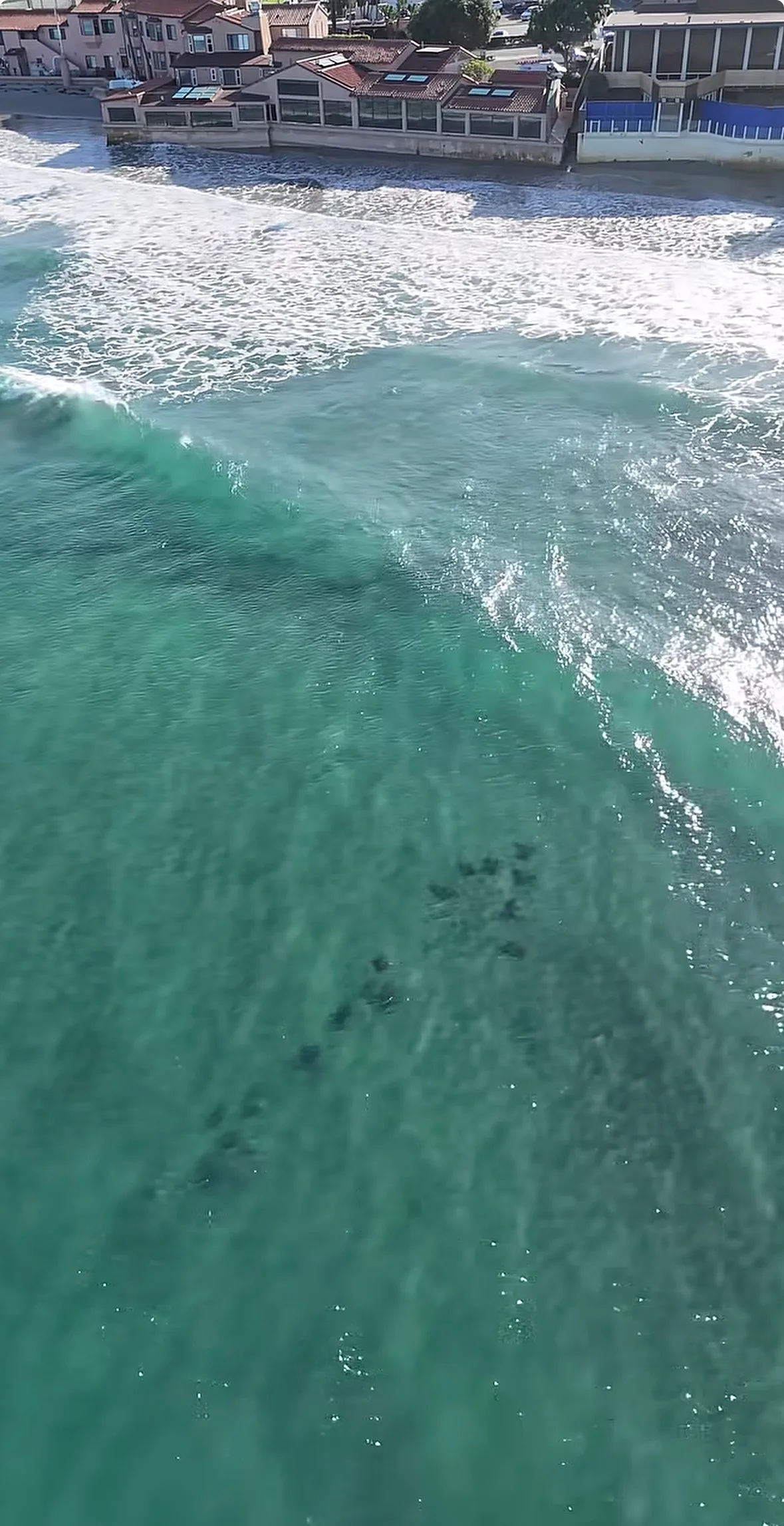 The school just past the surf line at the Marine Room. Photo: Chris Hart, @lajollamorningreport
The Baja Ha-Ha sailing rally covers 750 miles from San Diego to Cabo San Lucas, at the tip of the peninsula, according to Latitude 38 magazine. The Gulf of California, where the Manta Trust guide says Munk's pygmy devil rays gather by the thousands at certain times of year, lies farther still, around the cape.
The species keeps to coastal water and uses sheltered bays as nurseries, according to the guide, and the schools often breach, leaping several meters out of the water. The rays feed on small drifting crustaceans, mostly krill in Mexico, according to the Mexican Fish.com species guide. Like all of their relatives, females give birth to a single live pup, rarely 2, every 1 to 5 years, the Manta Trust guide says. The International Union for Conservation of Nature (IUCN) has listed the species as Vulnerable since 2018, according to FishBase, and the guide notes that its schooling habit makes it easy to catch in gillnets, trawls, and purse seines.
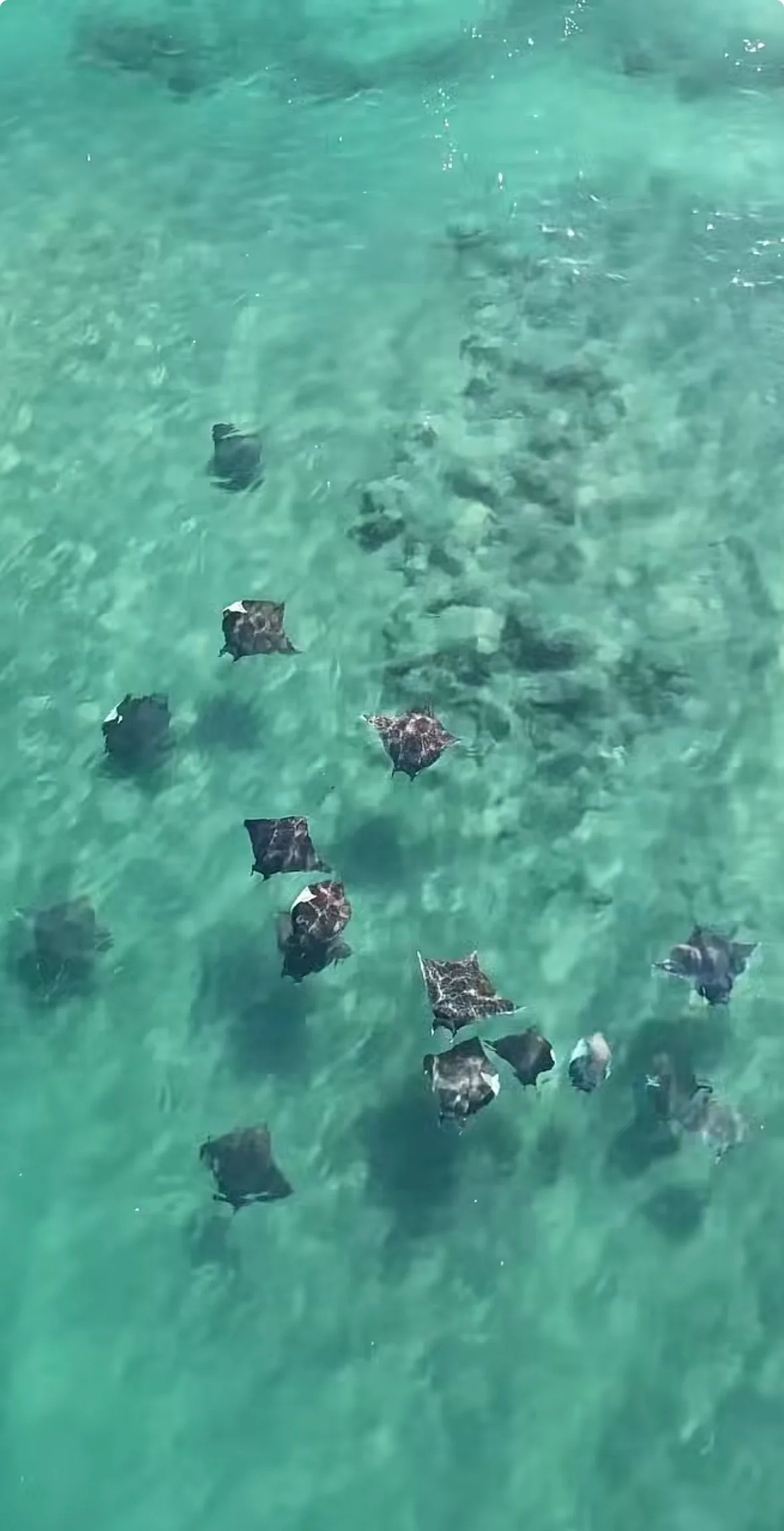 Sunlight across the rays' backs. Photo: Chris Hart, @lajollamorningreport
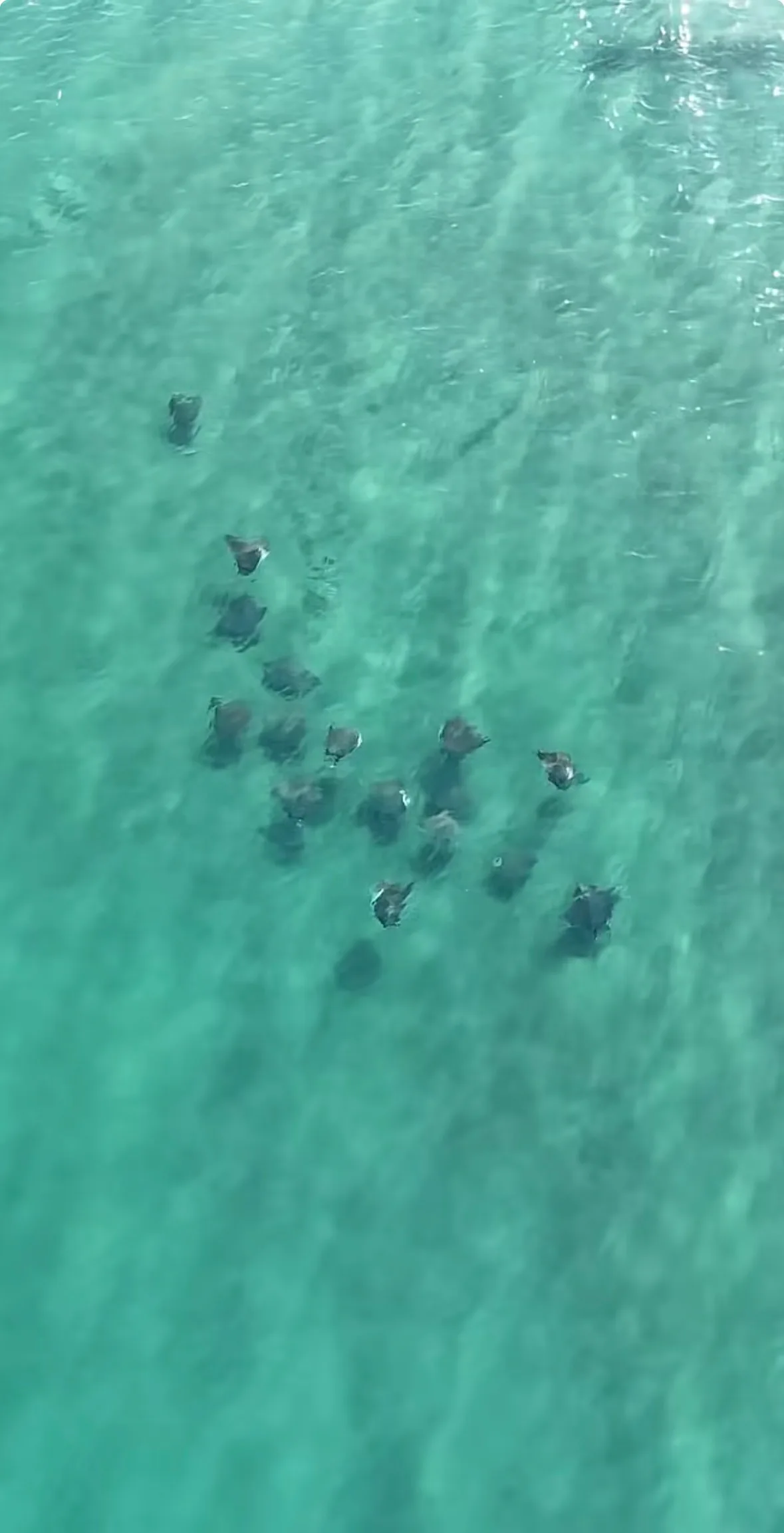 The school spread over the sand. Photo: Chris Hart, @lajollamorningreport
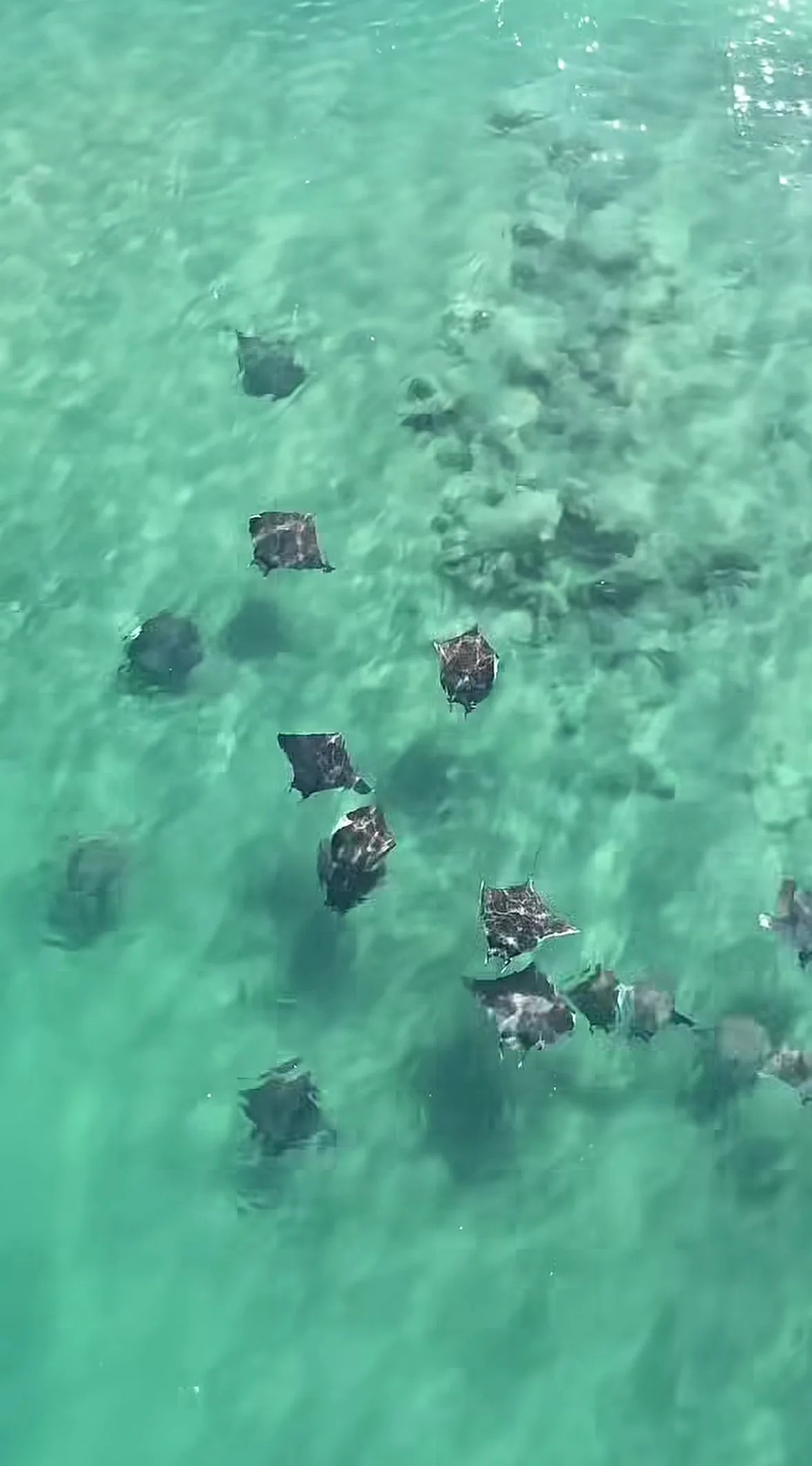 Their shadows on the bottom in shallow water. Photo: Chris Hart, @lajollamorningreport
The rays were still there the next day. Julia Pelio photographed the school from above on November 19, some swimming single file and others bunched together over the sand, and drone shots by @bigbluephotoboat the same day caught surfers paddling and riding waves right beside it.
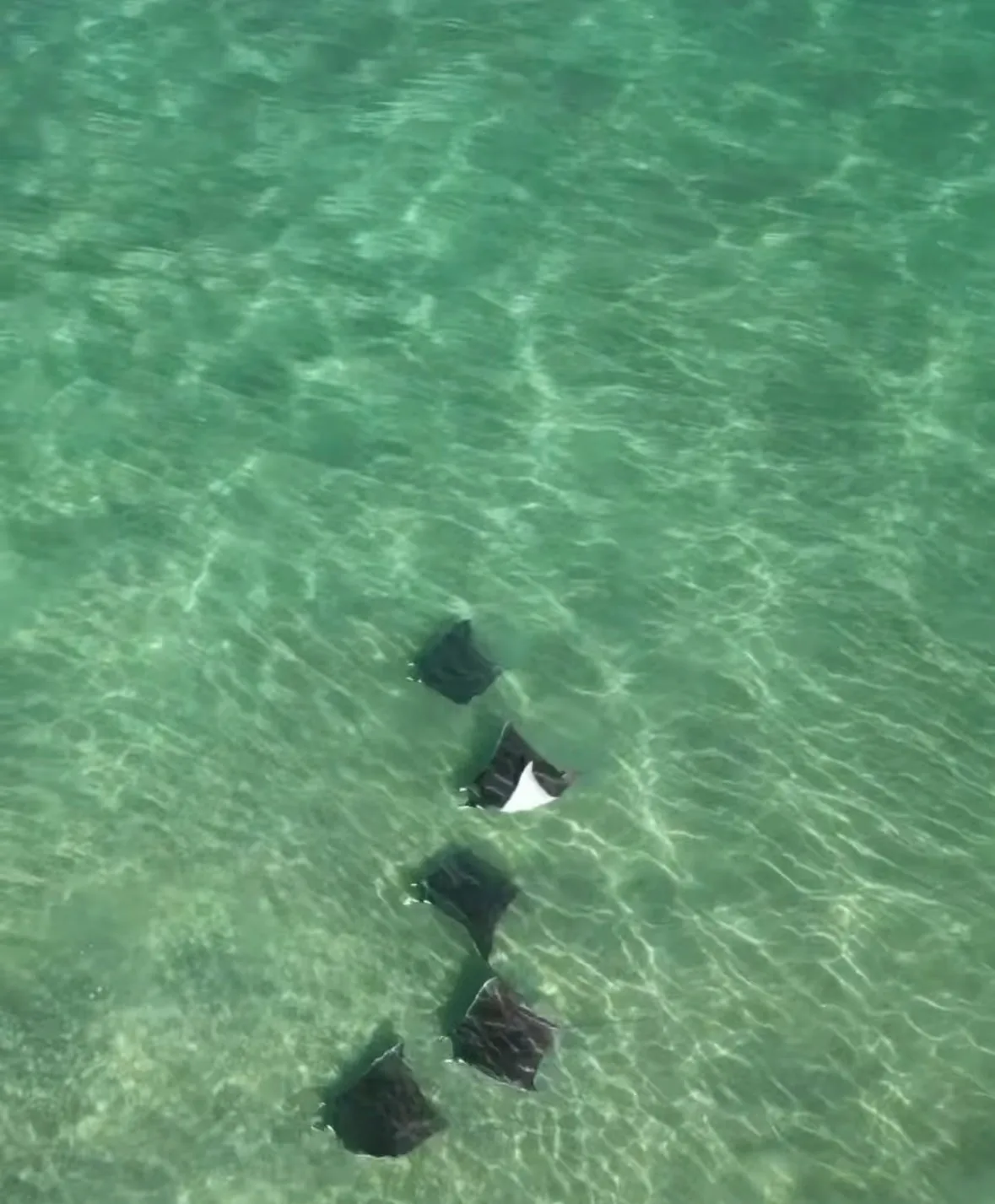 November 19, the day after the first sighting. Photo: Julia Pelio
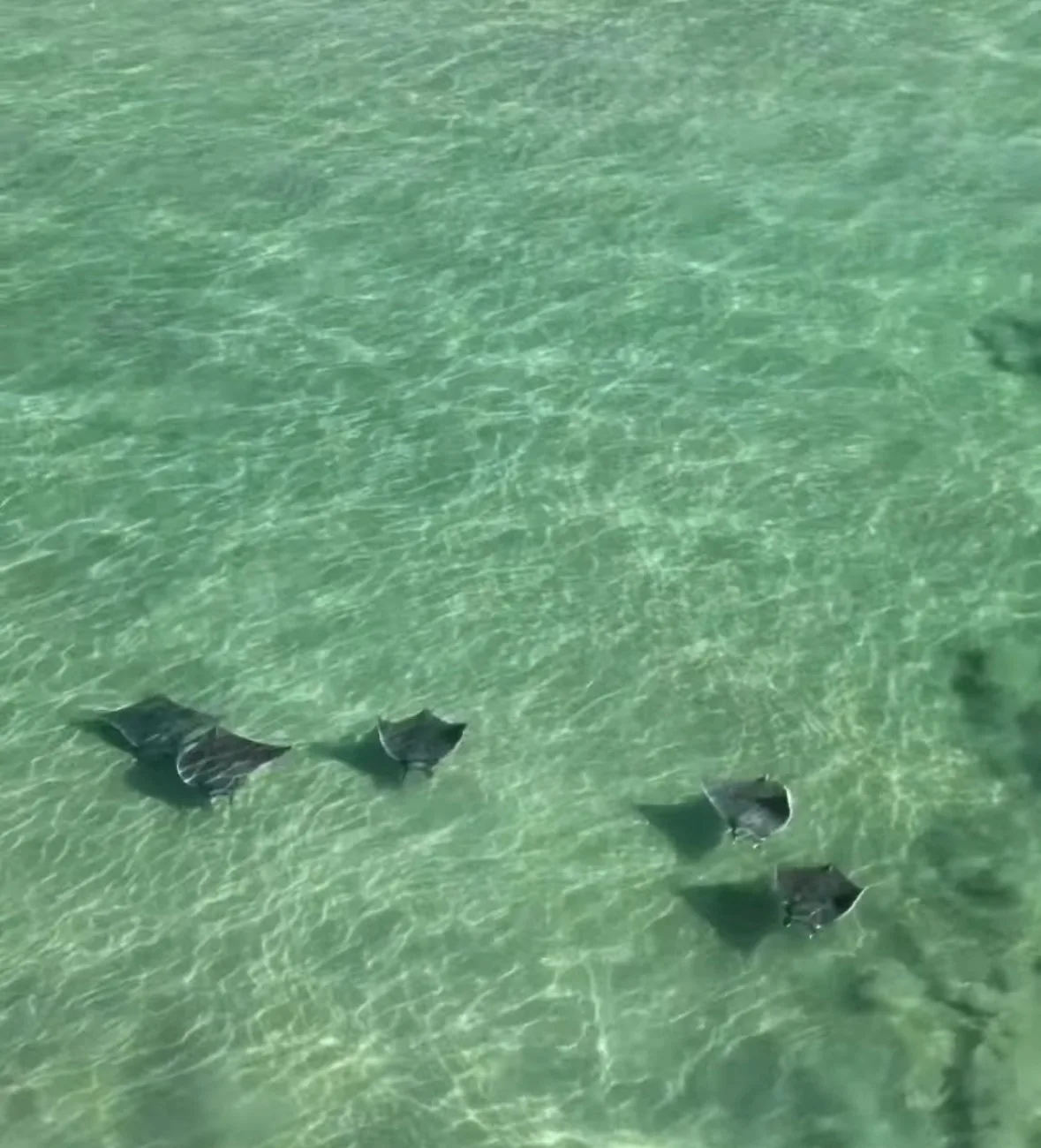 November 19. Photo: Julia Pelio
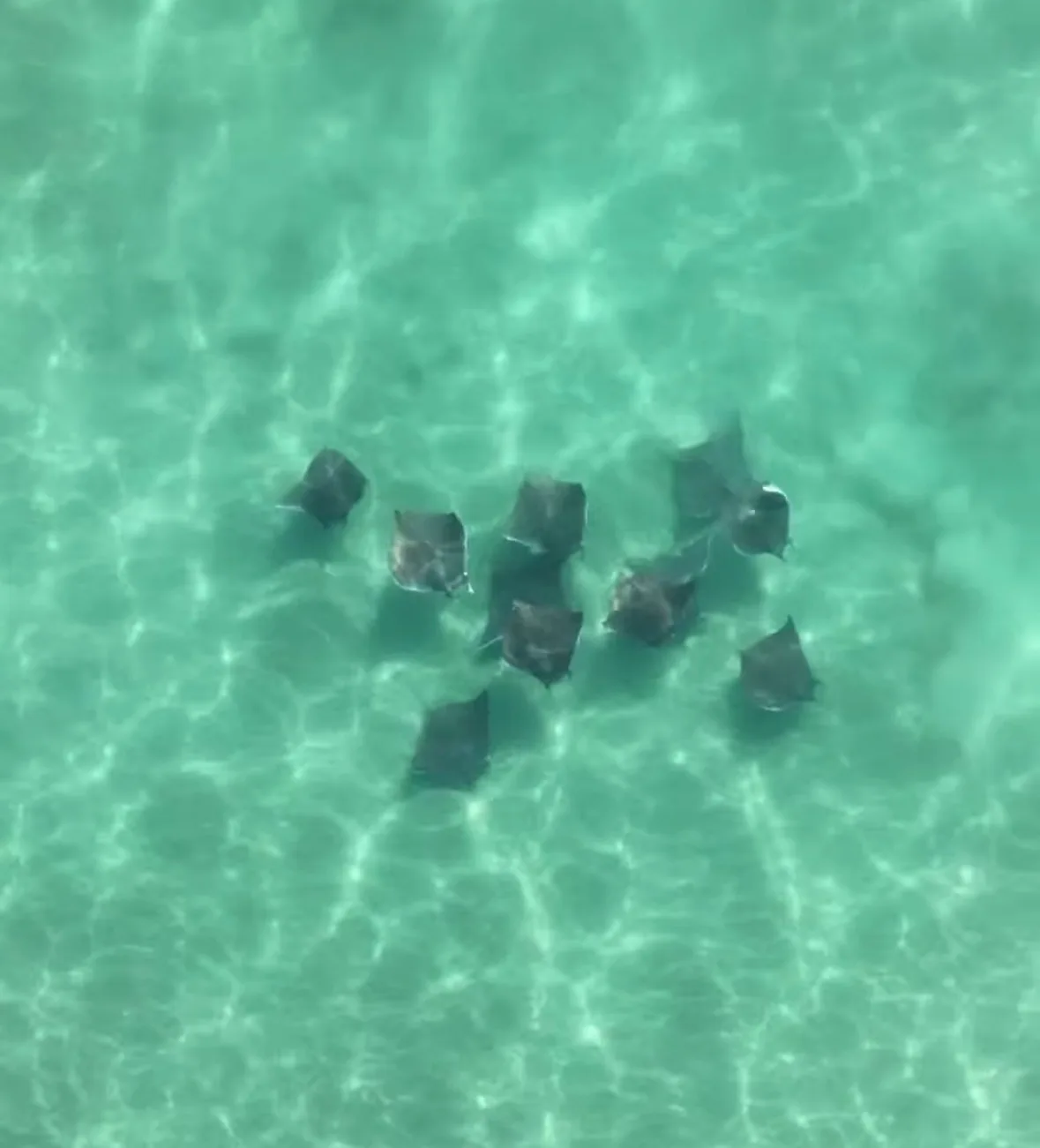 November 19. Photo: Julia Pelio
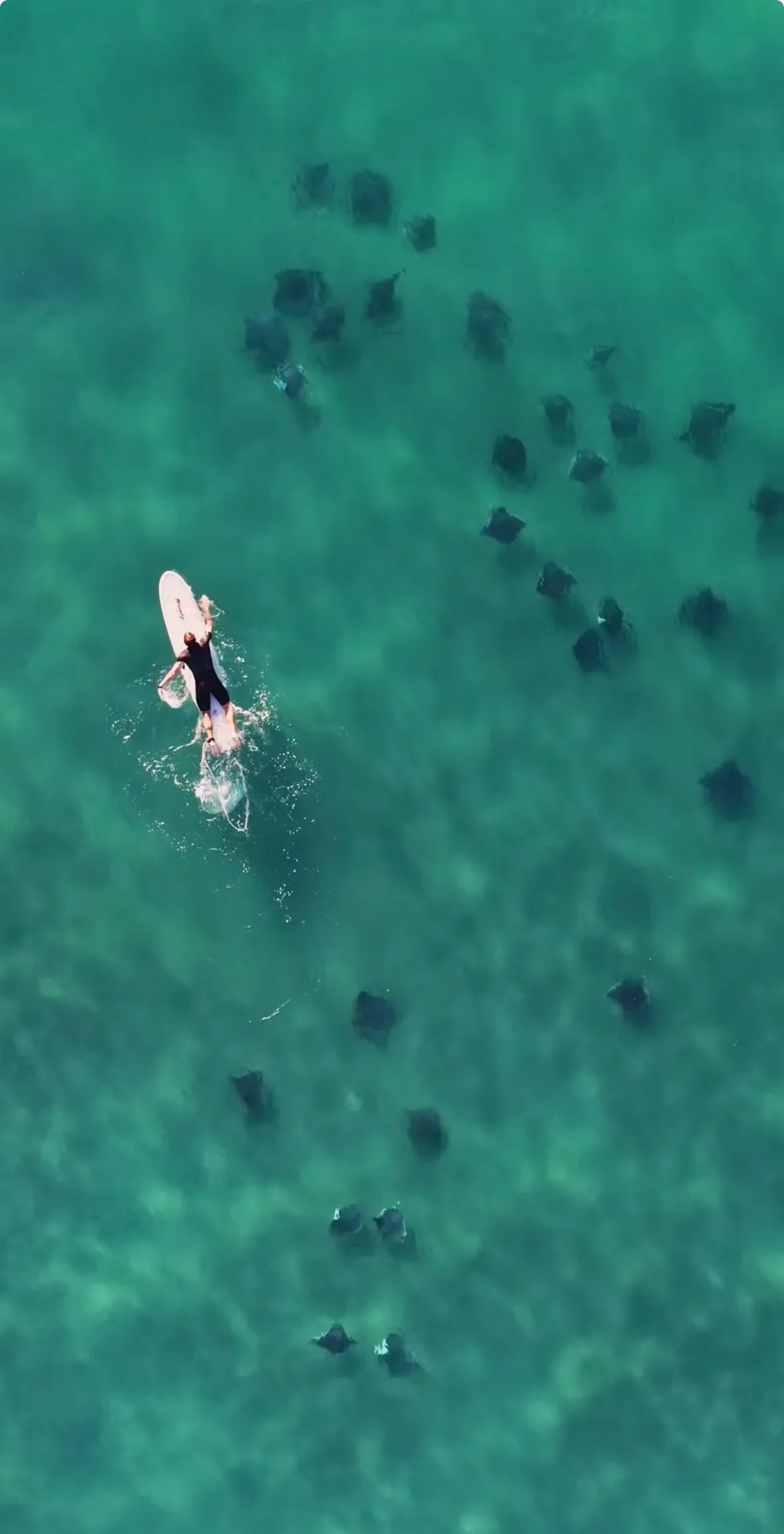 A surfer paddles past the school, November 19. Photo: @bigbluephotoboat
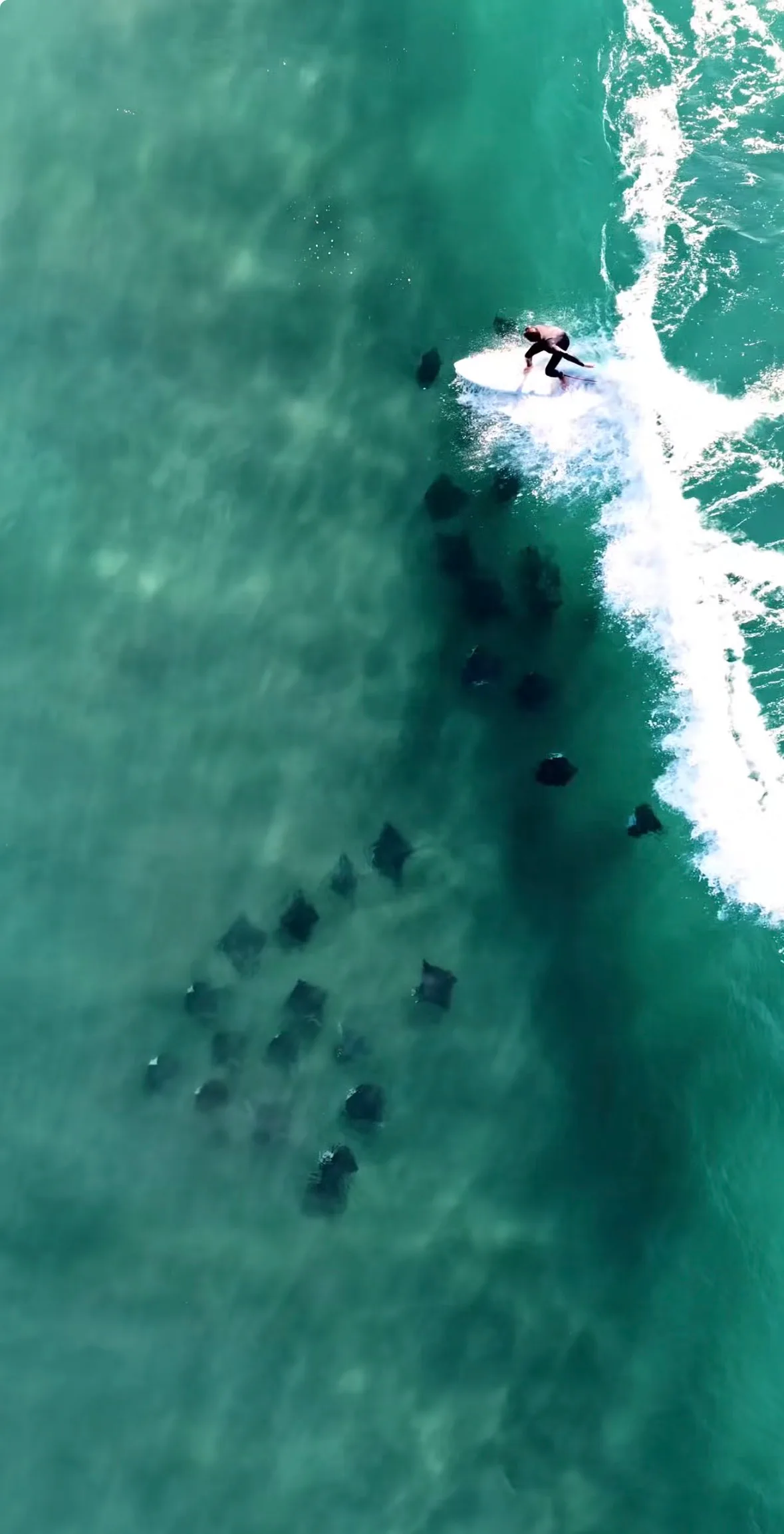 A surfer rides a wave over the school, November 19. Photo: @bigbluephotoboat
Lajolla.ca tied the sighting to the persistent marine heatwave and the strong El Niño season drawing tropical species north. Nautical Nick tracks those arrivals in its El Niño Compendium, numbering each tropical species by the order it was first seen in Southern California this season. The Munk's pygmy devil ray is TEP-045, the 45th, where TEP stands for Tropical Eastern Pacific, the warm coastal region that runs from the Gulf of California to northern Peru. Meyers told lajolla.ca he expects the rays to head back south once the water cools.
The man in the name
Notarbartolo di Sciara described the species in 1987 in the Zoological Journal of the Linnean Society and named it for his scientific mentor. Walter Munk was born in Vienna in 1917 and took a summer job at Scripps in 1939, according to the University of California San Diego. During World War II he and Scripps director Harald Sverdrup worked out how to forecast waves for amphibious landings, and the forecasters they trained correctly predicted that the surf at Normandy would be high but manageable. He went on to study ocean waves, tides, and the rotation of the Earth, and the university credits him with helping "nurture a university into existence." He died at his home in La Jolla on February 8, 2019, at 101. Scripps director Margaret Leinen called him "a guiding force, a stimulating force, a provocative force in science for 80 years."
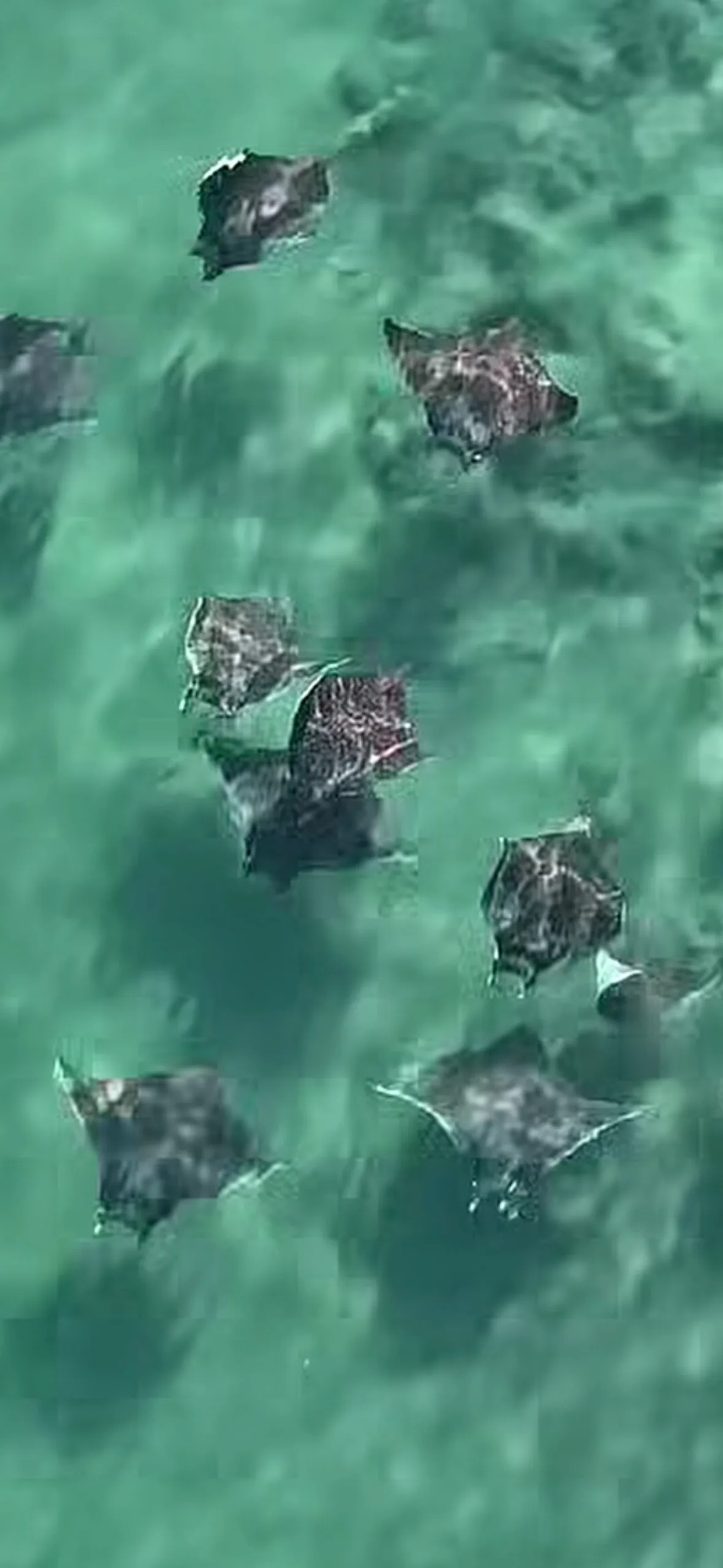 A closer look at the school from the drone. Photo: Chris Hart, @lajollamorningreport
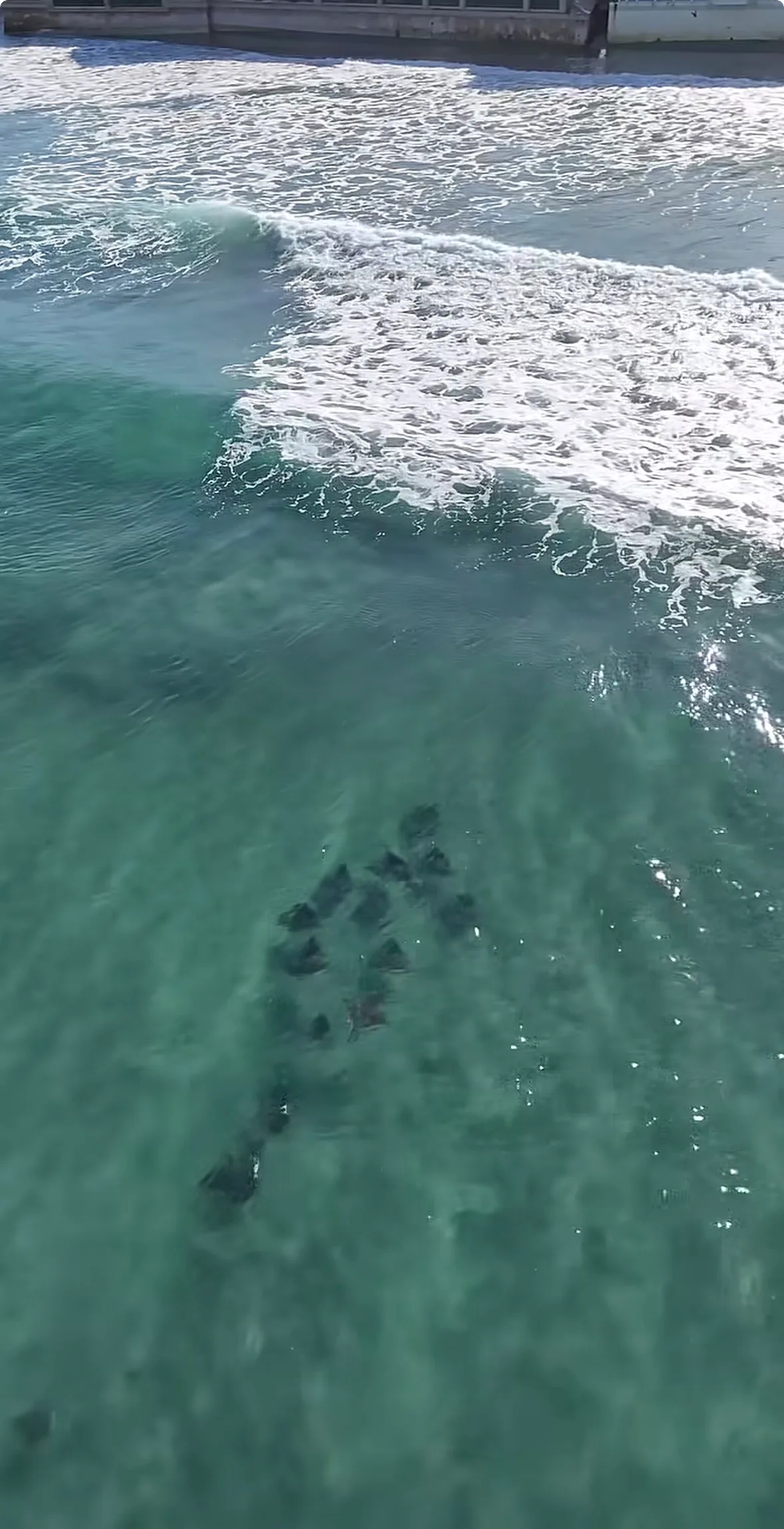 The school beside the surf off the Marine Room. Photo: Chris Hart, @lajollamorningreport
The specimens behind the 1987 description, including the holotype, the single specimen that formally defines a species, are kept in the Scripps collection, according to the shark-references species database. Notarbartolo di Sciara had a theory about why the rays came. "I think they have come up N to visit their friend," he wrote to Meyers, pointing to the holotype in the Scripps collection of marine vertebrates.
The reel that reached San Diego
Meyers spent about 12 hours on a video about the rays and posted it at 11 p.m. on November 18 as episode 1 of El Niño Visitors of the Tropical Eastern Pacific, his series on the tropical species El Niño has carried to Southern California. The video told the story of the sighting and closed on Walter Munk and the town where he spent his career. More than 100 commenters said the ending made them cry, by Meyers' count. The reel passed 900,000 views on Instagram, with more than 71,000 likes and 900 comments, and the Walter Munk Foundation for the Oceans shared it as a collaborator. His Instagram following went from about 6,000 to 15,000 overnight, he said. Lajolla.ca interviewed Meyers for its story on the sighting.
Meyers asked Notarbartolo di Sciara one more question: whether Munk would have been moved to know the rays named for him had come to visit. "Oh boy," he replied, "he would be delighted."
Sources
- Chris Hart, La Jolla Morning Report, drone video of the rays, November 18, 2026, https://www.instagram.com/p/Df4-C1Wh8DW/
- Elisabeth Frausto, lajolla.ca, La Jolla sighting of Munk's pygmy devil ray is the first in the US, November 19, 2026, https://lajolla.ca/news/wildlife/la-jolla-sighting-of-munks-pygmy-devil-ray-is-the-first-in-the-us/
- Julia Pelio, photographs of the rays, November 19, 2026, provided to Nautical Nick
- @bigbluephotoboat, drone photographs of the rays with surfers, November 19, 2026, provided to Nautical Nick
- Giuseppe Notarbartolo di Sciara, public comment on the Nautical Nick reel and messages to Nick Meyers, November 2026, quoted with his permission
- Nautical Nick, El Niño Visitors episode 1, https://www.instagram.com/reel/Df6eN9tv2mw/ (YouTube: https://youtube.com/shorts/oj6PMCOwmpE)
- Stevens, Dando, Hutchinson, Laglbauer, Cronin, Fernando, Notarbartolo di Sciara, Palacios, Rojas, and Waldo, Field Guide to Manta and Devil Rays in Pacific Ocean Fisheries, IBSS and The Manta Trust, 2023, https://www.sharktagger.org/mobulid-id-guide
- Love and colleagues, checklist of northeastern Pacific fishes, Zootaxa 5053, 2021, https://zenodo.org/records/5818797
- FishBase, Mobula munkiana, Munk's pygmy devil ray, https://www.fishbase.se/summary/Mobula-munkiana.html
- shark-references, Mobula munkiana, https://shark-references.com/species/view/Mobula-munkiana
- Mexican Fish.com, Pygmy Devil Ray, https://mexican-fish.com/pygmy-devil-ray/
- iNaturalist, Munk's Pygmy Devil Ray observations (taxon 105924), queried November 18, 2026, https://www.inaturalist.org/taxa/105924
- UC San Diego, Obituary Notice: Walter Munk, World-Renowned Oceanographer, Revered Scientist, February 8, 2019, https://today.ucsd.edu/story/obituary_notice_walter_munk_world_renowned_oceanographer_revered_scientist
- Latitude 38, Huge Baja Ha-Ha Fleet Heads South, https://www.latitude38.com/lectronic/huge-baja-ha-ha-fleet-heads-south